

👨🏿🚀TechCabal Daily – Terra’s mega haul
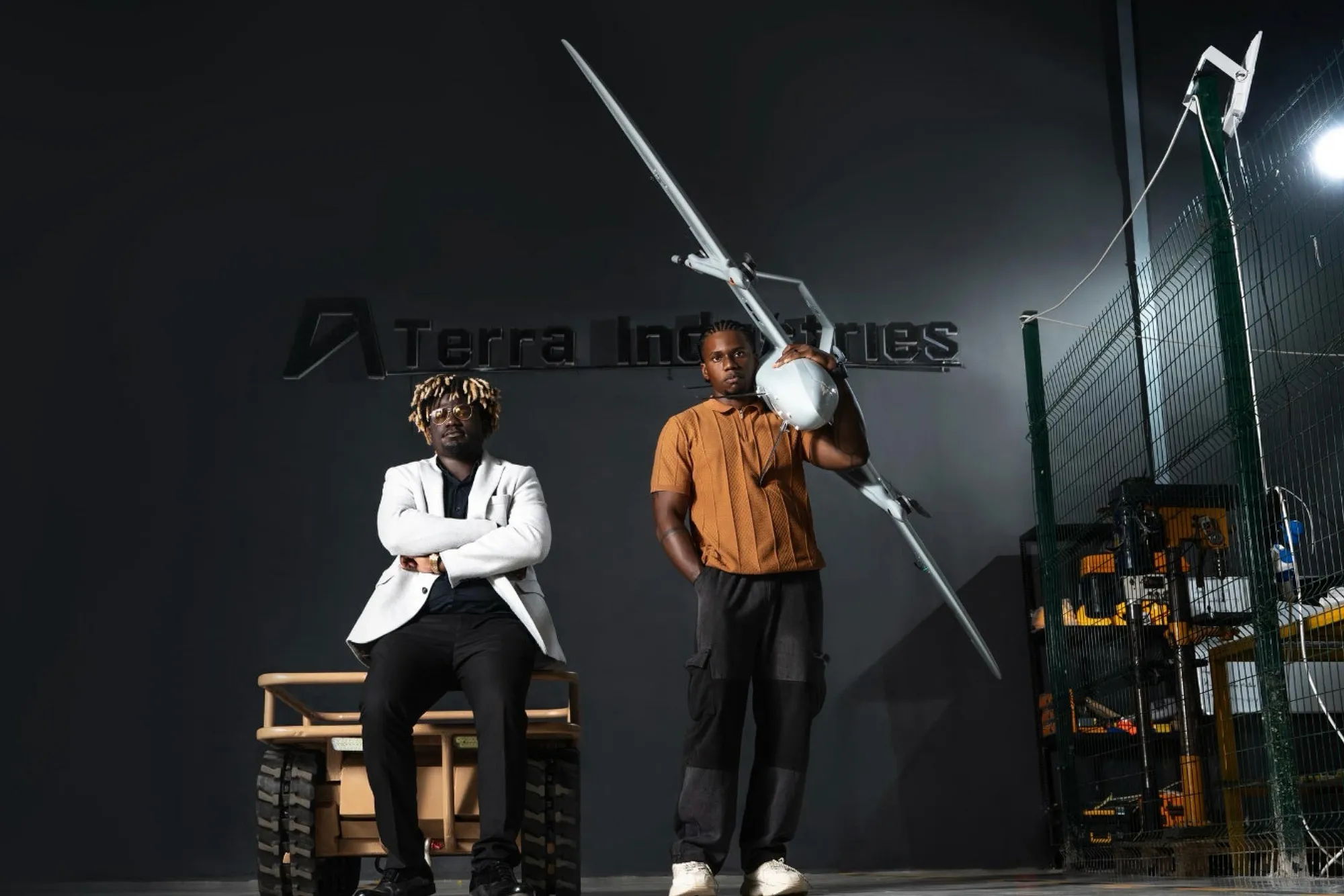
What is the appeal with a defence-tech startup building drones and remote threat sensors from a little factory in Abuja, Nigeria? So much that investors from Silicon Valley and a big name like Palantir lined up with their dollars, cash in hand ready to back an unprecedented $11.75 million funding round?
Three things: first, traction. Nathan Nwachuku and co-founder Maxwell Maduka started building Terra Industries (formerly Terrahaptix) in stealth mode in 2023. Both knowledgeable in robotics—Maduka previously sold his former robotics startup, Spacial Nova, to Nigerian automotive company Nord Motors in 2022—they banded together to build something different. Nwachuku, fresh off his success with edtech startup Klas, had been an investor in Spacial Nova, which brought the two together.
They saw an opportunity to change how drone operators, who often lacked the after-sales support to use foreign drones. Locally-made drones were not on the same quality level, so there was no real competition to the Chinese imports. By 2024, still in stealth mode, Terra had secured over $1 million in surveillance contracts, with Archer, its aerial drone, selling several units. It was an experiment that yielded critical traction that attracted eyeballs.
Soon, heavy-hitters and experienced defence-tech veterans began to join its board. That was the second validation: association.
Third, an experienced team. Starting out as an early-stage startup, Terra wasn’t focused on marketing, rather it wanted to develop the right human capital and expertise to build, a key quality that often lacks in the defence-tech sector. By 2024, Terra had only robotics engineers, hardware operations specialists, and software engineers (for building its ArtemisOS software which serves as a control centre for its drones).
“I felt like I’ll never be able to assemble a team like this again. We started it and it’s been a rocketship since,” said Nwachuku in 2024.
Today, the validation of that speed and careful foundational building is its $11.75 million raise. Terra has become the most visible Nigerian startup putting defence-tech on the global map.
Yet Terra isn’t chasing the world. Selling surveillance hardware like drones, which is effectively military-grade equipment, can draw government scrutiny. There’s also extensive due diligence required to ensure whose hands that hardware ultimately ends up in. Terra is playing a selective game, keeping its enterprise clients local while pursuing carefully chosen scale globally. With Palantir now onboard, there’s a thing or two it could learn.
Crédito: Link de origem
Comments are closed.