

10 companies owned by South African multimillionaire Robert Gumede
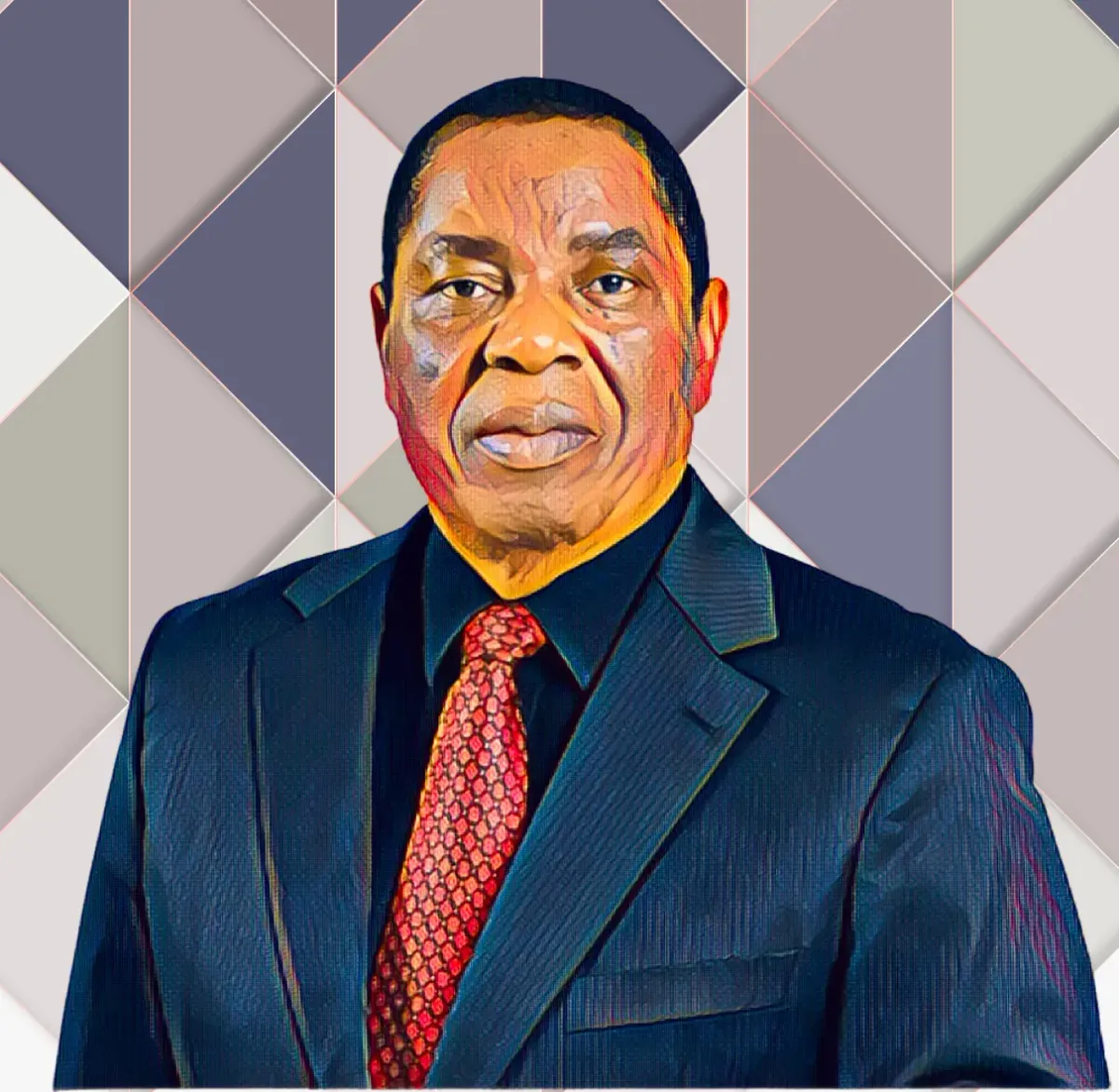
Robert Gumede has never done things quietly.
The boy who started as a golf caddie in apartheid-era Nelspruit, who sold second-hand clothes to help feed more than a dozen siblings and cousins crammed into his grandmother’s three-roomed house, is now one of South Africa’s most recognisable and most controversial billionaires.
Few deals in recent South African corporate history have been as turbulent as his pursuit of Tongaat Hulett. The sugar giant collapsed into business rescue in October 2022 after a multi-billion rand accounting fraud brought it to its knees. Gumede moved in with a consortium called Vision, later restructured as Vision Sugar, alongside Zimbabwean businessman Rutenhuro Moyo, and spent two years fighting a parallel bidder, a Mozambique-based group called RGS, in the courts and in creditors’ meetings. Creditors voted for the Vision plan in January 2024 after RGS withdrew its own bid at the eleventh hour, alleging the process was rigged in its rival’s favour. Banks led by Standard Bank sold their R11.7 billion in Tongaat debt to Gumede’s consortium at a steep discount. But Vision repeatedly failed to meet its financial obligations, triggering a crisis that, by February 2026, had the business rescue practitioners filing for the company’s provisional liquidation. Gumede publicly denied Vision was responsible, blamed the Business Rescue Practitioners, and insisted the company could still be saved. As of March 2026, the matter is still before the Durban High Court and Tongaat Hulett’s future remains unresolved.
That saga, sprawling and unfinished, is characteristic of Gumede’s style. He built Gijima into the largest 100% black-owned IT company in Africa. He signed a letter of intent with the government of Liberia and American billionaire Robert Friedland to build a $3 billion to $5 billion railway connecting Guinea to the West African coast. He has signed energy deals across Indonesia, Mozambique and South Africa. And he has done it all while carrying the title of Executive Chairman of the Guma Group of Companies, a conglomerate that now employs over 12,000 people across sectors ranging from ICT and energy to mining, agribusiness, rail infrastructure, tourism and real estate.
Gumede is also a man who has spent years fighting allegations. The Special Investigating Unit in South Africa is pursuing him over a near-R600 million PPE contract awarded during COVID-19. Tender irregularities have followed his name through courtrooms and newspaper front pages. He has denied wrongdoing across the board. That tension between the scale of his ambition and the weight of his legal battles defines his public life.
Tongaat aside, here is a full breakdown of every company Robert Gumede owns or controls in 2026.
1. Guma Group of Companies
This is the mothership. Guma Group is Gumede’s master holding company, an Afro-global conglomerate with operations spanning mining, energy, infrastructure, tourism, hospitality, railways, ports, healthcare, ICT, real estate, agribusiness and human capital development. The group employs over 12,000 people globally and has clients that include some of the world’s largest multinationals. Gumede founded it in 1994, the same year Nelson Mandela became South Africa’s first democratically elected president. He has described its mission in blunt terms: industrialise Africa, create sustainable jobs, move goods and people across the continent. Guma has a presence in the United Kingdom, the United States, Brazil, New Zealand, India, Spain, Japan, the Caribbean, the Middle East and across multiple African countries.
2. Gijima Group
Gijima is Gumede’s flagship and the company that put him on the map. He founded it in 1997 as a vehicle to deliver IT services to South Africa’s new democratic government. It grew fast, winning major contracts from the Department of Justice and Correctional Services, the Department of Home Affairs and telecoms giant Telkom. Today Gijima is structured into five standalone divisions, each with its own managing director, operating under a shared services umbrella. The company is 100% owned by the Gumede Family Trust and has over 70 points of presence across South Africa, with operations in other African countries as well. Gijima remains one of the biggest black-owned IT enterprises on the continent and its government contracts, particularly in managed IT outsourcing, remain its commercial backbone.
3. Gen Technologies
Guma presently jointly owns Gen Technologies on a 50/50 basis with Everest Systems Solutions. The company was formed in January 1999 and focuses on citizen security infrastructure, specifically identity documents, passports and election technology. It is one of the group’s more specialised technology subsidiaries and sits within the broader Gijima ICT portfolio.
4. Guma Africa Group / Liberty Corridor Project
In February 2024, Gumede’s Guma Africa Group signed a letter of intent with US company High Power Exploration (HPX), led by billionaire Robert Friedland, and the government of Liberia to develop the Liberty Corridor. The project is a proposed $3 billion to $5 billion multi-user infrastructure corridor connecting the Nimba district of Guinea to a new deep-water port at Didia, Liberia. The corridor would include a brand-new heavy-duty railway, an upgraded road network, an extension of renewable hydropower from Cote d’Ivoire into Liberia and Guinea, and high-speed fibre optic telecommunications infrastructure. The three parties agreed to form a tripartite Project Steering Committee to engage stakeholders and international financiers. The project has attracted controversy, with Guinean authorities reportedly reluctant to permit ore transportation via Liberia, and critics raising questions about financing viability.
5. Guma Energy (Oil, Gas and Renewables)
Guma Group has a dedicated energy division covering both fossil fuels and renewable power. In September 2024, Guma signed an MOU with Indonesia’s Energi Mega Persada (EMP), a subsidiary of the Bakrie Group, to explore oil and natural gas opportunities in the Buzi Block in Mozambique. Separately, Guma Africa Group entered into a study agreement with Pertamina NRE, the renewables arm of Indonesia’s state-owned oil company Pertamina, to explore building a gas-to-power plant in South Africa, with gas to be supplied from Mozambique. These deals position Guma’s energy arm as a bridge between Asian energy capital and Southern African gas reserves.
6. Guma Mining and Minerals
Mining sits within the Guma Group’s diversified industrial footprint. The division operates across various African countries and is positioned to benefit from the group’s infrastructure ambitions, particularly the Liberty Corridor project which is explicitly designed to unlock mineral resources in Guinea and Liberia. Guma’s mining interests complement the group’s construction and infrastructure capabilities and its long-standing government relationships across the continent.
7. Guma Infrastructure and Construction
This division handles large-scale infrastructure development, engineering and construction projects across Africa. It is one of the group’s original pillars, growing out of Gumede’s early exposure to the construction sector when he worked as a consultant for Grinaker-LTA in the 1990s. The unit is positioned to execute the Liberty Corridor development if that project reaches financial close, and has been involved in road, rail and facilities work across South Africa and neighbouring states.
8. Guma Tourism and Hospitality
Guma Group has interests in the tourism and hospitality sector. This includes Gumede’s involvement with the Mbombela Golf Club in Nelspruit, the same golf club where he worked as a caddie as a boy. Gumede has invested significantly in upgrading the facility and improving the welfare of its caddies. The tourism division covers hospitality assets across the group’s areas of operation and forms part of Guma’s broader vision for developing integrated economic corridors that encompass travel, leisure and accommodation infrastructure.
9. Guma Real Estate
Real estate is a standing part of the Guma Group portfolio. The group holds commercial and residential properties across South Africa and in other African markets. Gumede’s Nelspruit mansion, which has attracted substantial social media attention for its scale and design, is among the most visible symbols of his personal wealth. The real estate division supports the group’s infrastructure development business and is part of Guma’s broader smart city ambitions in Mpumalanga.
10. Robert Gumede Family Keni Foundation
The foundation is not a commercial entity but it is a central part of how Gumede positions himself publicly and it channels millions of rand annually. Its primary focus is providing full university scholarships to children of single mothers. Gumede has cited his own upbringing, raised by a domestic worker single parent alongside over a dozen relatives in a three-room home, as the reason this cause is personal. The foundation also funds healthcare projects, housing and road infrastructure in communities where the Guma Group operates.
Crédito: Link de origem