

4 Francophone African countries to watch in 2026
Africa’s venture capital story has always been geographically narrow. The ‘Big Four’—Nigeria, Kenya, South Africa, and Egypt—absorbed the majority of capital, talent and attention. In 2024, those four markets captured 67% of all African venture funding, according to global venture firm Partech. Yet concentration is no longer producing comfort. Currency volatility, regulatory unpredictability, and declining capital efficiency have forced a rethink from investors to find a new source for durable returns.
In 2025, there were 66 M&A deals, representing a 69% increase year-over-year. Francophone Africa accounted for several notable exit events during the year. Pan-African logistics firm Logidoo acquired Ivorian digital freight startup Kamtar; Moroccan super app Ora Technologies acquired Cathedis, a local last-mile delivery startup; AfriCar Group (AUTO24), an automotive marketplace startup, acquired Ivorian car price platform, Koto.ci; Senegalese payment gateway PayDunya acquired by South African payments platform Peach Payments; US-based Global Shop Group acquired Ivorian e-commerce marketplace ANKA; and Saviu Ventures, an early-stage VC focused on Francophone Africa, also exited its investment in pan-African eyewear startup Lapaire.
By comparison, 2024 recorded 36 M&A deals, with only three exits in Francophone Africa (as of H1). The only reported tech deal was Yassir’s acquisition of Tunisian meal delivery startup KooL. Exits in Francophone Africa last peaked in 2019, with 13 M&A deals. While 2025 was not the region’s strongest year on record, it likely marked a clear improvement over 2024 and helped restore investor optimism.
In 2026, that reassessment could push capital deeper toward Francophone Africa. While the Big Four will still matter because of their proven commercial outcomes for investors, Francophone Africa could be an emerging market worth exploring.
Why 2025 invented smart money
The shift began when Francophone Africa’s macroeconomic growth became impossible to ignore in 2025.
The region’s gross domestic product (GDP) was estimated to grow by 4.8% in 2024 and remain above 4% through 2025, outperforming the continental average of roughly 3.8%, and higher than the 3.9% and 4% projected for North and West Africa in the same year. This was driven by economic advancements from Senegal, Côte d’Ivoire, and Benin, which maintained projected growth rates above 5%. Morocco combined moderate growth with investment-grade sovereign status, a rarity on the continent.
The relatively stable currency, the CFA franc, pegged to the euro, has been a key factor in startup math. Currency stability helps ensure that startups do not see their capital eroded by exchange-rate volatility. In contrast, the naira depreciated against the dollar by over 40% between 2023 and 2024.
Capital flows followed fundamentals. African startups raised over $3 billion in 2025, yet recovery remained uneven. The Big Four still dominated volume, but outside those markets, Francophone countries accounted for about 55% of equity funding across the rest of the continent, a share that held despite a funding decline in Francophone markets in 2024.
The composition of capital also shifted. According to the African Private Capital Association (AVCA), venture capital represented nearly 60% of private capital deal activity in Francophone Africa between 2021 and H1 2024, compared with negligible levels before 2016. Deal volume averaged 44 transactions per year between 2021 and 2023, almost double the 2012 to 2020 average.
Governments and regulators are beginning to recognise the opportunity. In 2025, they took steps to lay the groundwork for tech innovation, from Senegal’s Startup Act to an interoperability initiative between the Central Bank of West African States (BCEAO) and the Central African Economic and Monetary Community (CEMAC). This collaboration between the two regional central banks is expected to ease cross-border fund flows, address longstanding trade bottlenecks, and unlock new opportunities for logistics businesses across the region.
Senegal, Côte d’Ivoire, and Morocco are three Francophone African countries to watch in 2026; frontier markets, like DR Congo, are showing more promise going into the new year.
Senegal’s second act
Senegal shows the new investment logic more clearly than any other market in the region. For years, its tech story began and ended with Wave. The mobile money company’s $1.7 billion valuation in 2021 proved that a Francophone market could produce a unicorn. But without repeatable success, that hype cooled until recently, and oil played a part.
In 2024, production started at the Sangomar offshore oil field and exceeded expectations. Senegal produced 16.9 million barrels in its first year. In 2025, output forecasts rose to 34.5 million barrels, with most of that target reached by August. Annual oil revenues are projected to cross $1 billion.
Gas production also grew. The Greater Tortue Ahmeyim LNG project began exports in April 2025 and reached commercial operations two months later. Phase one capacity stands at 2.3 million tons per year, with expansion planned. A third project, Yakaar-Teranga, holds around 25 trillion cubic feet of recoverable gas and is moving toward a final investment decision.
This resource income has improved fiscal stability and given the government room and the revenue to act. Senegal is now trying to expand its non-oil revenue—which majorly comes from telecoms—to other technology sectors. It activated its Startup Act in November 2025, offering tax exemptions, access to public procurement, and clearer regulations for startups. Infrastructure investment followed, including the Diamniadio Science and Technology Park, backed by the government and the African Development Bank.
Wave continues to play the role of a market enabler. With over 20 million customers, nearly half of Senegal’s population, Wave still collects 1% in transaction fees, making it a comparatively cheaper payments service provider compared to other financial institutions. The company also powers SMEs and startups, directly contributing to the tech and informal economy’s growth.
With consumer fintech established, investment has shifted toward logistics, agri-tech and B2B commerce. Senegal’s position as a regional trade hub, anchored by the Port of Dakar and the West African Economic and Monetary Union (WAEMU) market access, makes supply chain digitisation commercially viable. Capital is flowing to companies that move goods, finance inventory, and formalise trade rather than those competing for marginal consumer wallets.
Côte d’Ivoire’s case
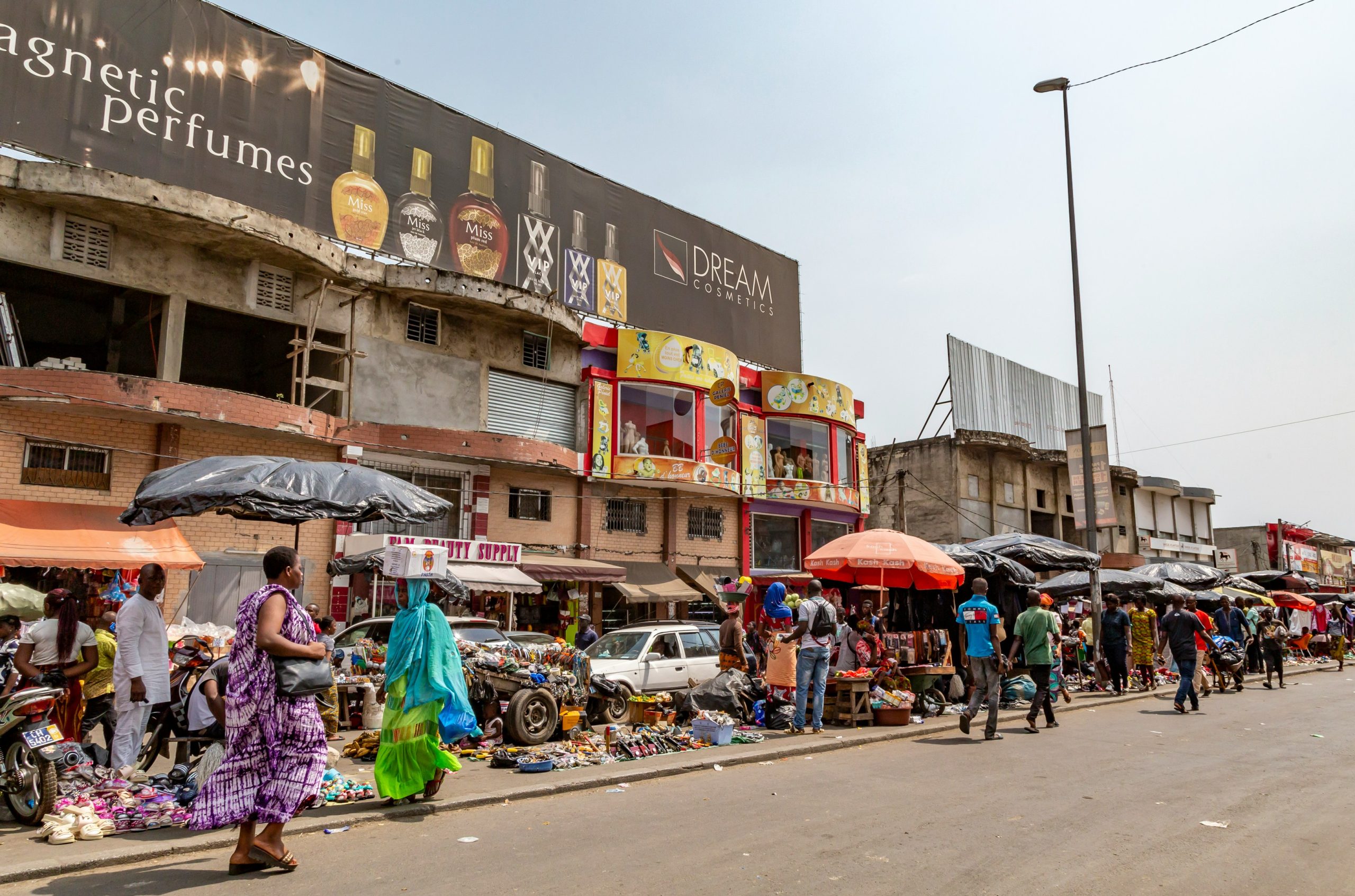
Côte d’Ivoire has become the financial anchor of Francophone West Africa. The country contributes 40% to WAEMU’s GDP and has sustained growth close to 6% for over a decade. Inflation is moving toward the regional target, and public finances remain stable. For investors tired of volatility elsewhere, Abidjan has become the default base.
Policy supports that position. In 2025, the government announced a 450 billion CFA franc ($800 million) innovation fund, alongside an additional $550 million in US-backed commitments. Digital public infrastructure has moved into active use. The e‑Impôts tax and e‑invoicing platforms are central to efforts to increase revenue collection and demonstrate that the state can act as a reliable anchor customer for digital services.
Agriculture strengthens the case. Côte d’Ivoire produces 40% of the world’s cocoa. Supply chain digitisation, including farmer identification and traceability, is generating usable data across millions of producers. That data allows agri-fintech lenders to price credit based on real output.
Djamo reflects the shift. The Abidjan-based fintech raised $17 million in 2025, the largest venture round in West African fintech. It serves over 1 million users, holds a microfinance licence, and is the country’s leading card issuer. Growth comes from payments and subscriptions, not incentives.
Larger institutions are following. Zenith Bank chose Côte d’Ivoire as its entry point into Francophone Africa in 2025, directing a significant share of its expansion capital to the market. For conservative institutions, that decision confirms where risk now feels manageable.
Morocco’s policy edge
In 2025, Morocco regained its ‘investment-grade’ status and recorded about 25% growth in foreign direct investment (FDI) the previous year. It remains the only African market combining sovereign investment grade with an active startup ecosystem.
The difference is execution. The government committed MAD 1.3 billion ($140 million) to startup support through grants, venture funding and technoparks, and launched a MAD 2.5 billion ($269 million) fund-of-funds to anchor local and foreign venture managers. Several international firms are expected to set up local teams. Through these initiatives, Morocco is aiming to support 1,000 startups by 2026 and produce up to two unicorns by 2030.
In 2025, Chari, the Moroccan B2B e-commerce platform, raised a $12 million Series A funding and became the first VC-backed Moroccan startup to receive a payment institution licence. It now serves more than 20,000 merchants with payments, transfers, and financial services, and is expanding into Francophone West Africa with a banking-as-a-service (BaaS) product.
Morocco’s appeal lies in predictability. For investors seeking African exposure with lower institutional risk, that clarity carries weight.
DR Congo is a tech frontier market
The Democratic Republic of Congo (DR Congo) remains one of the most operationally challenging markets on the continent, yet promising. Infrastructure is thin, logistics are costly, and governance risks are persistent. At the same time, the country’s scale is unmatched. Its population now exceeds 100 million. Internet penetration remains low (30.5%), and digital financial services are still early. That gap defines both the problem and the opportunity.
In October 2025, the government announced a $1.5 billion national digital development plan running through 2030. The programme combines public funding with external capital and focuses on fibre rollout, data centres, digital identity, and core public platforms. Despite plans to cap export quotas for 2026, mining revenues from cobalt and copper are expected to provide partial fiscal support, reducing dependence on concessional financing. In November 2025, Nomba, a Nigerian fintech last valued at $150 million, expanded to DR Congo, citing untapped opportunity and clear conviction in the market.
According to GSMA estimates, digital transformation could add CDF 9.8 trillion ($3.6 billion) to DR Congo’s GDP by 2029. In 2026, DR Congo will be a frontier bet within stable portfolios.
Why capital is moving now
Currency stability has become a competitive advantage. The CFA franc’s euro peg, once criticised, now protects dollar returns. Regulatory harmonisation across WAEMU reduces friction for regional scale. The interests of development finance institutions (DFIs) have increasingly converged around Sub‑Saharan Africa, including French‑speaking markets. At least five DFIs now allocate over 50% of their portfolios to SSA, with a further six allocating between 30–50%. Finnfund, Norfund, and British International Investment (BII), the Finland‑, Norwegian-, and British-based DFIs, all backed Wave in 2025. These institutions are co‑investing in the region and, in some transactions, taking junior or first‑loss risk tranches to crowd in private capital.
Sector focus has also deepened. Fintech remains dominant, but the emphasis has shifted to infrastructure, embedded finance, and B2B platforms, which will remain key sectors to watch, laying the plumbing for the growth of other frontier sectors, like climate finance, agri-finance, and logistics.
Crédito: Link de origem
Comments are closed.