

The Shadow of 2025 Africa’s Debt Maturity Wall
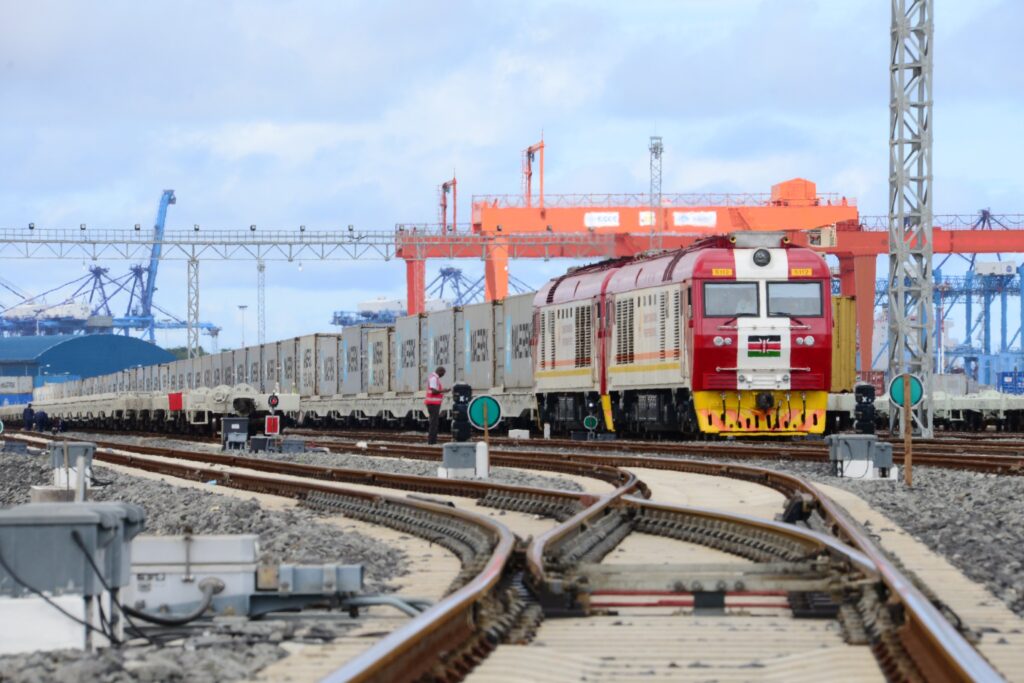
- In 2025, the harsh reality of Africa’s debt maturity wall reared its ugly head, leaving economies with scars of a decade of heavy borrowing. To navigate, some policymakers got tired of the U.S. dollar and came up with new ideas. China’s renminbi (yuan) rose quickly, and Kenya and Ethiopia led the way in debt swaps that turned dollar loans into RMB, cutting costs.
- By November, a “growing list” of countries, including Nigeria and South Africa, were looking into RMB trade settlements. This was a test of China’s plans to make the RMB the world’s currency on African soil.
- The dirham of the UAE also gained ground and became a bridge between the Gulf countries. Morocco and Egypt signed deals for renewable energy in dirhams, using sovereign funds that were full of oil profits.
As the sun set on 2025, Africa’s sovereign debt portfolio showed the scars of a decade of borrowing that was now hitting a huge “maturity wall.” This financial cliff, with over $10 billion in Eurobond payments due in the year, put policymakers and treasury officials in governments from the Sahel to the Cape to the test.
At first, it was a race for dollars to pay for infrastructure and the Covid-19 pandemic recovery. It, however, changed to a high-stakes chess game of restructurings, multilateral bailouts, near-defaults, and bold currency changes.
For some countries, smart diplomacy and knowledge of the market opened up new streams of capital. For others, however the debt maturity wall grew bigger, casting shadows of default and the need for austerity. This reckoning, which is happening at the same time as global rate cuts and geopolitical realignments, shows that a continent is slowly moving away from relying on the U.S. dollar and toward financing in other currencies including Chinese yuan, Japanese yen, and the United Arab Emirates’ dirham.
The Shadow of 2025 Africa’s Debt Maturity Wall
Years ago, the word “maturity wall or financial cliff” became part of Africa’s vocabulary. It made analysts and observers alike think of a huge wave of payments crashing down on weak economies. By 2025, the flood had come: sub-Saharan African countries had to pay back $10 billion in Eurobonds, which was a little less than the peak in 2024 but still a huge amount compared to GDP.
This wall was built during the low-interest 2010s, when oil-rich Angola and fast-growing Kenya entered international financial markets. It showed weaknesses that were made worse by the COVID-19 economic fallout, the Ukraine war’s commodity shocks, and a U.S. Federal Reserve rate hike cycle that made refinancing more expensive.
There was a lot of pressure in the Central African Economic and Monetary Community (CEMAC). A regional central bank’s liquidity injections, which were limited to XAF600 billion per week, and high funding needs were not enough to stop the flow completely. Yields on regional bonds rose sharply because people were worried about the effects of oil price volatility.
Wider studies showed a bleak picture: 21 African countries with low incomes were on the verge of going into debt distress, with over $1 trillion in external obligations. Climate change made the crisis worse, and weak economies such as those in the Horn of Africa had to pay a “climate debt premium” that raised borrowing costs by up to 1 per cent of revenue each year.
But 2025 was not a disaster for everyone. Proactive buybacks and restructurings broke down the wall a little bit. For example, Kenya bought back $1.5 billion in maturing bonds early, which helped lower its 2025–2027 repayment bulge from 1.7 per cent of GDP.
Namibia’s clean sweep—paying off a $750 million Eurobond all at once—was a rare example of fiscal discipline from Africa. But these moves hid deeper problems: resource-rich states like Angola took advantage of rising oil prices, while smaller economies struggled with service costs that were higher than foreign direct investment.
Africa’s Debt Restructuring and repayments: the good, the bad
Getting through payments required a lot of creativity, almost like improvisation. Eight African countries, led by Côte d’Ivoire and Benin, brought in $15.7 billion in new Eurobonds from January 2024 to early 2025. The yields on these bonds were often around 9 per cent, the highest in the world.
Fast forward in September, South Africa, the largest economy in Africa, redeemed $2 billion in bonds and then quickly looked for a market return to rebuild its reserves.
Debt swaps turned out to be a smart way around the problem as well. For instance, Côte d’Ivoire’s first “blue bond” exchange, backed by Paris-aligned guarantees, cut debt payments by 1 per cent in 2025, freeing up money for projects that make the coast more resilient. This wasn’t just greenwashing; it combined environmental concerns with financial relief.
The World Bank lauded policymakers in Abidjan for including resilience in Eurobond frameworks. At the same time, Angola. which hadn’t been on the market since 2022, made a big comeback in October, selling $1.5 billion in five- and ten-year notes at 9.5 per cent, its lowest yield in six years. This was possible because oil cartel OPEC+ production increases during the year helped boost oil revenues.
In contrast, the restructurings seemed to go on forever, like Sisyphean tasks. Zambia’s long story, which began in 2020, came to an end in 2024 when Eurobond holders finally signed a deal. However, problems with implementation in 2025 left refinancings in limbo.
Ghana had just defaulted on its own bonds in 2023, but it was hoping for a revival of its domestic bonds in late 2025. However, investors were still wary, as yields stayed above 10 per cent. These cases showed that the G20 Common Framework has problems, such as slow coordination between creditors and uneven participation from non-Paris Club lenders such as China, which has roughly 12 per cent of Africa’s external debt.
IMF Talks: Lifelines and Strings Attached
The International Monetary Fund (IMF) is the continent’s unwilling debt referee. In 2025, IMF programs grew to include 10 African countries that owed more than $20 billion in total. Senegal’s story made the news. A spending spree before the election found $11 billion in hidden debts, which made the public debt 132 per cent of GDP and stopped the approval of a $1.8 billion loan.
Cheikh Ndiaye, the finance minister, promised to pay back the money and talk, but Bank of America warned that an external moratorium was likely by mid-2026. The IMF’s visit in October predicted that the deficit would go down from 13.4 per cent to 7.8 per cent of GDP. However, critics said that austerity hurt social spending.
The IMF pushed for “debt stabilization” through tighter budgets and reforms to boost growth, but Africa’s Faustian bargain continued: loans came with cuts to subsidies and tax hikes that caused protests from Dakar to Addis Ababa.
According to UN estimates, Ethiopia was able to get an extension on its expiring facility, while 23 other countries were in trouble. In October briefings, the head of the Fund’s African Department talked about how inflation was going down, from 23 to 10 countries with double-digit rates. However, he also said that high-risk debtors such as Sudan and South Sudan need to be restructured.
For people in Africa, these talks are like a double-edged sword: they are important bridges over the maturity gap, but they also tie up sovereignty. As Trevor Manuel’s report joked, sub-Saharan Africa’s 5 per cent share of IMF votes is not in line with its 50 per cent share of loans. This is a colonial echo that calls for reform.
Success Stories: Going Back to the Financial Markets
In the middle of the gloom, 2025 crowned a number of comeback kings. Angola’s October splash wasn’t a one-time thing; nine countries used Eurobonds in 2024, and they were all oversubscribed three to five times, bringing in $38 billion.
Benin and Morocco were the best, with deals that made 8–10 per cent even though the Fed was cutting rates to attract yield-hungry investors. Nigeria, which had been on the sidelines for a long time, slowly came back with naira-denominated greenshoots. Tanzania’s February sukuk debut, its first Islamic bond, sent money to infrastructure without riba.
These successes came from a mix of strategies: IMF-backed reforms made the countries look better, and commodity tailwinds—gold for Ghana and cocoa for Côte d’Ivoire—helped them deal with shocks. The yield on Kenya’s 2028 Eurobond fell by 2 per cent to 8.3 per cent, which shows that the market is thawing.
For people outside of Africa, this revival shows that there is still untapped potential: According to the OECD, Africa’s corporate debt markets grew up when sovereigns stopped lending money and private credit and syndicated loans filled the gaps.
Countries in Danger: Trouble Ahead
Not every story ended with applause. The Economist counted 20 sub-Saharan countries that were in or near trouble, and 32 that were spending more on debt service than health care. Zambia’s economy shrank by 1.5 per cent during a drought, showing that it was still weak after restructuring. Senegal’s hidden bomb and Mozambique’s cyclone-ravaged finances were on the edge, with Egypt’s ($13 billion) and Angola’s ($4 billion) debts topping the list—ironically, Angola’s market return.
The IMF’s March report said that Chad, Ethiopia, and South Sudan were all “unsustainable” because climate costs made their vulnerabilities worse. External debt service reached $89 billion, which is twice as much as FDI, putting countries in a cycle of debt.
Diversifying Africa’s Debt Portfolio
In 2025, it seems policymakers got tired of the dollar and came up with new ideas. China’s renminbi (yuan) rose quickly, and Kenya and Ethiopia led the way in debt swaps that turned dollar loans into RMB, cutting costs. Kenya saved $215 million a year on its $3.2 billion Standard Gauge Railway debt, avoiding currency fluctuations as the yuan stabilized.
Ethiopia came next, negotiating swaps while owing a total of $28 billion, with 40 per cent of that going to Beijing. By November, a “growing list” of countries, including Nigeria and South Africa, were looking into RMB trade settlements. This was a test of China’s plans to make the RMB the world’s currency on African soil.
The dirham of the UAE also gained ground and became a bridge between the Gulf countries. Morocco and Egypt signed deals for renewable energy in dirhams, using sovereign funds that were full of oil profits. In 25 countries, external service took up 20 per cent of GDP, which led to changes. Dirham bonds had lower rates and followed Islamic law, with $5 billion issued across the continent.
The yen from Japan had a quieter role, with JICA loans for infrastructure in East Africa, but the amount was lower—$2 billion compared to the yuan’s $10 billion. This trio—yuan for volume, dirham for variety, and yen for niche—could mark the beginning of dedollarization, which will make U.S. policy less important in the years ahead. While critics say it will create new dependencies, but for treasuries that are short on cash, it’s practical poetry.
Making a More Stable Path on Africa’s Debt
As 2025 draws to a close, Africa’s debt journey leaves behind lessons that can be seen in balance sheets. Angola’s return and Kenya’s swaps show that being flexible pays off, while Senegal’s problems show that being open is important. As we enter into 2026, analysts could expect more diversification, and debt negotiations as economies craft avenues to withstand economic storms.
Read also: Africa’s economic growth stalls amid debt crisis, education reforms key to inclusivity
Crédito: Link de origem
Comments are closed.