

South Sudan’s 12 years of unpunished massacres
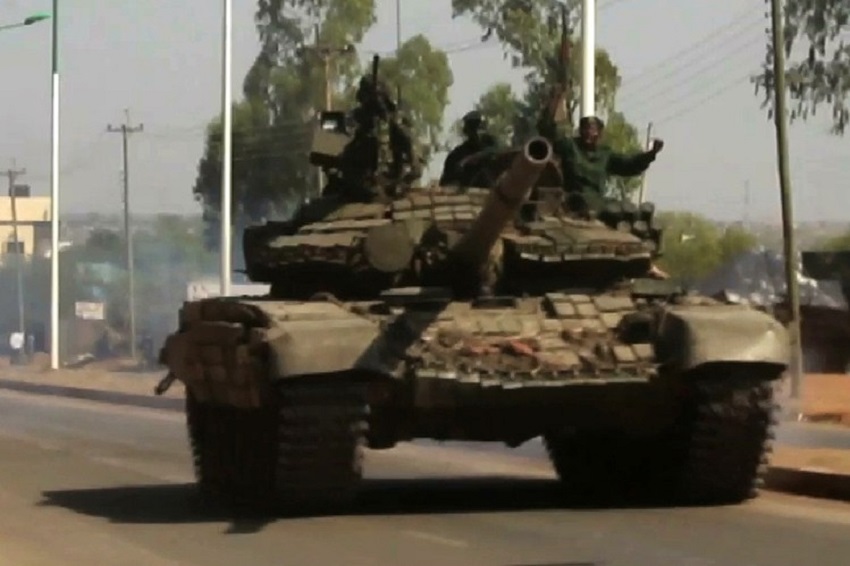
JUBA – South Sudan today – December 15, 2025 – marks twelve years since fighting erupted in the capital, Juba, triggering a civil war that spiraled into ethnic violence, starting with the mass killing of Nuer civilians in government-controlled neighborhoods and followed by retaliatory attacks against Dinka communities in Nuer-majority areas of the Upper Nile region.
The violence, which started inside the presidential guard barracks, located south of the capital Juba, spread within hours across the city before engulfing Jonglei, Upper Nile, and Unity states, setting the stage for a civil war that would change the political and security landscape of the world’s youngest nation for the next twelve years.
The December 2013 killings triggered one of the region’s largest displacement crises in its post-independence era. An estimated 400,000 South Sudanese were displaced internally, with hundreds of thousands seeking refuge in UN protection sites. Others crossed borders into Uganda, Kenya, Ethiopia, and Sudan, forming communities of long-term refugees.
Successive political agreements — from the 2015 peace deal to its 2018 revitalized version — sought to end the fighting, and bring justice to victims of the violence, but implementation faltered due to renewed clashes, splintered armed groups, and deep mistrust among communities, especially the Nuer and the Dinka ethnic group who have dominated South Sudan’s politics since independence.
Twelve years on, the legacy of those early massacres continues to shape South Sudan’s fragile transition. Survivors and community leaders say promised reconciliation mechanisms remain unrealized, while the proposed Hybrid Court, intended to address serious crimes committed during the war, has yet to be established.
Civil society leaders – including prominent activist Edmund Yakani – warn that the absence of accountability has allowed wartime narratives to harden, fueling local conflicts from Upper Nile to Western Equatoria and undermining confidence in the national peace process.
This story revisits what unfolded in Juba and across the states in December 2013 through the eyes of soldiers, survivors, and community leaders. It examines how political leaders have struggled to confront one of the darkest chapters in the country’s history — and why, despite repeated commitments, South Sudan has yet to fully reckon with the violence that continues to shape its politics, its armed movements, and its collective memory.
Fighting at the presidential guard barracks
At around 9:00 PM, South Sudan’s local time, gunfire erupted at the presidential guards. There are contradicting accounts of what happened. One of the versions of that story is that President Salva Kiir Mayardit ordered then presidential guards commander Marial Chinuong to disarm the ethnic Nuer components of the presidential guards unit, also known as “Tiger Battalion.”
Before the implementation of this order, Marial reportedly informed then SPLA Chief of Staff (army chief), James Hoth Mai – an ethnic Nuer – of the presidential order, which Hoth advised Marial to implement by disarming the entire battalion.
However, after disarming the entire battalion, Marial reportedly rearmed the ethnic Dinka components of the battalion, sparking panic among the Nuer components of the battalion who then attacked the guard in charge of the gun and ammunition store and to break into the story and rearmed themselves. This group was led by Colonel James Lok Tang Raet, a Leek Nuer commander from Rubkona County.
This resulted in armed confrontation at about 9:32 PM and went on before another fight broke out at the SPLA headquarters in Bilpam, also along ethnic lines. The Nuer officers who rebelled at the Tiger division fought until the next morning, December 15, 2013, as well as those who also fought in Bilpam.
Earlier in the day on Sunday, a national convention session of the Sudan People’s Liberation Movement (SPLM) was ongoing to select a candidate for the ruling SPLM party to lead the party for elections slated for 2015 at the time.
One account is that then former Vice-President and deputy chair of the party Riek Machar along with suspended secretary-general Pagan Amum alongside others boycotted the meeting, allegedly because they were being attacked by those loyal to Kiir and as such Kiir was ill advised that they were planning for a coup.
Machar stayed at his residence in central Juba until Monday, December 16, 2013, at his residence and left to flee on fears of him being arrested. One eyewitness, Raet Dak Thoan, who spoke to Sudans Post this week said he met Machar outside Juba on their way towards Terekeka through their arrival in Mangala, Jonglei’s Bor and deep into territories of the Lou Nuer in Greater Akobo.
According to his accounts, Machar was provided with three vehicles by then Central Equatoria State governor Clement Wani Konga, which he used to travel through the jangles of Central Equatoria from the bush northwest of Juba, through Jebel Lado to Terekeka County where he used a boat provided by Nuer businessman Matai Ruea to cross to Central Equatoria State’s Mangala Payam where he met Nuer SPLA officers on December 18 and from where he contacted the then 8th Infantry Division commander of the SPLA Maj. Gen. Peter Gatdet Yaka.
He said Machar’s escape unfolded under constant pressure, with fighting cutting off normal routes out of the capital and forcing the group to move through bush and dry riverbeds to avoid detection.
“After we were overwhelmed, we were dislodged into the bush,” he said. “From that point on, we were only aware of our own team and relied on ourselves.”
He said Machar emerged from hiding late on December 16 and began coordinating the withdrawal in person, signalling a shift from evasion to organised flight.
“At around 4:00 p.m., Riek Machar returned from where he was hiding near a khor and sat under the mango trees at Kurjik,” the witness said. “By the evening, he crossed to the other side of the khor and told us to wait for the Tiger Battalion deserters.”
The door-to-door killings of ethnic Nuer civilians
The fighting in the barracks on Sunday night and Monday morning quickly gave way to targeted ethnic violence across Juba. Following the disarmament and subsequent rearming, the violence spilled out, resulting in the systematic killing of hundreds, and ultimately thousands, of ethnic Nuer civilians by government forces and allied militias. Accounts from multiple sources detail house-to-house searches where Nuer men and boys were rounded up, taken to detention centers, or executed on the spot.
One of the most widely reported and horrific incidents occurred at the Gudele Police Station and the Jebel area, where a large number of Nuer men were allegedly executed after being detained.
While precise figures remain disputed due to the lack of an official investigation, reports from the African Union Commission of Inquiry (AUCISS) and the UN Mission in South Sudan (UNMISS) indicate that at least 300 to 400 civilians were killed in the initial days of the violence in Juba alone, with some estimates placing the total casualty figure in Juba in the thousands. The violence was characterized by an ethnic dimension, with Nuer civilians being deliberately targeted.
As a result, hundreds of thousands of civilians, overwhelmingly Nuer, fled in terror, seeking sanctuary wherever they could find it. The most immediate and significant destination was the UN Protection of Civilians (PoC) sites.
The UNMISS bases became islands of relative safety in a sea of violence. Hundreds of thousands of South Sudanese sought refuge in these sites, fearing for their lives if they remained outside. Today, twelve years later, thousands still remain.
One Nuer survivor, still residing in the UN PoC camp in Juba, stated that he cannot return home because it is unsafe for Nuer people to do so. He emphasized that the residents of the camps did not choose to stay, but were forced to remain due to ongoing security threats. He expressed the deep mistrust felt by his community toward the government, saying, “The government doesn’t know their real enemy, but only collectively considers the Nuer as ‘rebels’.”
The leader of the Bentiu, Nasir, Fangak, Akobo (BNFA) Nuer Community organization, Chuol Ker, called for reconciliation in an interview to Sudans Post. He said the Nuer community has forgiven, something he said is necessary for the country to move forward past the past wrongdoing because the country cannot move forward without reconciliation.
The White Army attack on Bor
Following the outbreak of violence in Juba, fighting rapidly spread to other states. One of the most critical and brutal phases occurred in Jonglei State’s capital Bor.
The defection of the Division 8 Commander, Maj. Gen. Peter Gadet, to the opposition was a major trigger. Bor, which had fallen to opposition forces, became the target of a massive counter-offensive from the Nuer-dominated group community defense group known as the “White Army.”
In late December 2013 and early January 2014, thousands of armed youths, often referred to as the White Army, mobilized, predominantly from the Lou Nuer and Gawaar communities of Jonglei State, and marched toward Bor. Their stated objective was to “protect” their people and fight the government. On December 31, 2013, the White Army, accompanied by defected SPLA soldiers, captured Bor from government forces.
The fighting in and around Bor was marked by extreme brutality and massacres of Dinka civilians by the White Army. The UNMISS Bor compound itself was breached, and threats were made against the civilians sheltering inside. A UN peacekeeper was killed in Bor.
The subsequent back-and-forth fighting over the town—which changed hands multiple times—resulted in the widespread destruction of infrastructure and the displacement of virtually the entire population. The massacres committed by the opposition forces in Bor, targeting Dinka civilians, mirrored the atrocities committed against Nuer civilians in Juba, further cementing the conflict’s ethnic dimension.
Fighting also broke out in Bentiu, the capital of Unity State, where the division commander, General James Koang Chuol, declared loyalty to Machar and named himself the state’s military governor on December 19. On December 24, fighting broke out in Malakal, the Upper Nile state capital and attacks on UN compound in Nasir was reported where a peacekeepers was killed.
Refugees and internally displaced persons
The scale of the conflict’s displacement has been staggering. The initial conflict and subsequent cycles of violence have displaced over 2.3 million South Sudanese into neighboring countries, making it one of the world’s largest refugee crises. The vast majority fled to Uganda (which hosts the largest number), Sudan, Ethiopia, and Kenya.
Inside South Sudan, there are still over 2.2 million people who remain internally displaced. The largest concentration is in the capital, Juba, where camps like the PoC site (now known as a ‘Juba IDP camp’ under government control) continue to host tens of thousands of civilians, including victims whose homes have been stolen and those who survived the violence.
Significant displaced camps remain in Juba, Bor, Malakal, and Bentiu. These camps mostly hosted the Nuer community. While the UN has formally handed over the administration of these sites to the government, most people who spoke to us have said they still do not have confidence in the security situation in South Sudan.
Dak Maet Jal, a survivor and a displaced person living in the Juba camp said he cannot return home because the situation is not safe for the displaced people to return to their homes, saying the government doesn’t provide protection.
“The reason people live in IDP camps is not because they choose to. Every individual feels unsafe. The country remains insecure because Nuer civilians are still collectively viewed by the government as rebels,” he told Sudans Post in an interview.
“The government does not distinguish between its real enemies and civilians. Whether you are a civilian, a soldier, a woman, a child, or an elderly person, you are treated as a rebel simply for being Nuer. That is why civilians remain in IDP camps, particularly the Nuer. Nobody chooses to live in an IDP camp. It is a situation where, wherever you go, you are left responsible for your own security,” he added.
A history of failed implementation and renewal
The initial attempt to halt the civil war was the Agreement on the Resolution of the Conflict in the Republic of South Sudan (ARCSS), signed by the parties—the SPLA-IO led by Riek Machar and the SPLM-IG led by Salva Kiir—in July and August 2015, respectively. This comprehensive deal aimed to establish a transitional government and implement security sector reforms.
It briefly brought Riek Machar back to Juba as the First Vice President in April 2016. However, the agreement was critically fragile, lacking a solid foundation of trust and political will. It faltered in a matter of months, culminating in renewed heavy fighting at the Presidential Palace (J1) and elsewhere in Juba in July 2016. The clash ended in Machar’s second flight, where he trekked through the jungles of Equatoria to the DR Congo, marking the complete of the ARCSS.
Two years after the failure of the ARCSS, a new, revised version known as the Revitalized Agreement on the Resolution of the Conflict in the Republic of South Sudan (R-ARCSS) was signed in September 2018 under the auspices of the Intergovernmental Authority on Development (IGAD).
This agreement was intended to address the shortcomings of the first deal and included a more detailed roadmap for security arrangements and constitutional and institutional reforms. It brought Riek Machar, now in detention and trial, back into the government for a second time as First Vice President.
Crucially, both the ARCSS and the R-ARCSS provided for three key transitional justice mechanisms to address the violence and lay the foundation for future peace. These are the Hybrid Court for South Sudan (HCSS) (An independent court established by the African Union to try individuals responsible for serious crimes committed during the conflict), the Commission for Truth, Reconciliation, and Healing (CTRH) (A mechanism focused on documentation, dialogue, and healing for victims and communities) and the Compensation and Reparation Authority (CRA), An body intended to provide redress and compensation to victims of the conflict.
However, despite these detailed commitments, the parties have consistently reneged on the full implementation of the agreement, particularly on the formation of the transitional justice institutions. The establishment of the Hybrid Court, a key demand for victims and a necessary tool for accountability, has been indefinitely delayed, allowing the cycle of impunity to persist and undermining public confidence in the entire peace process.
The agreement itself is now under the threat of collapse following the fighting in Nasir in March and the subsequent house arrest and trial of Riek Machar. This ongoing political instability and the failure to complete the unification of forces and enact permanent constitutional reforms threaten to derail the current transitional period, which is meant to conclude with democratic elections, and risks plunging the nation back into widespread conflict.
Crédito: Link de origem
Comments are closed.