

Opportunity Africa and the work of a continental voice
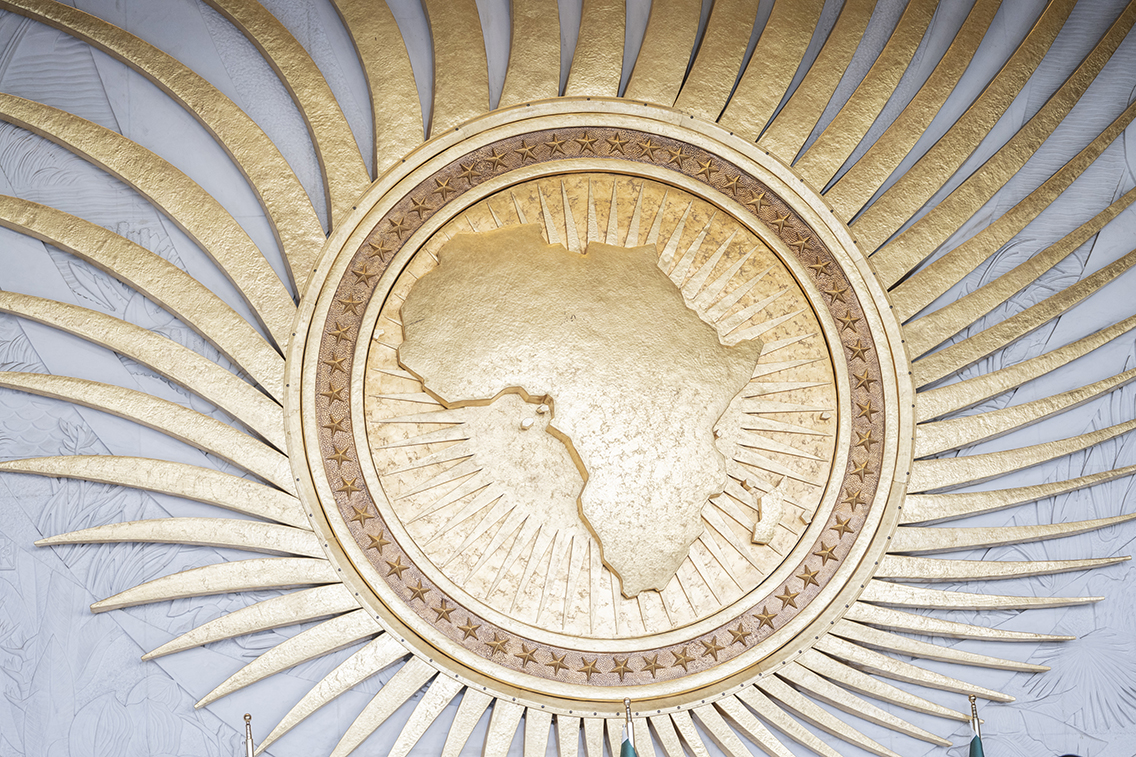
In early December, discussions at the African Union brought focus to an issue Africa can no longer treat as peripheral. A continent of this scale cannot rely on a fragmented narrative. In a world where perception increasingly shapes power, those who do not define themselves are defined by others. Working from the seat of Africa made that reality impossible to ignore.
Opportunity Africa is a developing effort to bring coherence to how Africa presents itself to its citizens and to the world. The continent’s cultural, economic and intellectual influence is already global, and investor interest in Africa is real and growing. Capital is actively looking for opportunities across the continent. The challenge is not demand. It is clarity. Too often, Africa is still reduced to a single, flattened story that hides complexity and obscures where opportunity truly lies. That is no longer a communications issue. It is a strategic weakness.
Global dynamics are shifting rapidly. Capital is being reassessed. Supply chains are being redesigned. Influence is more contested. Regions that organise their voice gain leverage. Those who do not are judged through outdated assumptions. Investors are not asking whether to engage with Africa. They are asking how. A reductive narrative makes that question harder to answer than it needs to be.
Africa’s youth sit at the centre of this moment. With the youngest population in the world, the continent is already being reshaped by young people building businesses, influencing culture, driving civic participation and redefining ambition. Yet the dominant global story about Africa rarely reflects the seriousness of its contribution or the scale of its expectations. When narrative lags reality, the cost is carried by the very generation expected to carry Africa forward. Any credible continental voice must place youth at its core, not as symbolism but as substance.
I was at the AU with Thebe Ikalafeng, a leading authority on African brand leadership, Moky Makura of Africa No Filter, and other skilled African storytellers who have worked for years inside the continent’s institutions, markets and civic spaces. As practitioners, we offered our time and insights to help frame the early architecture of a continental narrative approach. The work was practical, disciplined and grounded in lived experience rather than theory.
My own work across African brands, governments and the humanitarian sector over three decades shaped the perspective I brought into those discussions. Years of advising leaders, navigating crises and shaping national and institutional narratives have reinforced one lesson. Communication influences legitimacy, investment and trust. It is not cosmetic. It is structural.
The African Union deserves credit for how it engaged. Officials approached the discussions with seriousness and intent. There was a clear recognition that Africa’s story requires structure, consistency and long-horizon thinking. There was also an understanding that a continent undergoing such rapid demographic and economic change cannot rely on episodic storytelling. A steady voice is not optional. It is infrastructure.
The conversations were anchored in fact. Africa produces excellence across sectors, yet the narrative surrounding the continent remains uneven. This imbalance affects investor confidence at a time when global capital is being repositioned. It weakens diplomatic leverage in an increasingly contested international environment. It shapes how African citizens, particularly young people, interpret legitimacy and progress. Narrative does not sit on the margins of power. It shapes outcomes.
The experience in the room was deep. Communication, policy, crisis response, development and brand leadership across multiple African contexts informed the work. There was immediate alignment on one point. Africa does not need another slogan. It needs a coherent framework that reflects its scale, its diversity and its ambition. Without that, even Africa’s successes struggle to travel far enough.
The world already feels Africa’s presence. Our artists shape global culture. Our athletes set world standards. Our thinkers influence debate. Our entrepreneurs build businesses that respond to real needs. Our diaspora leads across professions and sectors. These are not isolated achievements. They point to a continent whose influence is already significant. What remains missing is a continental narrative capable of linking these realities with clarity and consistency.
Opportunity Africa seeks to address that gap. It is a long-term effort to align Africa’s presence with Africa’s real value. It asks us to move beyond national silos, to recognise young Africans as central actors in the continental story, and to present Africa with confidence in a world that is changing quickly.
The work at the African Union in December demonstrated that the capability exists and the commitment exists. Institutional leadership engaging seriously with experienced African storytellers provides the right foundation. What follows must be disciplined, collective and sustained.
Africa is entering a decisive period. Demographics, geopolitics and global economic patterns are shifting at once. In this environment, continents that speak with clarity shape their future. Those that do not are spoken for.
Opportunity Africa is about ensuring Africa speaks for itself. With accuracy. With confidence. And with intent.
Crédito: Link de origem
Comments are closed.