

Addicted to hollow words – New African Magazine
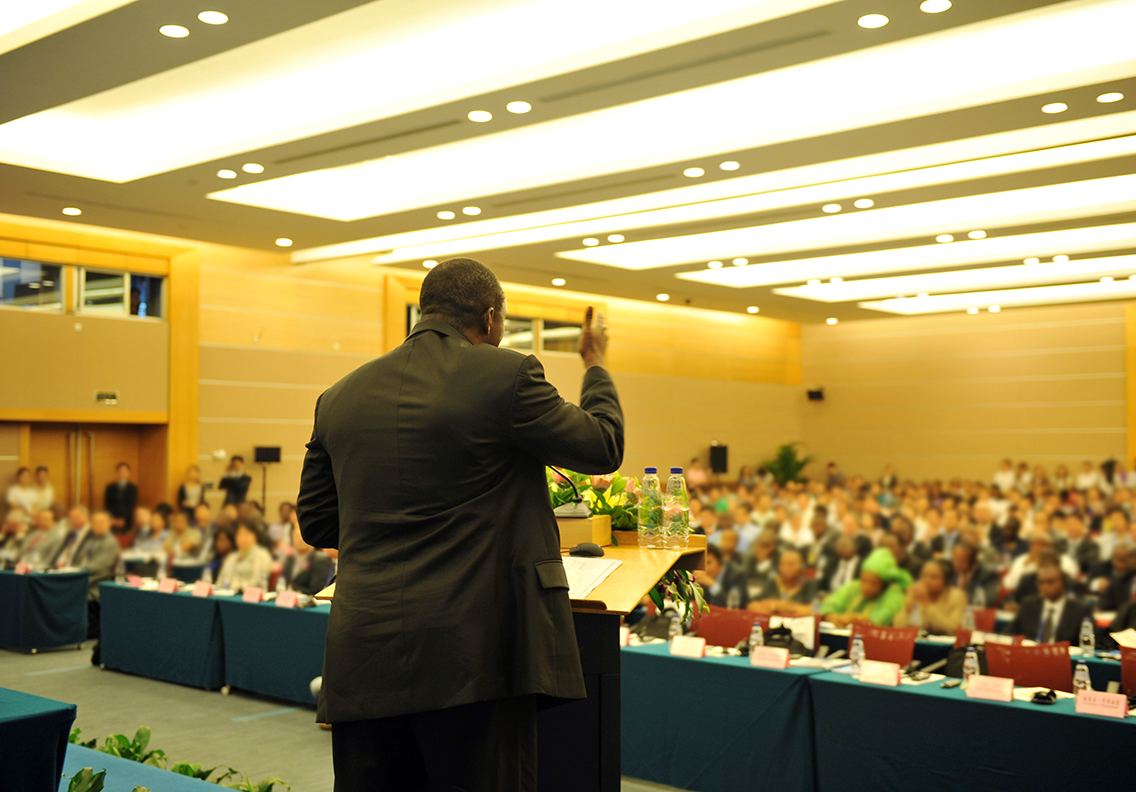
We Africans are very engaged in talking up Africa at conferences and in the media, but do we actually measure the implementation of all those high-sounding ideas?
Right now, somewhere in the world, there’s probably a conference about Africa happening – or about to begin.
We’re in a golden age of conferences, forums, summits and roundtables, where conversation seem to be a priority for the decision makers driving Africa’s development agenda.
The themes rarely change, and the protagonists repeat the same well-worn pro-Africa phrases: ‘Africa is open for business’; ‘Africa has the world’s youngest population’; ‘Six of the ten fastest-growing economies are in Africa’; ‘By 2050, one in four people on earth will be African’.
The statements are true and they sound hopeful, but they lack the substance to make them really meaningful. And more importantly, the narrative they put out, is one of a continent that’s full of potential and possibility, but somehow never quite crosses the finishing line.
Maybe it’s the headlines proclaiming ‘new partnerships’, ‘new investments’, ‘new deals’, as if the continent resets to zero after every new deal. It’s hard to find the follow-up stories once the signing ceremonies are done. It seems no one is interested in the number of people who benefit.
Take the African Continental Free Trade Area (AfCFTA) – the single most significant initiative to come out of the continent in years. I don’t hear much talk about the number of businesses scaling regionally, or the amount of transactions using the Pan-African Payment and Settlement System (PAPSS).
This is not to say there is no progress. The challenge is that we seem unable to articulate the effect these initiatives are having – at best our evidence is anecdotal – and we don’t centre impact in our conversations.
Perhaps we have forgotten in the midst of the on-stage applause, that development demands not only funding and partnerships but also stories that count and sharing what has been achieved.
Imagine if the media spoke of progress on their pages and every major African conference included a ‘progress session’ – a space where high-profile speakers reported back on what they achieved since the last gathering.
Measuring achievement
Imagine if they were grilled on the kilometres of road built, megawatts of power connected, trade volumes increased and startups scaled. Because progress to ordinary citizens is when a mine worker in Zimbabwe can feed his family and send his children to school on his income; when a Nigerian manufacturer can sell goods to Zambia without weeks of customs delays; or when a rural household in Malawi can have electricity for 24 hours in a day.
So next time you hear someone at one of these conferences saying ‘Africa is rising’, ask them to specify which African leaders are holding it up and how.
When you hear them say ‘Africa has the world’s youngest population’, ask them to talk about the exact number of academic and vocational institutions they are building to transform the youth into assets for their countries.
When they talk about the ‘fastest-growing economies in Africa’ ask them to highlight the infrastructure they have built and the enabling policies they have passed to allow local businesses to grow.
When they say ‘Africa is open for business’, push them on which countries have moved up the Ease of Doing Business index and which companies have grown market share.
When they say ‘by 2050, one in four people on earth will be African’, ask them to share the number of new homes that have been built and the food security initiatives in place to support the numbers.
The next time we gather at a grand hotel to discuss Africa’s future, let’s ask a simple question: what did we do since we last met?
Because until Africa measures its own success, the story of its failure will keep defining it.
Crédito: Link de origem
Comments are closed.