

Along the Gold Road: Medieval Africa, Global Power, and Mali’s Enduring Cultural Legacy

The Africa-America Institute’s “Following the Gold Road” online conference starting Jan. 14 and Afropop’s “Mali Gold” Playlist
This story is written and edited by Afropop Worldwide
We’re pleased to announce the launch of the Africa-America Institute’s State of Education 2026 Conference – “Following The Gold Road–Global Medieval Africa in the Time of Ghana, Mali, and Songhai.”
This exciting, free online conference, launching this month, spans 1,400 years of fascinating, under-recognized history created by our colleagues at AAI in partnership with Howard University’s Center for African Studies and Boston University’s African Studies Center. We go back to a time when Mansa Musa, the 14th Century king of the fabulously wealthy, gold-based Malian Empire, was the richest ruler on earth, and a world historical figure.
Accompanying “Following the Gold Road” is the music playlist Mali Gold curated by Banning Eyre for public radio’s Peabody Award-winning Afropop Worldwide (found on afropop.org). This is an expansive playlist of iconic hits from the golden age of Malian music, from the 1980s onwards, featuring beloved artists such as Salif Keita, Ali Farka Touré, Oumou Sangaré, Toumani Diabaté, Habib Koité, Kandia Kouyaté, the Super Rail Band and more.
“Following the Gold Road” is a three-part lecture series presented on January 14, 21 and 28. It features leading U.S.-based scholars of African history and anthropology, targeting K-12 educators as well as all interested others. It explores the medieval West African empires of Ghana, Mali and Songhai (6th–16th centuries). The program reframes global medieval history by centering Africa’s essential role in the world economy through its prized resource—gold—and by spotlighting its contributions to art, architecture, learning and governance.
This 2026 edition of AAI’s State of Education Conference explores the centrality of ancient West African empires to the global economy. AAI says that while The Gold Road is especially useful for educators, it is a free conference open to the public, inviting all who are interested to participate. You can register here.
AAI’s annual Education Conference continues a legacy, since its founding in 1953, as the leading education and opportunity bridge between Africa and the U.S. providing over 23,000 scholarships and fellowships to African students who have gone on to become presidents of their countries, heads of ministries, academics, educators, a Nobel Prize winner, leaders in business and civil society and more. None other than Barack Obama Senior was an AAI scholar, so we have AAI to thank for President Barack Obama!
Virtual Conference Sessions:
JANUARY 14, 2026: Geography, Technology and Governance
West African societies harnessed key geographic features—such as the Niger River and Saharan trade routes—and innovations like iron smelting and gold mining to build powerful and enduring states. Dr. Gomez’s distinguished scholarship on African political thought and state formation will help illuminate how geography and technology shaped enduring traditions of leadership and governance across West Africa.
Featuring:
Dr. Michael Gomez, Silver Professor of History and Middle Eastern & Islamic Studies and Founder of the Association for the Study of the Worldwide African Diaspora (ASWAD).
Dr. Madina Thiam, Fannie Gaston-Johansson Assistant Professor of Africana Studies and History at Johns Hopkins Krieger School of Arts and Sciences.
JANUARY 21, 2026: Gold, Power, and Global Trade Networks
Gold lay at the heart of the great West African kingdoms of Ghana, Mali, and Songhai—fueling trans-Saharan trade, drawing global interest from Europe and the Islamic world, and affirming Africa’s central role in the medieval global economy. Its legacy also set the stage for subsequent European colonization and the transatlantic slave trade. The conversation will illuminate how the historic Gold Road continues to shape patterns of wealth, power and exchange in the contemporary global economy.
Featuring:
Yinka Adegoke, Editor at Semafor Africa.
Sarah Guérin, Associate Professor of History of Art at the University of Pennsylvania.
JANUARY 28, 2026: Ajami Manuscripts & Knowledge Production in West Africa
Medieval West Africa achieved remarkable knowledge and literacy, flourishing on trans-Saharan trade routes and embracing Islam as a cultural force. Despite this astounding history, for centuries, sub-Saharan Africa has been misunderstood as a largely illiterate region due to a Eurocentric definition of literacy as only the ability to read and write in European languages using the Latin script. However, millions of Africans have been reading and writing in both classical Arabic and their local languages, often using enriched forms of the Arabic script known as Ajami. This discussion invites scholars, educators, students and the public to discover what can be learned from studying Ajami texts produced during this period of Africa’s history.
Featuring:
Fallou Ngom, Professor of Anthropology at the College of Arts and Sciences, Boston University.
Dr. Gana Ndiaye, Assistant Professor of Ethnicity, Race and Migration at Yale University
Click here to register for the free web sessions:
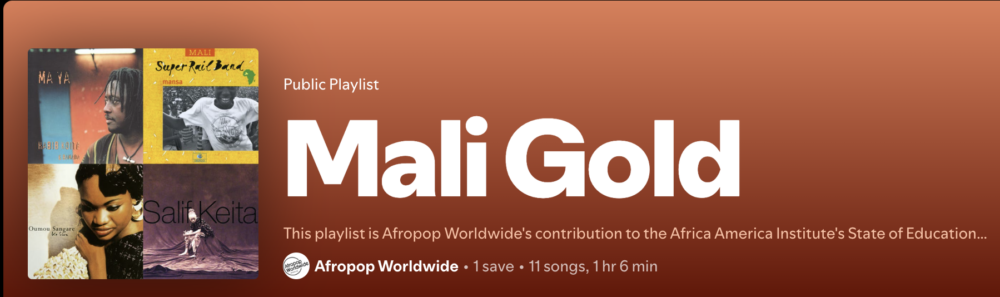
Afropop Worldwide (afropop.org) is delighted to collaborate with the Africa America Institute to create our Mali Gold playlist to complement “Following The Gold Road.”Mali truly enjoyed a golden age of music from the 1980s to modern times. Mali Gold features iconic hits by legendary Malian artists Salif Keita, Oumou Sangaré, Ali Farka Touré (RIP), the Rail Band, Habib Koité, Toumani Diabaté, Lobi Traoré, Amadou & Mariam, Bassekou Kouyaté, Kandia Kouyaté, and Baba Salah.
Peabody Award-winning Afropop Worldwide, hosted by broadcast legend Georges Collinet from Cameroon and launched by NPR in 1988, was the first national-distributed broadcast platform for contemporary African and diaspora music. We have done original research and recording in 50 countries in Africa and the diaspora, including producing numerous radio and web reports from and about Mali. Afropop has profiled all the Malian artists in the playlist, produced the acclaimed film “The Festival in the Desert: The Afropop Tent Sessions” about the legendary festival in the desert outside Timbuktou, Mal.i in 2003. The Afropop Hall of Fame event series has honored the continent’s greats at festive public events. Afropop has also produced highly popular Afropop Music Tours to Africa in locations from Senegal to Cuba and Madagascar. The Founder of Afropop Worldwide is Sean Barlow. The Co-Founder is Banning Eyre.
For over seven decades, the Africa America Institute has bridged Africa and its diaspora to catalyze a more sustainable and equitable world. Taking a transcontinental, multifaceted approach, their programs span across four impact pillars: Liberatory Education, Community Building, Global Healing and Repair, and Economic Sovereignty. Since their founding in 1953, over 23,000 Africans have received AAI scholarships and fellowships. Included in this community are H.E. Cyril Ramaphosa, President of the Republic of South Africa; H.E. Alassane Ouattara, President of the Republic of Côte d’Ivoire; H.E. Nangolo Mbumba, President of the Republic of Namibia; the late Nobel Prize wnner Dr. Wangari Maathai; Phumzile Mlambo-Ngcuka, former United Nations Under-Secretary- General and Executive Director of UN Women; Strive Masiyiwa, Founder & Executive Chairman, Econet Wireless; scholar Barack Obama Senior, and thousands more.
Afropop Worldwide’s 2010 program “Mali—Ancient Empires to Multi-cultural Democracy” featuring Professor Cherif Keita.
In this Afropop program, Professor Cherif Keita expertly guides us through the early history of Mali—including hunters’ societies and their music, griot families and their music, the rise of Sundiata Keita, the 13th Century founder of the Mali Empire—up until the end of the 20th Century, before the destabilizing events that began in 2012. The program features many of the country’s greatest artists including Salif Keita, Ali Farka Touré, Toumani Diabaté and others. A Malian himself, Cherif Keita teaches Francophone literature from Africa and the Caribbean at Carlton College in Minnesota. “Mali—Ancient Empires to Multi-cultural Democracy” is part of our Hip Deep series-within-a-series funded by the National Endowment for the Humanities for fourteen years. The series features the research, insights and interviews from leading scholars and authors of African and diaspora studies. The program was produced by Banning Eyre.
NOTE: You can go to afropop.org and search on “Mali” and you’ll get hundreds of results—radio programs, podcasts, interviews, features, photo essays, videos and more. Happy exploring!
Here’s more on the artists featured in the radio program and Mali Gold playlist:
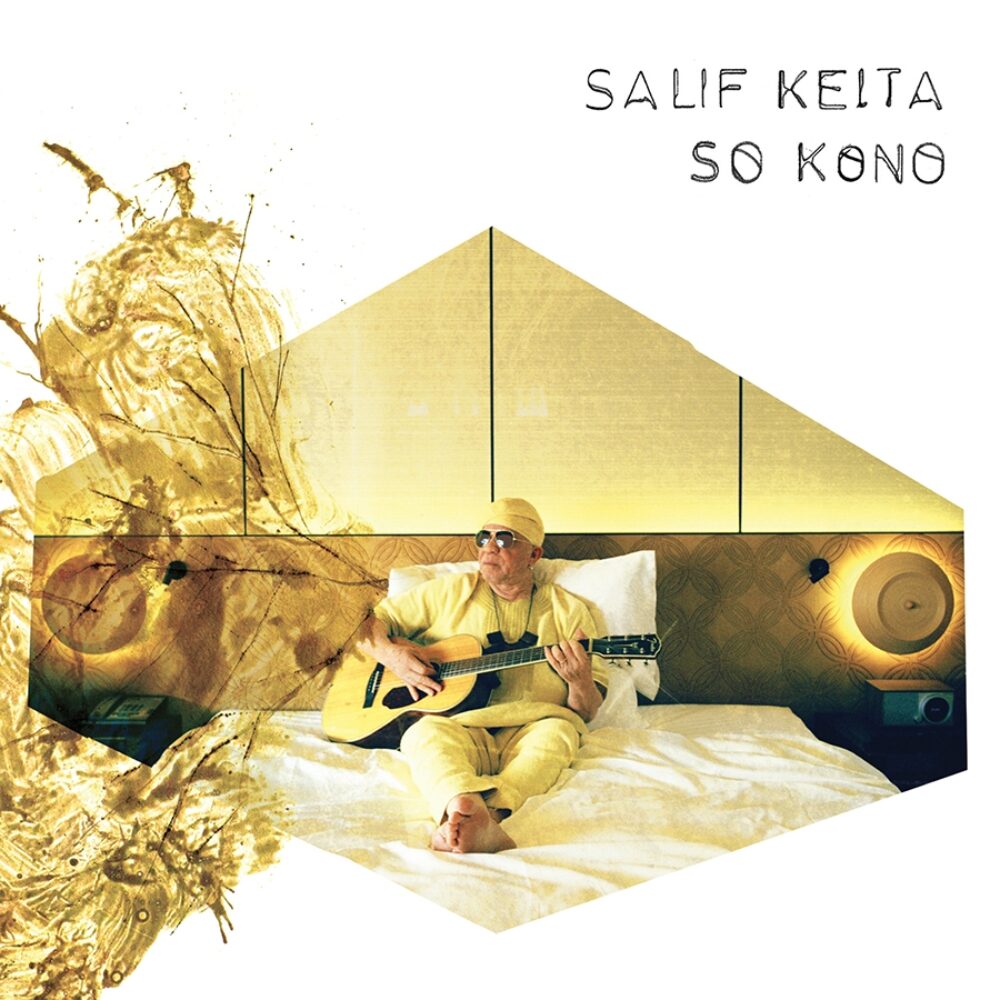
Revered as “The Golden Voice of Africa”, singer and composer Salif Keita came from a noble family where musical careers were forbidden. An early singer in the legendary Rail Band de Bamako (founded in 1970), Salif has gone on to a prolific career in recording and international touring.
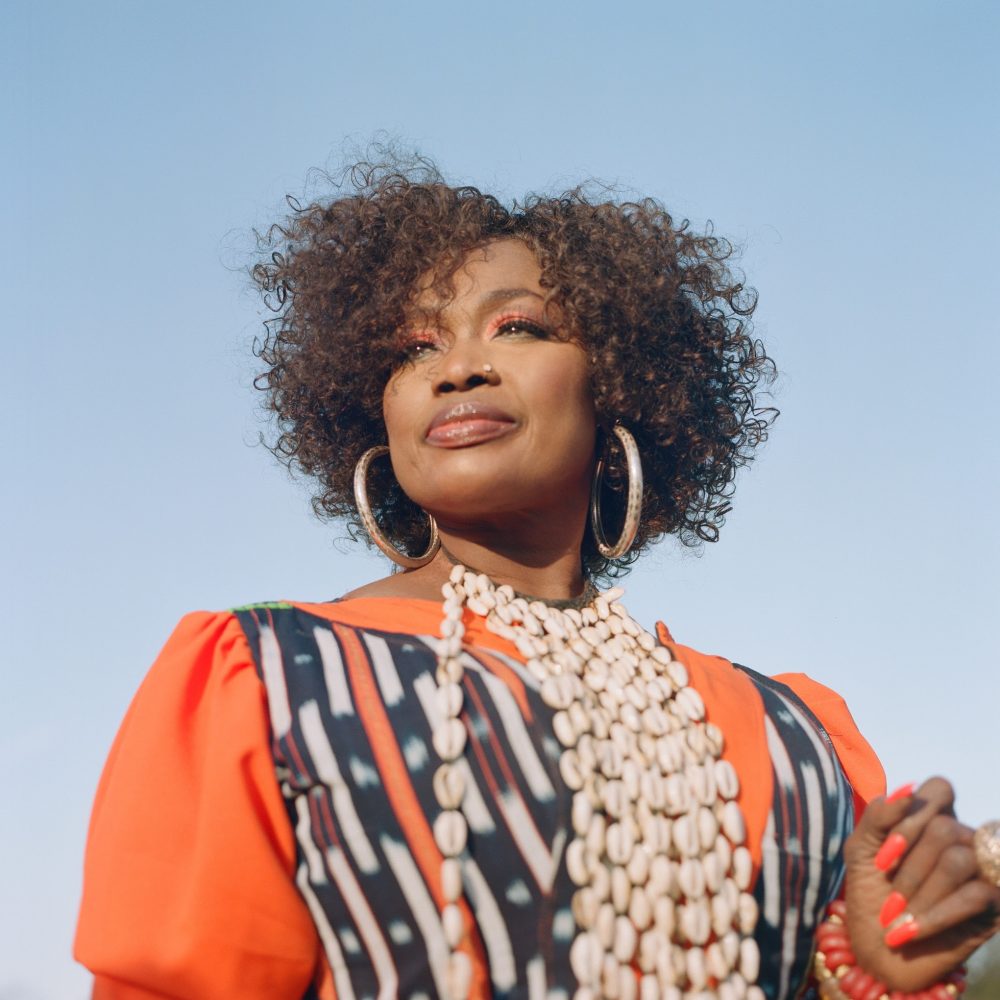
Celebrated as the international ambassador for the Wassoulou music of southeastern Mali, singer and composer Oumou Sangaré (b. 1968) burst on the scene with her groundbreaking 1989 album Moussoulou, which struck nerves with its sharp critique of polygamy and arranged marriages.
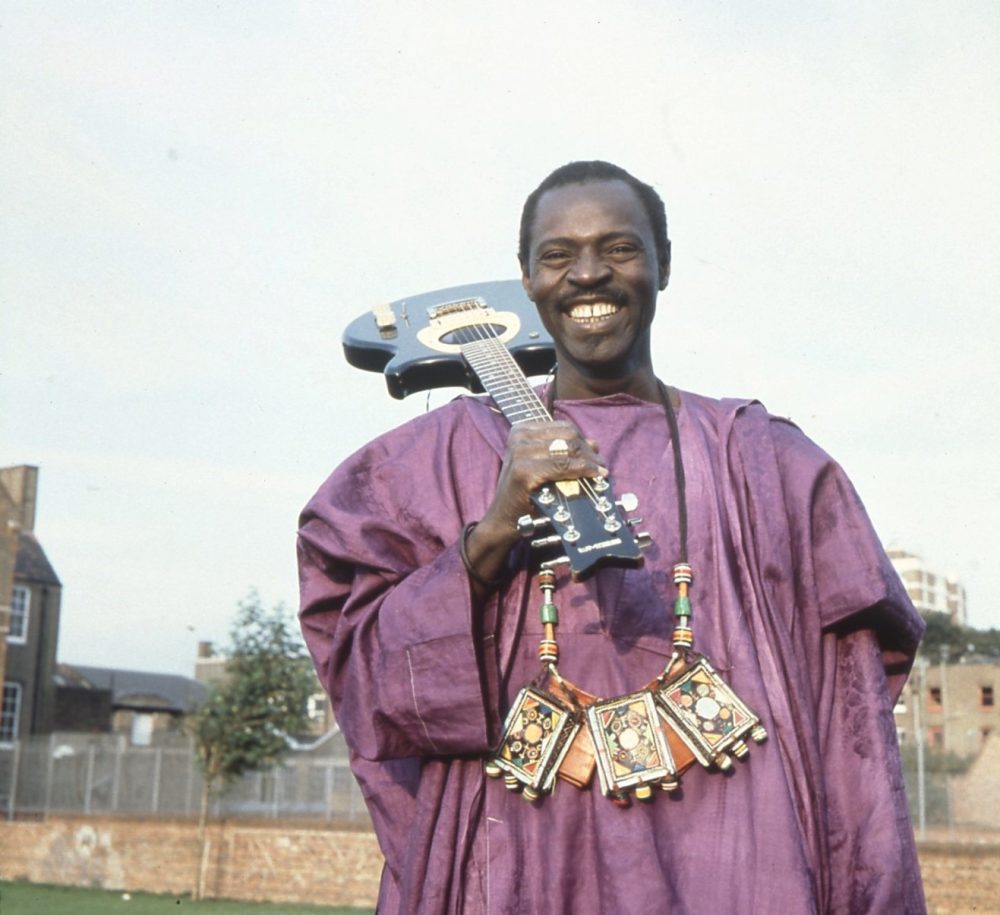
Grammy Award-winner multi-instrumentalist, singer and composer Ali Farka Touré(1939-2006) is renowned as the groundbreaking champion of the music of northern Mali. He earned a huge international following in what the music media in the west would dub “African Desert Blues,” although Touré himself never embraced that characterization.
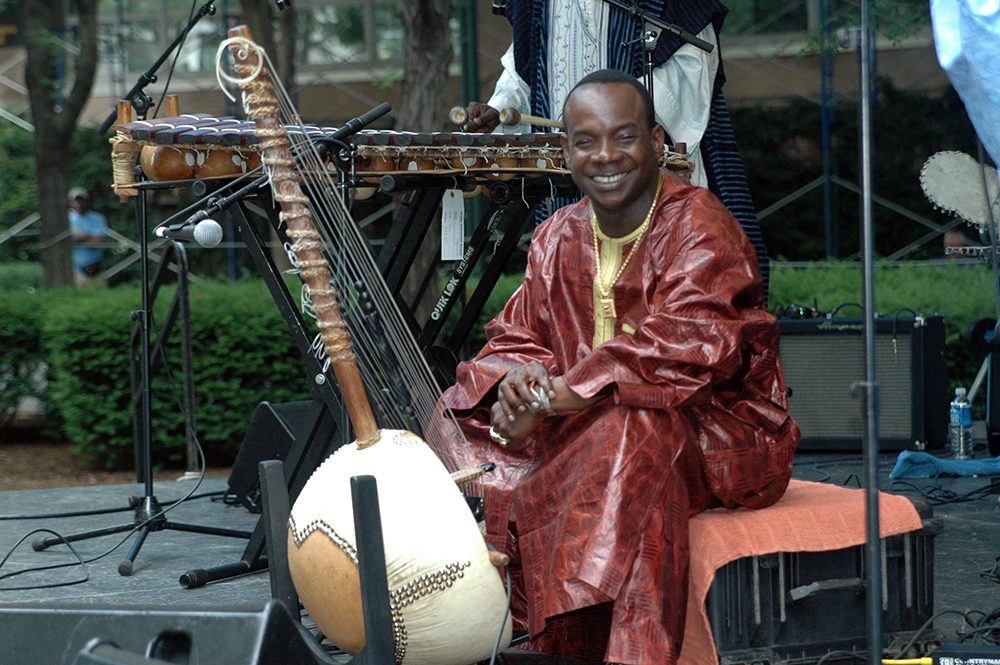
Toumani Diabaté (1964-2024) was a master of the kora, the ancient 21-string harp. He came from a griot family notable for its long line of kora players. An adventurous artist, Toumani played not only traditional Malian music but he engaged in cross-cultural collaborations with flamenco, blues, and jazz artists.
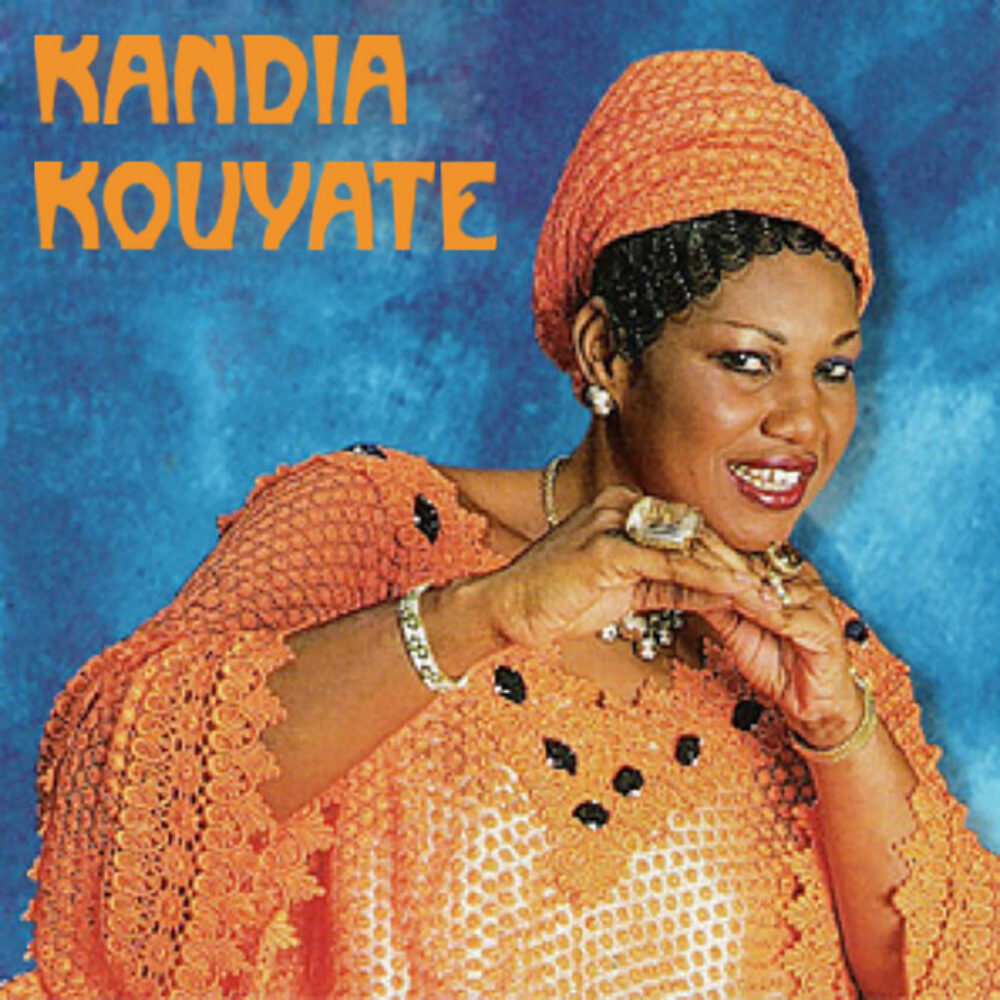
Kandia Kouyaté (b. 1959) is one of the most respected jelimusow (female griot singer) of the 20th Century. Her dense, emotional hypnotic manner of singing and her deep knowledge of history, reflected in her lyrics, have earned immense acclaim in Mali. She long ago earned the high honor of the title of ngara. One nickname for Kandia is “La Dangereuse.”
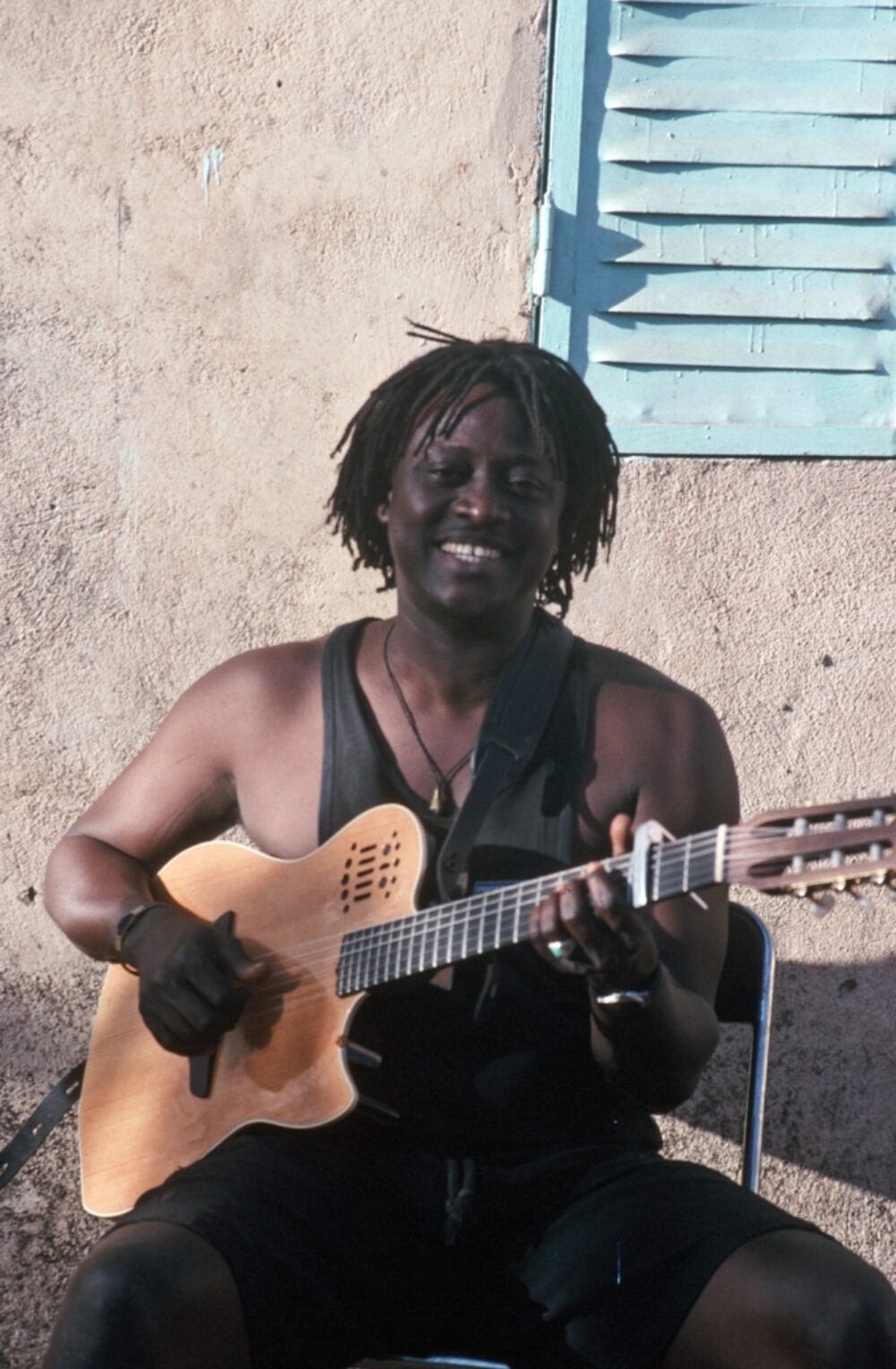
The gifted guitarist, singer, songwriter Habib Koité (b. 1958) earned worldwide recognition with his band Bamada featuring Kélétigui Diabaté on balafon. Habib pioneered pan-Malian music for a new generation. He joined Afropop’s Mali Magic 2000 tour of the country that included multi-Grammy winner Bonnie Raitt.
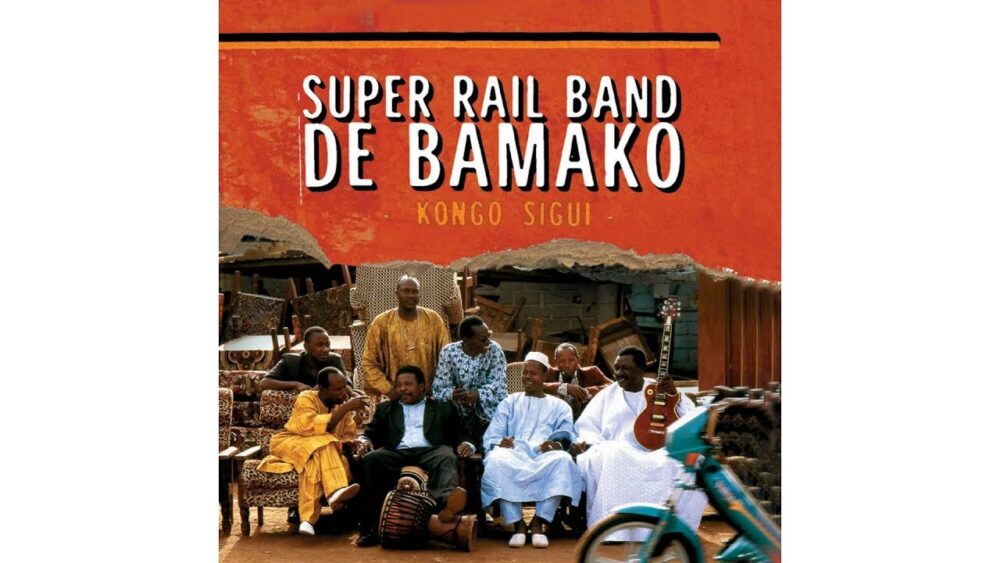
The Rail Band of Bamako was formed in 1970, based at the city’s train station depot, hence the name. They created a highly popular mix of traditional Malian instruments and styles with Afro-Latin, reggae and rock influences. In the 1970s, the Rail Band played to sold-out venues and stadiums across West Africa. They launched solo careers for many of its members, including Salif Keita and guitarist Djelimady Tounkara. The band was later renamed the Super Rail Band de Bamako.
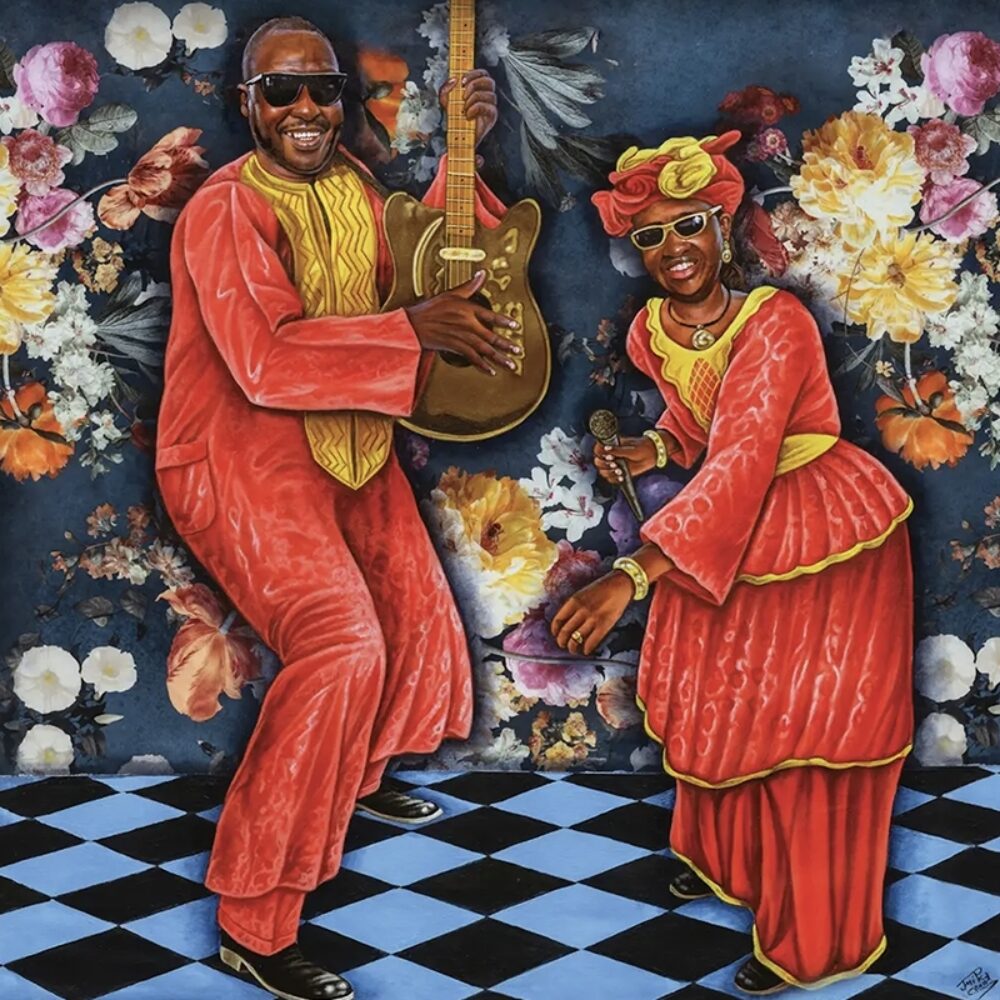
Amadou & Mariam launched themselves as “the blind couple of Mali” in the 1980s. Guitarist and singer Amadou Bagayoko (1954-2025) and singer Mariam Doumbia (b. 1958) toured the world widely for decades, performing songs from their many albums, notably 2004’s Dimanche à Bamako, produced by Manu Chao. In 2008, the album Welcome To Mali was nominated for the Grammy Award for Best Contemporary World Music Album.
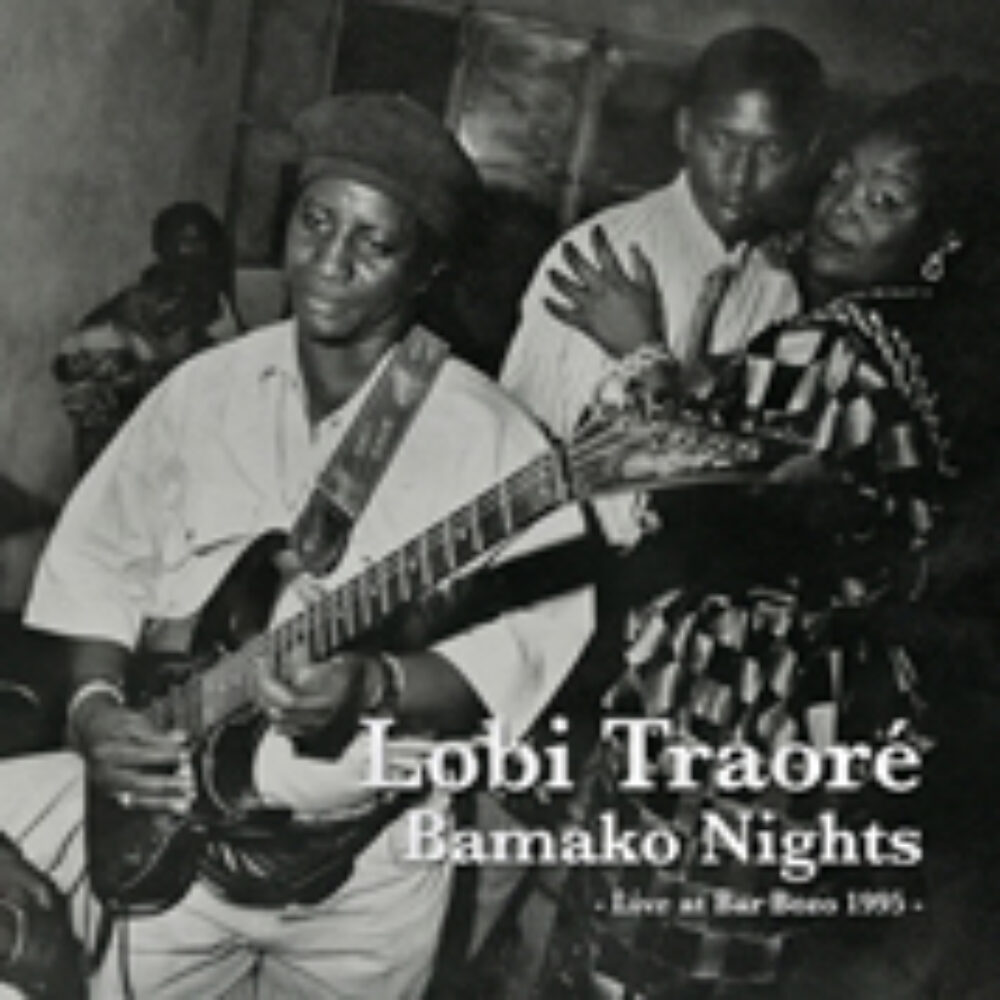
Guitarist, singer and composer Lobi Traoré (1961-2010) was born in a village on the fabled Niger River close to Segou. He fashioned a highly original transcendent sound merging pentatonic Bambara music with rock and blues aesthetics. His breakthrough album, Bamako, produced Ali Farka Touré was released in 1994. It was named one of the best rock albums of the year by the French newspaper Libération.
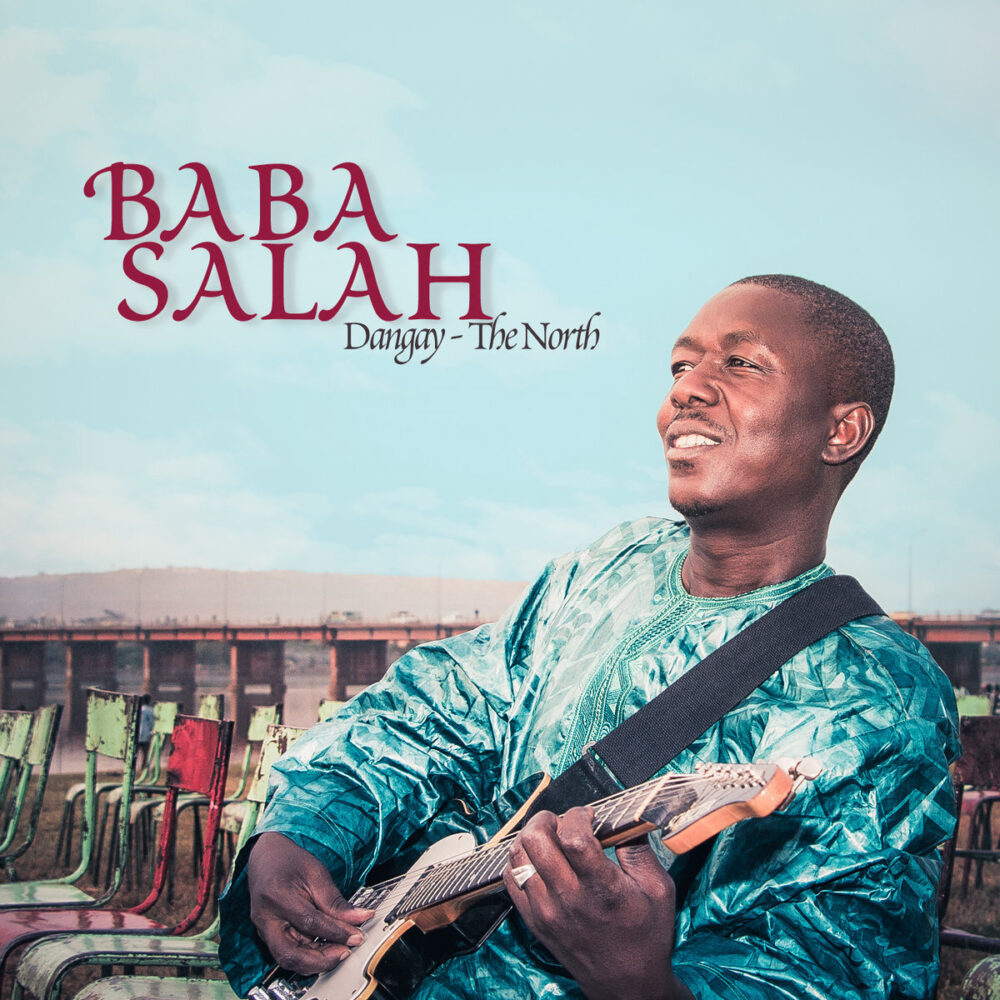
Singer and guitarist Baba Salah is a brilliant exponent of the Songhai music tradition of northern Mali. He launched his career as guitarist for Oumou Sangaré before going on to form his own band, which remains popular today.

This article was originally published by Afropop Worldwide and is republished here with permission.
Afropop Worldwide is a Peabody Award–winning public radio program and multimedia platform dedicated to music from Africa and the African diaspora. Produced by World Music Productions, Afropop Worldwide remains a leading platform for showcasing the richness, diversity, and global influence of African and diaspora music.
Crédito: Link de origem
Comments are closed.