

Singaporean builds rum brand in Africa
Rohan Shah
Interview with Rohan Shan
FOUNDER, UMWERO TERROIR SPIRITS
Lives in: Kigali, Rwanda
Rohan Shah trained as a development economist at Harvard University, but his weekends were defined by a different pursuit: bartending. After obtaining his degree, he worked with small-scale farmers in Africa and India for a non-profit organisation. However, when Covid-19 struck, he was forced to move back to Singapore and operate remotely. This allowed him to moonlight at a local Singapore bar called Native, a venue that greatly inspired Shah with its focus on Southeast Asian spirits and ingredients.
This experience influenced Shah to combine his background in development with his passion for cocktails. He relocated to Rwanda to build a spirits brand that tells Africa’s stories and supports local farmers. In June 2022, he officially registered Umwero Terroir Spirits in the country.
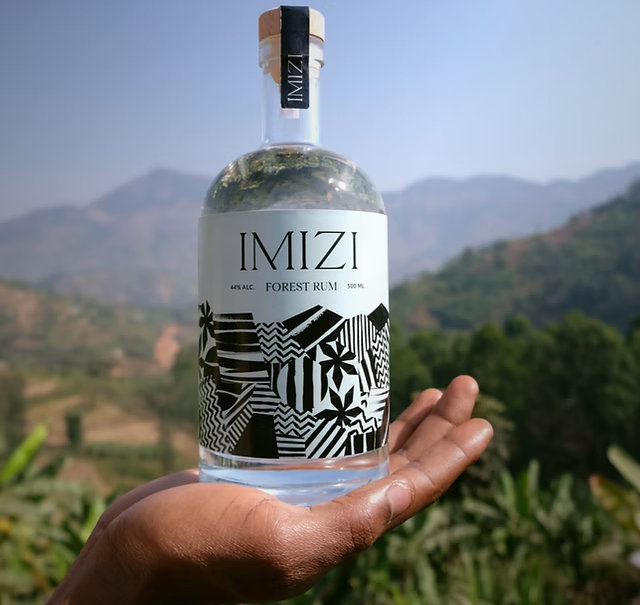
Umwero’s flagship product, Imizi, is a craft rum infused with six African herbs and spices. This gives it an earthy, botanical profile distinct from the sugary sweetness often associated with Caribbean rums. It is branded as a ‘forest rum’, differentiating it from traditional rum marketing, which often emphasises island life.
The spirit is made from sugarcane sourced from small-scale farmers in Rwanda. Shah’s experience in development work revealed to him that a major challenge faced by smallholders in Africa is finding reliable buyers. Rwanda has just one sugar refinery, which does not purchase from the smallholder farmers Umwero collaborates with. These farmers typically sell their sugarcane in local markets, where it is bought for chewing. By sourcing from them, Shah has provided a market for their crops at significantly better prices than they have received in the past.
The venture was initially self-funded. Shah spent his first months in Rwanda experimenting – fermenting and distilling to create a liquid that excited him. He then established a small factory and secured the necessary licences. With everything in place, he began limited sales to gauge the market’s response.
Imizi secured its first listings in eco-tourism lodges. To drive further awareness, the company also hosted a monthly pop-up bar, using the events to educate consumers about rum and showcase the product.
Validation followed in early 2024, when Shah was named the International Wine & Spirit Competition’s Emerging Talent in Spirits.
Later, in October, he brought on a Rwandan co-founder, Pierra Ntayombya. Her background in fashion retail proved invaluable. Shah notes that Ntayombya brought a luxury instinct to the business, specifically the ability to “build a world around a brand” and identify strategic partnerships.
By the end of that year, Umwero had raised US$500,000 from a diverse group of investors from across Singapore, Rwanda, the United Kingdom, and North America.
Umwero’s flagship product, Imizi, is a craft rum infused with six African herbs and spices.
Part of the funds has been allocated to a new distillery, currently under construction, to greatly increase production. At the moment, the company is limited to about a hundred bottles a month, occasionally adding night shifts to meet extra demand.
Once completed, the facility will allow Imizi to start exporting. The brand has already seen success during tests in London and Boston, attracting interest from international distributors. However, Shah explains that the current low volumes make the unit economics of exporting unviable given the high cost of logistics. Scaling up production will lower the cost per bottle, making global distribution financially feasible.
The funding also supported the launch of the Imizi Residency, a cocktail bar in Kigali. This venue serves a dual purpose: it generates revenue while acting as a marketing engine for the rum. Shah describes the concept as “marketing that funds itself”.
Every cocktail on the menu is made with Imizi, giving customers ideas for how to mix the spirit at home. Guests also receive a welcome drink of fresh sugarcane juice, a subtle way to educate them on the rum’s raw ingredient.
The bar is Imizi’s way of achieving what the alcohol industry calls “liquid on lips” – simply getting consumers to taste the product. Usually, brands spend heavily on sponsorships and free samples to make this happen. Lacking the budget for that, Imizi uses the Residency to achieve the same result. Instead of the company funding the distribution of free samples, customers pay to taste the rum in a cocktail. This strategy allows Imizi to build a following without the heavy marketing price tag.
The brand has since grown its footprint, securing additional listings in luxury hotels, select restaurants and bars, and the duty-free store at Kigali International Airport.
Reflecting on the journey so far, Shah acknowledges that everything took longer than planned. “I probably suffer the same feeling that all entrepreneurs have,” he says, “of being far too optimistic about what can be done in how much time.”
He admits he was surprised by the product’s uptake in Rwanda. Priced at around $45 a bottle, he reasoned that his main markets would be Europe, the UK, and North America. However, as the timeline for exporting stretched out, the business had to rely entirely on local sales to stay afloat.
“We underestimated just how much the brand would resonate with local customers,” he says. “There is a cosmopolitan, hip Kigalian who is ready for these sorts of experiences. Nobody was serving that customer.”
With the new distillery set to open, the company will finally have the volume to satisfy both its local fans and those waiting abroad.
This article is an excerpt from our latest book How we made it in Africa II. Purchase the book from the official website or from Amazon.
Related articles
Crédito: Link de origem
Comments are closed.