
Amr Abol-Enein on opportunity, risk and Egypt’s capital markets
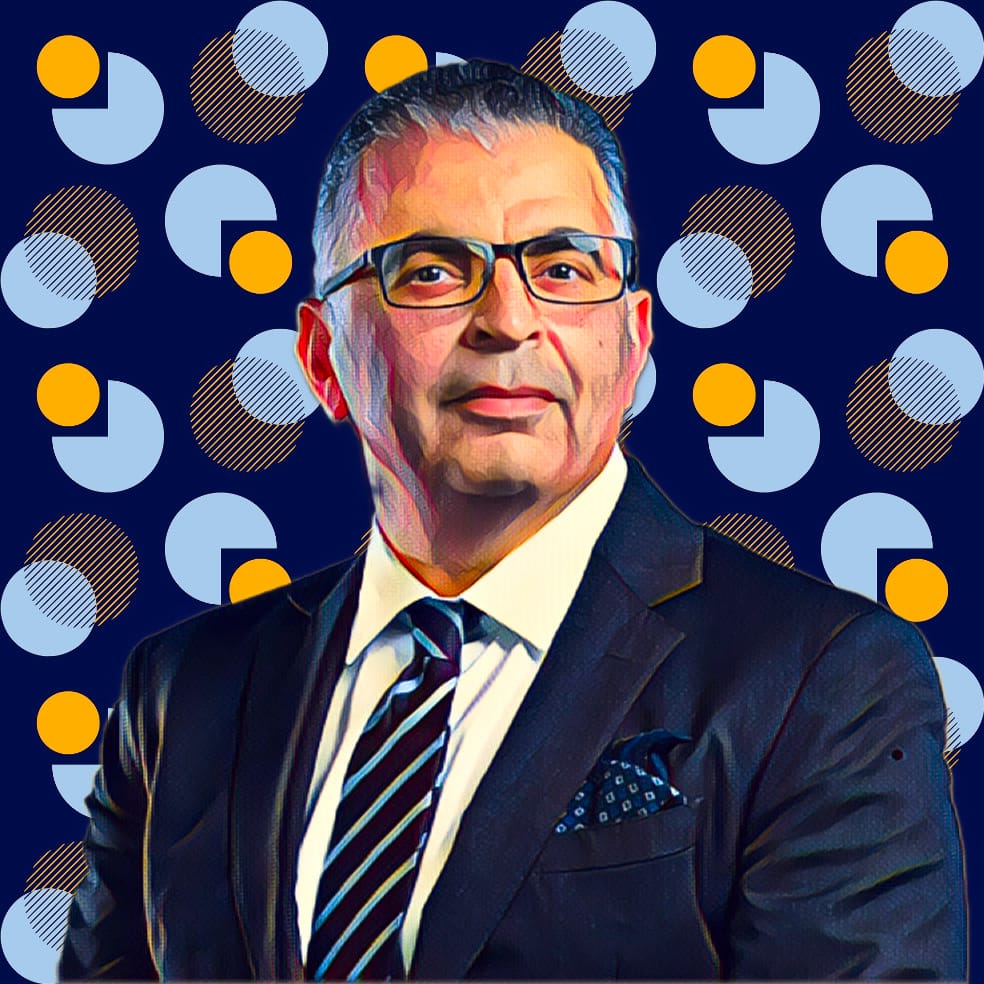
Amr Abol-Enein sits at the center of Egypt’s financial transformation.
As chief executive officer and managing director of CI Capital Asset Management, the country’s largest asset manager, he oversees more than EGP 130 billion in assets. But beyond the numbers lies a leadership philosophy shaped by discipline, integrity and long-term thinking.
“My leadership was shaped from the outset by a belief that clarity of purpose and integrity of process are the foundations of any sustainable enterprise,” he says. For Abol-Enein, high performance is never accidental. It is designed, structured and reinforced through accountability. Leadership, in his view, is about empowerment rather than authority.
A Leadership Philosophy Built on Discipline
His fascination with finance began early. Numbers intrigued him not just as calculations but as indicators of deeper economic forces. “From an early age, I was drawn to numbers, not just solving them, but understanding what they represent and what they imply,” he recalls. That curiosity grew into a passion for understanding how capital moves, how investors make decisions and how risk and value are priced across cycles.
While studying international finance, he secured an internship at Lloyds Bank, where he was exposed to trade finance, treasury operations and credit analysis. “Since I was in the international finance major, I had always dreamt to be a banker,” he says. The experience deepened his interest in investment management and the mechanics of financial systems.
His first professional role in equity research became a defining chapter. It taught him to translate raw data into strategic insight and to connect company fundamentals with macroeconomic narratives. This analytical discipline still anchors his investment approach today.
The most formative challenge came later when he began building and scaling an asset management business in Egypt. “We weren’t just competing in a market; we were helping to build one,” he says. That required conviction-based active management and full accountability for performance even during volatile periods. The experience forged the culture that defines CI Capital Asset Management today.
Building Egypt’s Largest Asset Manager
Rather than being shaped by a single mentor, Abol-Enein credits his development to working alongside senior professionals across global institutions including ING Group, DAMAC Invest and the Morgan Stanley-affiliated HC. Managing multi-billion-dollar portfolios across MENA, Europe and emerging markets embedded discipline and respect for risk management at scale.
Former Central Bank Governor Tarek Amer also played an important role in shaping his thinking. From him, Abol-Enein learned the importance of being consistently well-researched and logic-driven, a critical mindset in Egypt’s evolving economic environment.
CI Capital Asset Management attracted him because it offered rare scale combined with deep research capabilities. He saw an opportunity not just to manage portfolios but to build an institution capable of consistent outperformance.
His leadership style emphasizes trust and accountability. “Sustainable performance comes when people are trusted to make decisions within a clear framework,” he says. That philosophy has delivered results. CI Capital AM consistently outperforms the market by actively managing portfolios rather than mirroring benchmarks, combining macroeconomic insight with company-level fundamentals.
Developing Investment Talent in Egypt
When developing talent, he prioritizes analytical rigor, curiosity, integrity and emotional discipline. He believes strong investors must think independently, communicate clearly and verify information across credible sources.
For young Egyptians aspiring to enter asset management, his advice is straightforward. Start early. Follow markets. Ask why prices move. Learn how money is managed, even through everyday experiences. Combine curiosity with strong fundamentals and patience. “Asset management rewards those who think long term,” he says.
Reading the Economy and Market Reform
Abol-Enein believes Egypt’s investment environment has improved materially. Declining interest rates, a more stable pound, easing inflation and relatively contained geopolitical risks have strengthened investor confidence. Stronger remittance inflows and regulatory reforms are reinforcing external stability and supporting capital formation.
For investors, flexibility is essential. Diversification across equities, fixed income and alternative assets such as gold and real estate allows portfolios to adjust as macro conditions change. Risk management, he stresses, is just as important as return generation.
Looking ahead, he sees infrastructure development, renewable energy, healthcare, financial inclusion and digitalization shaping Egypt’s markets over the next five years. Rising financial literacy and broader retail participation will deepen liquidity and expand the investor base.
Innovation is central to CI Capital AM’s strategy. The firm identifies gaps in the market and designs accessible products for different risk profiles while maintaining strong governance and transparency. This approach helped grow assets under management beyond EGP 130 billion by December 2025.
Youmna El Guindy, business development manager at CI Capital Holding, says investor behavior has shifted significantly. “Investors today are far more informed and selective. They are looking for regulated, transparent products that balance protection with opportunity. Our role is to listen carefully to market needs and translate them into practical investment solutions that work for both retail and institutional clients,” she explains.
As Egypt’s capital market continues to institutionalize, asset managers will play a critical role in channeling savings into productive sectors, supporting economic growth and long-term wealth creation.
Why Gold Matters: Inside the Gold Misr Fund
One of CI Capital AM’s most significant innovations is the Gold Misr Fund. It was launched to meet strong demand for gold as an inflation hedge while offering a regulated, professionally managed and Sharia-compliant structure.
With global uncertainty driving gold prices higher, Abol-Enein saw an opportunity to provide disciplined exposure without the inefficiencies of physical ownership. Sharia compliance was essential for investors seeking ethical alignment, with the fund operating under FRA-approved governance.
Unlike physical bullion, the fund offers liquidity, transparent pricing and professional custody. Investors gain exposure to gold price movements without storage risk or insurance costs while benefiting from portfolio-level risk management.
El Guindy explains that the fund responded directly to client demand. “We saw strong interest from investors who traditionally relied on physical gold but wanted a more efficient, secure and liquid alternative. The fund allows them to access gold in a regulated structure while avoiding storage risks and high transaction costs. It has been especially appealing to younger investors and first-time market participants,” she says.
The structure serves both retail and institutional investors, offering flexible access to commodities with a medium- to long-term horizon.
Abol-Enein believes gold should be viewed strategically rather than tactically. Historically, it has preserved real value during inflation, currency depreciation and macroeconomic stress. Within diversified portfolios, it improves resilience and reduces volatility.
The fund uses 999.99 purity gold to ensure global pricing consistency and transparency. International custody standards reduce counterparty risk and align with institutional best practices.
Educating a New Generation of Investors
Education plays a key role. Rather than persuading investors to abandon traditional holdings, CI Capital AM explains cost efficiency, liquidity and governance, showing how regulated exposure complements physical gold in long-term financial planning.
Positioning Egypt for Global Capital
Global inflation, currency shifts and geopolitical uncertainty continue to shape investment strategy. CI Capital AM dynamically adjusts asset allocation across equities, fixed income and alternative assets, prioritizing liquidity and downside protection.
Abol-Enein believes investors must assess a full framework of indicators including inflation trends, interest rates, energy prices, fiscal and monetary policy and geopolitical risks.
Capital flows into Egypt are becoming more resilient. According to the Central Bank of Egypt, remittances exceeded $37 billion between January and November 2025, while foreign direct investment remains above $10 billion annually. These inflows support the balance of payments and reduce external vulnerability.
Gold demand, he notes, is structural rather than speculative, supported by central bank reserve accumulation, ETF inflows and sustained jewelry consumption.
Egypt and the Rise of Sub-Saharan African Wealth
As Sub-Saharan Africa produces a growing number of ultra-high-net-worth individuals, Abol-Enein believes Egypt is well-positioned to serve as a regional investment hub. The country combines market scale, financial depth and connectivity, offering access to both Middle Eastern and global capital markets.
Egypt’s mature banking and asset management ecosystem provides a strong foundation for African investors seeking diversified exposure. “It offers one of Africa’s largest economies and a well-developed financial sector,” he explains, making it a natural base for regional capital allocation.
Unlike Dubai, Egypt provides direct exposure to domestic economic growth and productive assets. Compared to Johannesburg, it benefits from stronger linkages to Gulf capital while remaining anchored in Africa’s long-term growth story.
African wealth investors are increasingly seeking stability, foreign exchange hedging and alternative assets. Egypt’s evolving FX regime, deep local debt markets and expanding range of alternatives, including gold-backed and income-generating strategies, help meet those needs.
Attracting European Capital
European investors are also turning toward emerging markets. Egypt’s regulatory improvements, capital market deepening and reform momentum make it an increasingly attractive entry point.
Offering sophisticated instruments such as ESG funds, Sharia-compliant vehicles and gold-linked strategies is essential to attract long-term European capital. Transparency, governance and global standards are now baseline expectations.
Before committing, investors prioritize policy consistency, foreign exchange flexibility, disciplined monetary policy and regulatory clarity.
The Future of Wealth Management in Egypt
Abol-Enein envisions Egypt developing into a family office and private wealth hub. With growing access to private equity, infrastructure and Africa-facing investments, capital is increasingly managed closer to where value is created.
At CI Capital AM, he is focused on alternative assets that offer genuine diversification, including commodities and real estate-linked products that provide inflation protection and resilient return profiles.
Technology will enhance but not replace human judgment. Digital onboarding, analytics and portfolio monitoring tools will improve transparency and personalization, supporting a hybrid advisory model.
Defining Legacy
When asked about legacy, Abol-Enein speaks of institutions rather than individuals. He wants to build platforms grounded in governance and disciplined risk-taking while developing professionals capable of competing globally.
“A leader’s primary role is to create an environment where talent can thrive within a clear framework of accountability, turning individual capability into institutional strength,” he says.
“Success is building institutions that endure, teams that outgrow you, and decisions that remain sound across cycles,” he adds.
Personally, success means knowing ambition was guided by integrity and that impact was created without compromising values, family or long-term purpose.
In a nation navigating economic transformation, Amr Abol-Enein continues to play a key role in shaping Egypt’s investment landscape, building institutions, empowering talent and offering investors new tools to protect and grow wealth in an uncertain world.
Crédito: Link de origem
Comments are closed.