

Nigeria’s Diezani Alison-Madueke Bribery Trial Starts
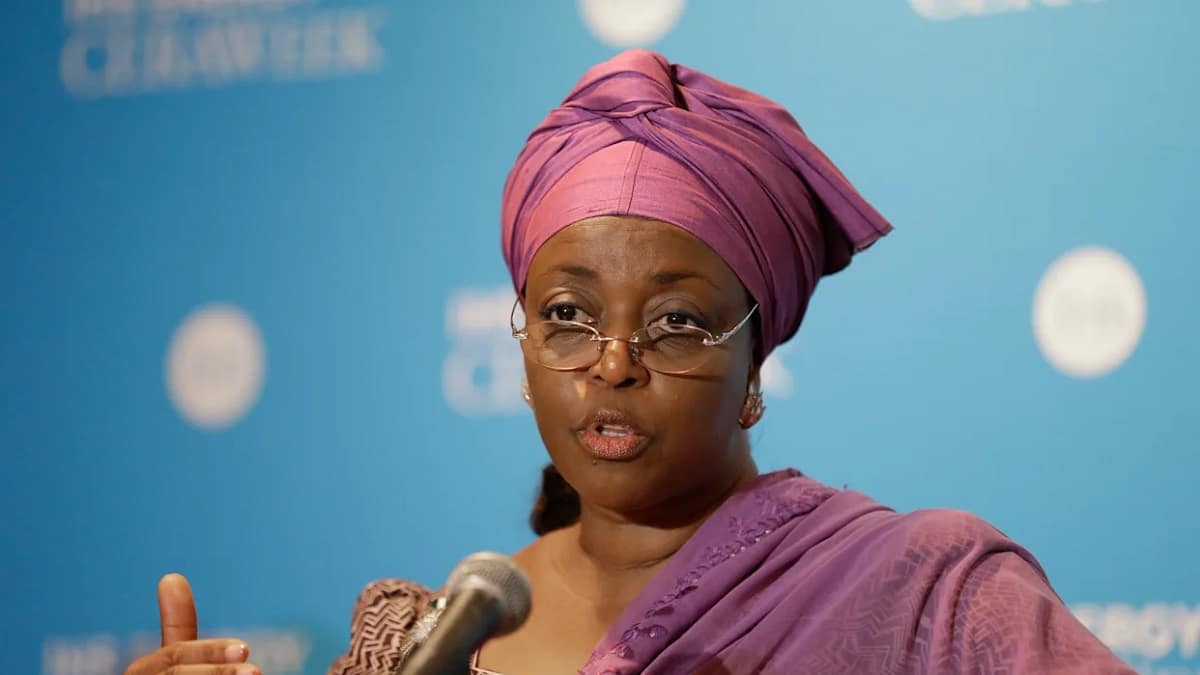
- Diezani Alison-Madueke faces an eight-count indictment for bribery and conspiracy to bribe under the UK’s anti-corruption laws. She has pleaded not guilty to all charges.
- The case stems from parallel investigations launched by the U.S. Department of Justice and FBI in the mid-2010s, and the UK’s National Crime Agency (NCA) from 2015.
- Alison-Madueke was arrested in London on 2 October 2015 on suspicion of bribery, corruption and money laundering linked to her time in office.
The long-awaited criminal trial of Diezani Alison-Madueke, Nigeria’s former Minister of Petroleum Resources, will finally begin on Monday, 19 January 2026, at the Old Bailey in London, with proceedings expected to last 10 to 12 weeks.
Ms Alison-Madueke, who served as Minister from 2010 to 2015 and made history as the first woman to preside over OPEC, faces an eight-count indictment for bribery and conspiracy to bribe under the UK’s anti-corruption laws. She has pleaded not guilty to all charges.
The case stems from parallel investigations launched by the U.S. Department of Justice and FBI in the mid-2010s, and the UK’s National Crime Agency (NCA) from 2015. Alison-Madueke was arrested in London on 2 October 2015 on suspicion of bribery, corruption and money laundering linked to her time in office. According to official figures, the UK authorities have so far spent approximately £30 million of taxpayers’ money on the investigation and prosecution.
Diezani Alison-Madueke trail one of the most significant corruption cases involving a high-ranking African official
The trial is widely regarded as one of the most significant corruption cases involving a high-ranking African official to reach a British courtroom. It centres on allegations that the former minister accepted bribes in exchange for awarding lucrative oil contracts and licences during her tenure—a period that saw the introduction of the landmark Nigerian Oil and Gas Industry Content Development (NOGICD) Act in 2010, which boosted local participation in the sector from roughly 5 per cent to around 56 per cent by 2024–2025, according to the Nigerian Content Development and Monitoring Board (NCDMB).
The outcome of the trial is likely to be closely watched in Nigeria, the UK, the U.S and across the global energy industry, with implications for ongoing asset recovery efforts and the broader fight against high-level corruption in Africa’s oil sector.
Who is Diezani Alison-Madueke?
Diezani Alison-Madueke, a pioneering figure in Nigeria’s energy sector, rose from humble beginnings in Port Harcourt to become a global trailblazer. Born on 6 December 1960 into the respected Agama family, her life story embodies ambition, and groundbreaking achievements. As the daughter of H.R.H. King Frederick Abiye Agama, the Ogbotom Edede of the Atissa Kingdom in Bayelsa State, she grew up in a culturally rich environment that instilled self-confidence and a commitment to public service.
Early Life and Education
Raised in an upper-class household emphasizing academic discipline, Alison-Madueke displayed early curiosity in creative and technical subjects like physics and design. By 1970, she attended Holy Rosary Secondary School in Port Harcourt, later moving to Mubi in Gongola State.
In the UK, she pursued A-Levels and architecture studies before enrolling at Howard University in Washington, D.C., where she earned her five-year professional bachelor’s degree. She later attended the University of Cambridge for postgraduate business studies, focusing on management and strategic planning.
Career in the Private Sector
Alison-Madueke entered the energy industry in 1992 at Shell Petroleum Development Company (SPDC) in Nigeria. Starting in project and facilities management, she excelled in mediating between communities and corporate interests.
In 2006, she shattered barriers as Shell Nigeria’s first female Executive Director, overseeing public relations, strategic planning, and community development.
Political Career
Her corporate success led to public service. In 2007, she became Nigeria’s Minister of Transportation, advocating for infrastructure reforms in waterways, aviation, and railways. Transferred to Mines and Steel Development, she revitalized the mining sector through investor-friendly policies and geological surveys.
In 2010, she made history as Nigeria’s first female Minister of Petroleum Resources. Championing the Petroleum Industry Bill (PIB), she laid groundwork for regulatory modernization and transparency. She restructured the Nigerian National Petroleum Corporation (NNPC), promoting better governance.
Alison-Madueke advanced local content via the Nigerian Oil and Gas Industry Content Development (NOGICD) Act, boosting indigenous participation. In 2014, she became OPEC’s first female President, navigating oil-price volatility with diplomacy. She also served as the first female President of the Gas Exporting Countries Forum (GECF).
Her Nigeria Gas Master Plan emphasized domestic utilization and industrialization, while anti-flaring initiatives addressed environmental concerns. She supported NLNG’s expansion, leaving substantial reserves for successors.
Legacy and Impact
Alison-Madueke championed women’s empowerment, mentoring professionals and promoting gender inclusion. Her firsts—as Shell’s female Executive Director, Petroleum Minister, and OPEC President—remain an inspiration for African women.
Read also: Nigeria secures $500 million AfDB financing to speed up energy transition
Crédito: Link de origem
Comments are closed.