

Africa’s $600 billion pension funds paradox
- Africa’s asset management sector soars to $600Bn but investment remains conservative with bulk of the pension funds tied in government securities.
- Other vital key enablers of economic growth such as SMEs and infrastructure hardly attract any financing from pension funds.
- New study notes that closing the gap between the scale and impact of long-term savings is critical to Africa’s ability to mobilize domestic capital.
Africa’s pension industry has amassed more than $600 billion in assets under management, but much of this capital is sitting idle in low-risk government securities, leaving high-impact sectors such as SMEs and infrastructure chronically underfunded.
This trend in conservative allocation is increasingly raising concerns that one of the continent’s largest pools of long-term capital is failing to fuel the very growth engines it was meant to support.
New survey shows that substantial long-term capital, ranging from $17 billion in Nigeria to $390 billion in South Africa to $20 billion in Kenya remains concentrated in government securities rather than productive sectors such as infrastructure, housing and SMEs.
According to a new Landscape Report on Africa’s Institutional Capital Markets, closing the gap between the scale and impact of long-term savings is critical to financing Agenda 2063, which is the African Union’s 50-year blueprint for transforming Africa into a global powerhouse, complete with ability to mobilise and deploy its own domestic capital.
Across Africa, bias persists in the allocation of pension funds
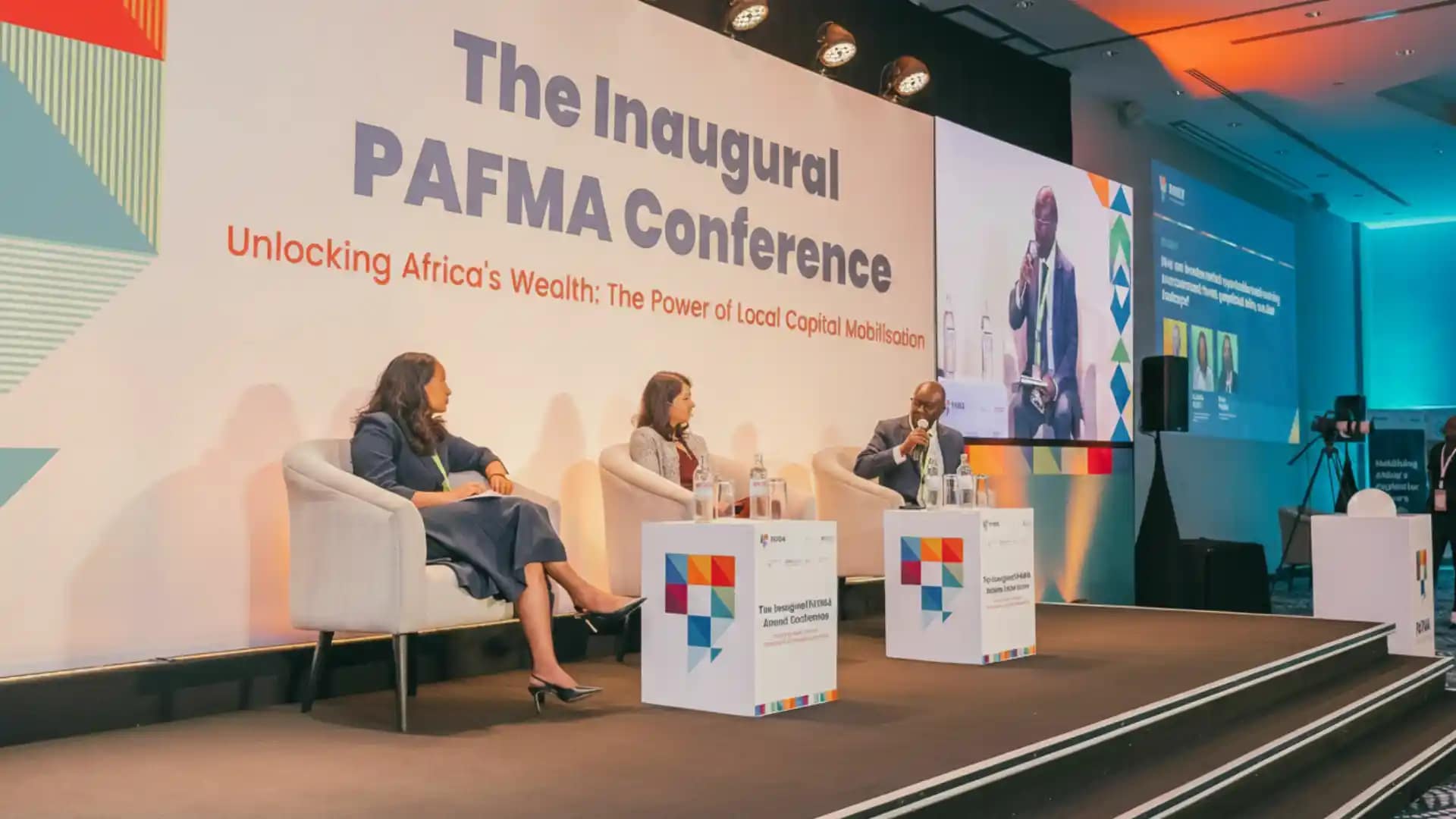
The report, which was released at the continent’s first Pan-African Fund Manager’s Alliance (PAFMA) Conference in Nairobi on Tuesday, examines why bias in the allocation of pension funds persists and what policymakers can undertake to change the situation.
Commissioned by FSD Africa, in partnership with the African Pension Supervisors Association (APSA) and the Pan-African Fund Managers’ Alliance (PAFMA), the report highlights that in many markets, less than 10 per cent of pension assets are allocated to productive sectors such as infrastructure, housing, private credit or small and medium-sized enterprises.
To turnaround the markets, the report calls for increased coordination, market infrastructure and scalable investment pathways that allow long-term capital to be deployed productively.
The report, which draws on data compiled from pension funds and asset managers across multiple African markets, offering a rare snapshot of how long-term domestic savings are currently allocated. Additionally, it provides actionable insights and recommendations to help unlock the full potential of African pension funds and asset management systems.
It was launched in tandem with a new interactive database, the APAM Data Hub, a repository of fresh knowledge containing up-to-date information on Africa’s pension systems and asset management industry along with analytical tools, providing a valuable resource for policymakers, regulators, industry practitioners, and researchers.
Pension funds in Africa: A snapshot of latest trends…
- Institutional savings are larger than often assumed, with assets under management in Collective Investment Schemes (CIS) ranging from $3 billion in Nigeria to $200 billion in South Africa.
- Asset allocation remains highly conservative, with government bonds accounting for approximately 60–70 per cent of pension fund portfolios in many countries, such as 90 per cent in Ghana, 60 per cent in Nigeria and 50 per cent in Kenya.
- Pension funds now form the backbone of domestic sovereign debt markets, supporting short-term stability but increasing long-term exposure to fiscal and inflation risks.
- Shallow capital markets and limited investable pipelines continue to constrain diversification, even where institutional appetite exists.
“This new report shows how unevenly pension and asset management markets have evolved across the continent, but it also indicates how significantly Africa’s institutional savings have grown overall as a pool of largely untapped long-term capital. Mobilising domestic institutional pools of capital for Africa’s development priorities will require a concerted ‘business unusual’ approach. We need new asset classes, new partnerships, and new enablers,” noted Evans Osano, Chief Financial Markets Officer at FSD Africa.
Tapologo Motshubi, Chair of PAFMA, added: “Progress will depend on sustained collaboration between fund managers, regulators, project sponsors and policymakers. PAFMA’s role is to provide a platform for that collaboration, helping align market practice, regulatory thinking and investment opportunities so that domestic institutional capital can play a larger role in Africa’s long-term development.”
PAFMA on bridging the climate finance gap in Africa
Established in 2023 by five founding members, PAFMA is a pioneering trade association bringing together pension fund managers from across the African continent. Some of its member associations are: Pension Fund Operators Association of Nigeria (PENOP), the Fund Managers Association (FMA) in Kenya, the Botswana Investment Professionals Society (BIPS), the Ghana Securities Industry Association (GSIA) and the Investment Management Association of Uganda (IMAU).
At the moment, PAFMA is dedicated to bridging the climate finance gap through private sector initiatives, with a strategic focus on alternative investments and green finance.
Since its introduction by FSD Africa at the Africa Climate Summit in 2023 as part of its mission to build deeper, more coordinated capital markets, PAFMA membership has grown to 11 members representing 23 countries with a market size exceeding $200 billion in AUM.
The PAFMA conference brought together senior industry leaders, regulators and policymakers to discuss the report’s findings and explore practical steps to strengthen capital market infrastructure, expand investable pipelines and improve regional coordination.
Read also: Why pension funds matter in Africa
Crédito: Link de origem