

Tanzania Vision 2050: The Roadmap, the Risks and the Reality
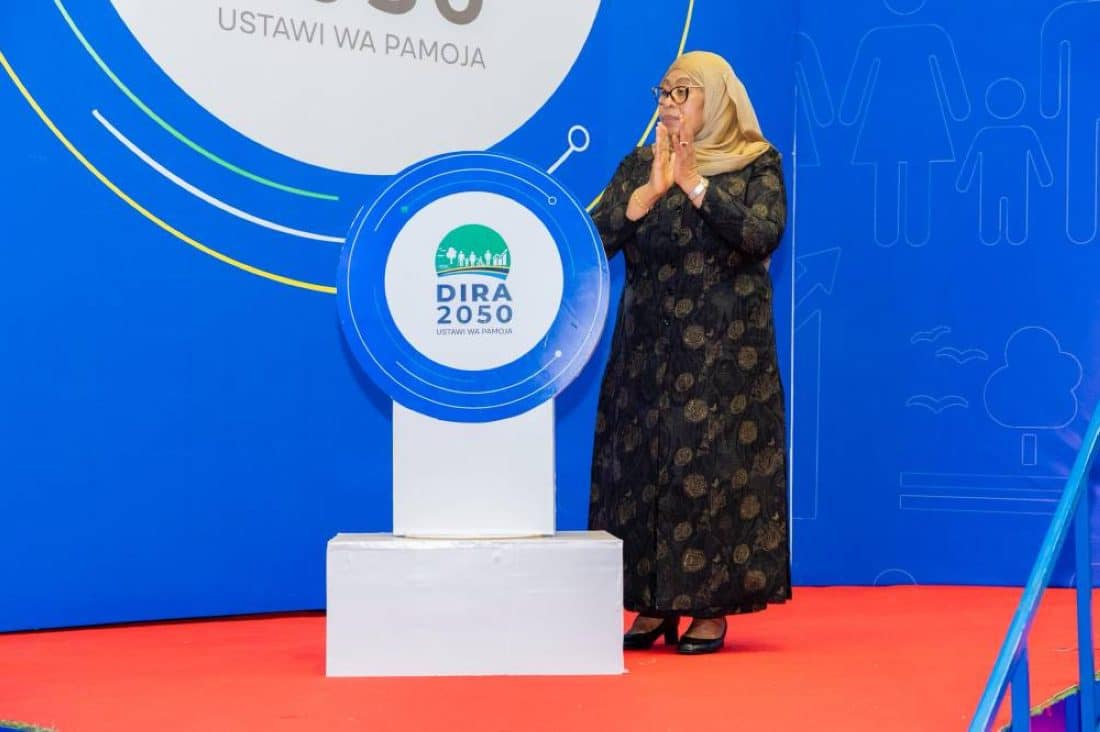
- Tanzania’s Vision 2050 builds on earlier national development frameworks, particularly Vision 2025, which President Samial Suluhu describes as successful despite both domestic and global challenges. The government has set $7,000 per capita goal by 2050.
- Officials maintain Vision 2025 achieved important milestones such as, national income per person (GDP per capita) tripled from $453 in 2000 to $1,277 as of 2023, life expectancy rose from 51 years in 2000 to 68 years in 2024.
President Samia Suluhu Hassan has reaffirmed Tanzania Vision 2050 as the country’s long-term blueprint for economic transformation, positioning it as a pathway to a competitive, inclusive and resilient economy. As the government pushes ahead with implementation, analysts are increasingly scrutinising whether the ambitious plan is achievable.
In an exclusive interview with The Exchange earlier this week, Prof. Jarandi Mwakigawa from the Ministry of Finance said the government remains confident the vision can be delivered, arguing that it builds on lessons learned from the outgoing Vision 2025.
“There are things we learnt that will now be implemented this time around…so in areas where development stalled we are now certain we will deliver,” he said.
Prof. Mwakigawa, who heads Projects and Financial Literacy at the Ministry, said Tanzania’s economic trajectory remains strong, pointing to key macroeconomic indicators as evidence of progress.
He said Tanzania has actually surpassed expectations and set goals; “if you look at inflation and the GDP you will see that we have been able to keep our trajectory,” he ascertained.
According to Prof. Mwakigawa, President Samia has tasked the Ministry of Finance with ensuring access to affordable financing, particularly for small businesses, youth groups and women, as part of efforts to make economic growth more inclusive.
“The president is keen on supporting the private sector and enabling underserved special groups,” he said. “The Ministry is confident that Vision 2050 as spelled out by the president is achievable,” he added.
President Samia formally reaffirmed Vision 2050 during her New Year’s Eve address to the nation from Tunguu, Zanzibar, describing it as the framework that will steer Tanzania’s long-term development agenda.
“Vision 2050 will guide Tanzania’s transformation…it is a long-term plan that will ensure sustainable growth, improved livelihoods, and increased opportunities for all Tanzanians,” the president said.
She noted that Vision 2050 builds on earlier national development frameworks, particularly Vision 2025, which she described as successful despite both domestic and global challenges.
According to the president, Vision 2050 seeks to strengthen economic growth, social development, environmental sustainability and technological advancement, while emphasising collaboration between government, the private sector and international development partners.
Offering his assessment of the plan, Prof. Mwakigawa said a key distinction of Vision 2050 is its focus on ensuring that economic growth translates into tangible benefits for citizens, including job creation, improved social services and higher living standards.
Looking back, he said the end of Vision 2025, Tanzania’s economy grew 5.8 percent, inflation was painted at a low single digit that averaged 3.4 percent, and foreign exchange reserves reached 6.6 billion US dollars.
“These achievements have set the groundwork for launching Vision 2050…Together, we can make Vision 2050 and usher a brighter future for our country,” the professor noted said.
Groundwork for Vision 2050
In 2000, Tanzania launched Vision 2025, a national transformation plan for twenty five years which according to the government, saw the country from a low-productivity agricultural economy into a semi-industrialised, human development-centred economy.
Vision 2025, according to the government, achieved important milestones such as, national income per person (GDP per capita) tripled from US dollar 453 in 2000 to US dollar 1,277 as of 2023, life expectancy rose from 51 years in 2000 to 68 years in 2024 and there is now overall increase in access to education, healthcare, water supply, and clean energy.
“The world around us is changing faster today than ever before. It is shaped by shifting global dynamics, transformative technologies, and the aspirations of a new, energetic generation.
These realities call for a renewed and more ambitious long-term vision for our country. Vision 2050 sets a clear path to achieve these aspirations,” president Samia summed up.
Also Read: Why Global Capital Is Moving to Africa’s Urban Property Markets
Understanding Tanzania Vision 2025
The government describes the National Development Vision 2050 as a bold, inclusive, and forward-looking roadmap that embodies the nation’s collective aspirations and sets a clear strategic course for the next twenty- five years.
According to the government released summary of Vision 2050, that is titled in Swahili Dira 2050, the goal of all development is to deliver high quality of life for all Tanzanians through inclusive growth, a knowledge-based and industrialised economy, and enduring national values.
“By 2050, we will build an upper-middle-income country of more than 118 million people, with a one-trillion-dollar economy and an average GDP per capita of US dollar 7,000,” President Samia says in her introduction of the Vision 2050 dossier.
“At its heart lies an unwavering commitment to the values that unite us as Tanzanians, and that will guide the choices we make. We respect the dignity of every individual and cherish each person’s worth in society Dira 2050 is not merely a government blueprint; it is the vision of all Tanzanians” she reaffirmed.
The Vision was officially launched in March 2025 following rigorous review by experts and key government decision-making bodies. It was subsequently tabled in the National Assembly on 26th June 2025.
According to the government document, the Vision is anchored on three interrelated strategic pillars; First is building a strong, inclusive, and competitive economy that will transform Tanzania into an upper-middle-income country by enhancing an enabling environment for business and investment.
Secondly, it focuses on developing human capital and social development through improved access to quality education, healthcare, clean energy, gender equality, inclusivity, social cohesion, and the reduction of regional disparities.
Thirdly, the Vision 2050 strategy looks to bring about environmental integrity and climate change resilience. It looks to position Tanzania as a global leader in environmental stewardship by “…ensuring the sustainable management of our natural resources for all generations,” it reads in part.
The government further lays out a plan to realise the goals, this includes establishing integrated logistics by “…leveraging Tanzania’s geographic advantage to become a premier regional trade hub through world-class infrastructure, digitized trade systems, and regional cooperation.”
It prioritizes the development of science and technology through the adoption of disruptive technologies, the development of innovation ecosystems, and inclusive digital access across the nation.
The document further emphasizes investment in Research and Development (R&D) as the basis to strengthening national innovation and sets a target of investing no less than one percent of the GDP.
Another pillar mentioned is digital transformation though the expansion of digital literacy and access to technology and switching to digital governance.
Energy is a key pillar of Vision 2050 in which the government aims to secure reliable, affordable, and clean energy as the basis to powering socio-economic transformation, and also looks to transform the country into a net energy exporter by 2050.
In his comments on the Vision 2050, Prof. Kitila Mkumbo, the Tanzania Minister of State notes that; “Dira 2050 establishes a framework for identifying employment generation, export potential, sectoral linkages, value addition, and revenue generation. These criteria will help Tanzania maximise its vast potential for inclusive and sustainable development.”
“By 2050, Tanzania is imagined to be a model of resilience, innovation, prosperity and diplomacy, both for Africa and globally,” the Minister goes on to envision.
He acknowledges that the country has abundant natural resources but needs to build robust infrastructure across all sectors, and to develop what he describes as a capable and motivated workforce that will make the country competitive in the regional and global economies.
According to the Minister, Tanzania is set to transform into an industrialised, knowledge based, upper middle income country valued at one trillion US dollar economy and a per capita income of US dollar 7,000.
“Achieving this Vision requires embracing transformative changes at an exponential pace, including establishing a business-friendly investment climate, boosting agricultural productivity, skilled workforce, expanding access to reliable electricity, advancing modern infrastructure development, and accelerating digital transformation,” he summed up.
The post Tanzania Vision 2050: The Roadmap, the Risks and the Reality appeared first on The Exchange Africa.
Crédito: Link de origem