

TradePal AI is building compliance tools for Nigeria’s informal crypto traders
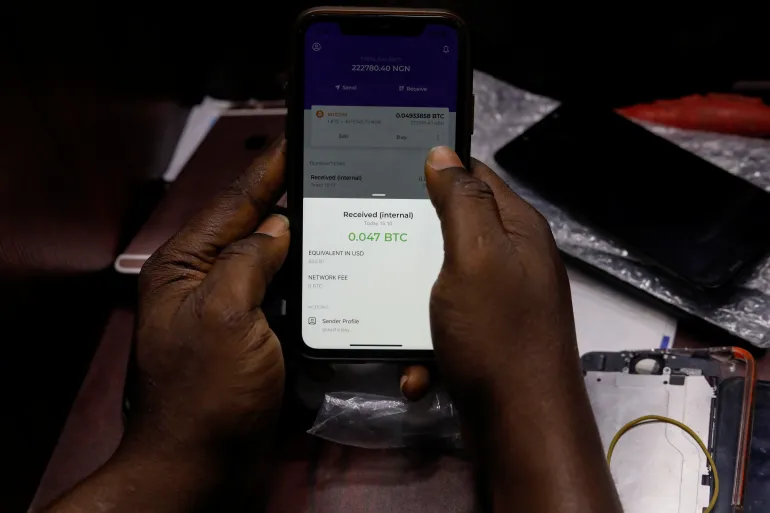
In Nigeria’s crypto market, where an estimated $92.1 billion in value flowed between July 2024 and June 2025, some of the most consequential trades do not happen on exchanges.
Over‑the‑counter (OTC) deals, private crypto trades conducted outside formal exchanges, often take place on informal channels such as WhatsApp, with minimal oversight. Payments are proven with screenshots, and records are easily lost. For traders, prioritising speed over structure has worked, until now.
As Nigerian regulators intensify scrutiny of digital asset transactions to rein in foreign exchange volatility, OTC traders face a growing risk of being unable to explain the origin, destination, or legitimacy of their funds to banks and regulators.
TradePal AI is betting that compliance, rather than liquidity, is the missing layer in Nigeria’s informal crypto economy.
Building a record-keeping tool for traders
Founded in 2025 by Ayoyinka Adebiyi and Femi Adegolu, TradePal AI positions itself as a compliance and reporting infrastructure for foreign exchange operators and digital assets merchants. The startup does not facilitate the buying or selling of crypto. Instead, it operates as a regulatory technology (RegTech) solution designed to bridge the gap between informal OTC trading and formal regulation in the digital assets sector.
It functions as a digital ledger and compliance toolkit for digital asset merchants, handling transaction monitoring, record-keeping, and automated reconciliation.
“TradePal AI is like a bridge between industry players, regulators, and policymakers,” Adegolu said. “We are building a platform to help the government understand the insight into the (digital asset) markets.”
The platform is built on two pillars: risk assessment and tax compliance. TradePal AI allows traders to log each transaction in real time, recording the value exchanged and the parties involved. Over time, this creates a structured transaction history that reveals patterns of activity.
For active traders, TradePal AI integrates a wallet-scanning feature that allows users to check a counterparty’s wallet against a global database, which the company says it cannot disclose under existing agreements, before completing a transaction. The system generates a risk profile, flagging wallets linked to terrorism financing, money laundering, or past security breaches.
One of its key features is a tax calculator, a timely addition given the new tax regulations that took effect on 1 January 2026. The tool allows users to input their trading volume and profit margins to calculate liabilities for Personal Income Tax, Company Income Tax, and Capital Gains Tax.
According to Deborah Ojengbede, TradePal’s CEO, the tool is not limited to crypto traders. Freelancers and other digital economy workers can also use it to assess their tax exposure under the updated tax framework.
Designing for how traders actually work
The biggest challenge for TradePal was not building compliance tools but getting traders to use them. In the fast-paced OTC world, logging into a separate web dashboard to record every transaction is a friction point most operators would skip.
“We saw that most of these guys [traders] do their business on WhatsApp,” Adegolu said. “We didn’t want to alter how they do their business; we wanted to build around it.”
TradePal’s solution is a WhatsApp chatbot that functions as a background logging assistant. A trader can send a voice note or text summary to the TradePal bot, and the system automatically analyses the details and logs the transaction into a structured ledger on the platform.
The global crypto tax software market is dominated by firms such as Koinly and CoinTracker, which support portfolio tracking and tax calculation for users in the United States and Europe.
Although they can be adapted for other jurisdictions, these global tools often hit a wall with Nigerian users, as they are not built around Nigeria’s specific tax structure.
TradePal AI, by contrast, is designed with Nigerian compliance requirements in mind and tailored to the country’s growing participation in over-the-counter (OTC) crypto trading, which, according to a report by TechCabal Insights and Quidax, surged by more than 106% in 2024.
To reflect the fragmented structure of Nigeria’s crypto market, TradePal uses a tiered pricing structure. The platform offers a seven-day free trial, after which users can subscribe to Basic, Premium, or Enterprise plans. Pricing ranges from $5 to $150 monthly, depending on the selected plan.
“We want to be able to capture as many people as possible… whether you are a newbie or a large-scale enterprise,” Ojengbede said.
In January 2026, TradePal AI secured $50,000 in funding from undisclosed angel investors to kickstart its operations. The company says it is deploying the capital to strengthen its security infrastructure, with a focus on protecting sensitive user and transaction data.
In a market built on trust, screenshots, and speed, TradePal bets that compliance, once seen as optional, will soon become unavoidable. When that moment arrives, the company wants to be the system that translates WhatsApp trades into something regulators can understand.
Crédito: Link de origem