

A DNA test just made her a $53.8 million heiress
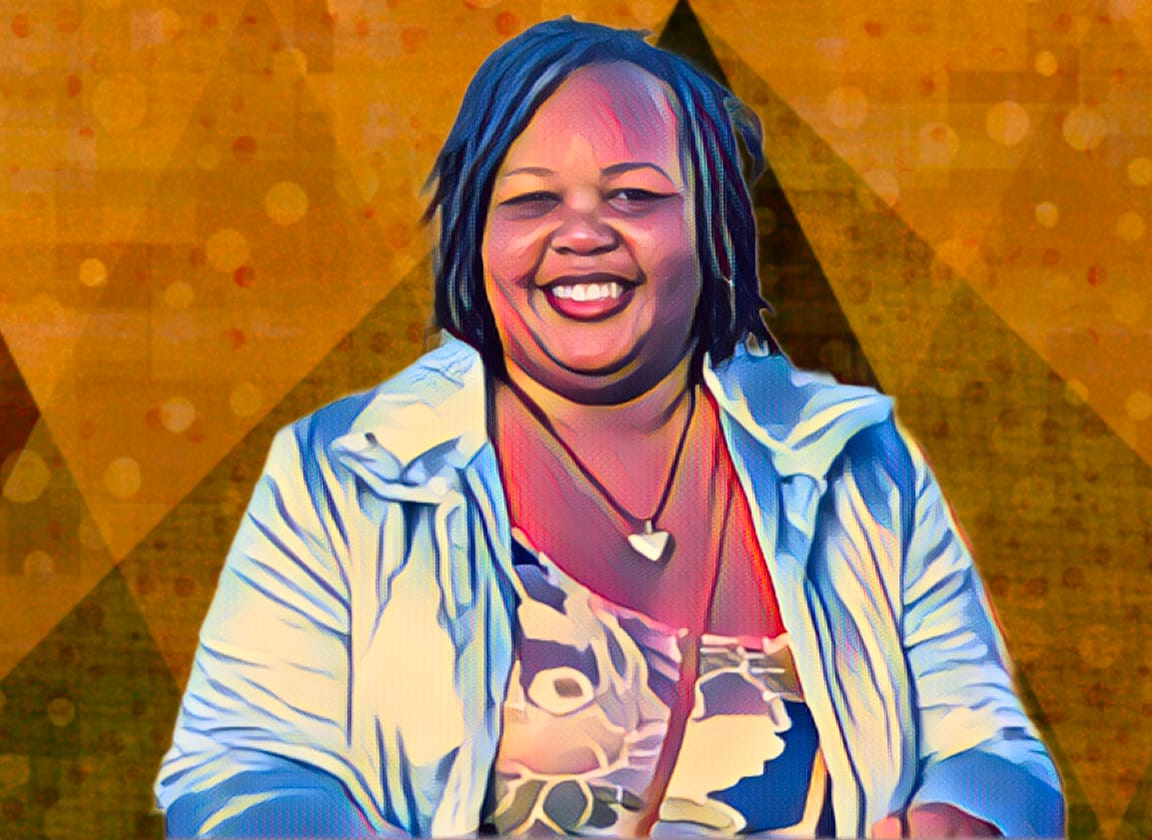
A Kenyan woman who spent a decade fighting to be recognized as her father’s daughter has finally won, and what she stands to inherit is one of the largest private estates to pass through Kenya’s courts in recent memory.
The High Court of Kenya sitting in Eldoret this week declared Chepkoech Too the biological daughter of the late Mark Kiptarbei arap Too, a KANU-era nominated MP and one of the most well-connected political fixers in Kenya’s post-independence history. The ruling, delivered by Presiding Judge Anuro Wananda, was based on DNA evidence that conclusively established Chepkoech’s paternity. Her stepmother, Sophie Too, had for years refused to acknowledge her as a beneficiary of an estate estimated at Sh7 billion, or roughly $53.8 million at current exchange rates.
The DNA tests were conducted at the Kenya Medical Research Institute, where samples taken from Chepkoech were compared against those of Arafat Mohammed Bakari, already recognized as a biological son of the late MP. The results showed that the two are half-siblings who share the same father but were born to different mothers. The science, as the judge put it, settled what family politics could not.
To understand the stakes of this case, it helps to understand who Mark Too was.
He was not a household name in the way that elected officials tend to be. He never won a constituency race. But in Kenya’s Moi era, winning a seat in parliament was only one way to wield power, and often not the most effective one. Too, known to insiders by the nicknames “Bwana Dawa,” “Mr Fix-It” and simply “Chairman,” operated in the corridors that ran behind the ones everyone else was watching. He was a Nandi branch chairman for KANU, a close confidant of President Daniel arap Moi, and a man who seemed to have the ear of virtually every political figure of consequence in the country regardless of party affiliation.
His most consequential act in public life came quietly. In 1997, Too was nominated to parliament by Moi. A few years later, he handed in his resignation letter to Speaker Francis ole Kaparo, clearing his nominated seat so that a young Uhuru Kenyatta could take it and get his foot in the door. Minutes after Too stepped aside, State House announced Kenyatta’s nomination. That single move changed Kenyan history. Kenyatta himself later acknowledged it publicly at Too’s funeral in January 2017, saying Too had been the one who pushed him hardest to stay in politics after a bruising 1997 loss.
Beyond politics, Too was a businessman who had been shaped by time at Lonrho, the British conglomerate that was deeply embedded in African commerce during the 1970s and 1980s. Working on Lonrho’s board and in its deal rooms across European and African capitals gave him negotiating skills and business contacts that most politicians of his generation did not have. He parlayed that into a vast agricultural empire built across the Rift Valley, spanning some of the most productive farming land in the country.
When he died on December 31, 2016, at a hospital in Eldoret at the age of 60, he left behind two widows and a mountain of assets spread across multiple counties. The estate includes 19 farms in Uasin Gishu, Nakuru, Nandi and Trans Nzoia counties, 10 trailers, 10 tractors, 11 vehicles, and shares in six companies. He owned prime residential properties in Lavington and Muthaiga in Nairobi, Milimani in Nakuru, and Elgon View in Eldoret. His business interests spanned large-scale dairy, wheat and maize farming, agribusiness and real estate.
His two widows, Mary and Sophie Too, were appointed joint administrators of the estate and have been managing it since his death. Mary is the first wife, with five children. Sophie is the second, with three children. Several children sired outside both marriages have sought recognition in the succession proceedings, Chepkoech among them.
Sophie’s position throughout the legal battle was firm. She acknowledged only two sons born outside the marriages, Ali and Bakari, and dismissed Chepkoech entirely. It was that dismissal that drove Chepkoech to court to request a DNA test, arguing it was the only tool that could resolve the question without relying on the willingness of the family to tell the truth.
The court agreed. After the KEMRI results came back confirming the half-sibling relationship between Chepkoech and Bakari, Judge Wananda issued the declaration: Chepkoech Too is a biological daughter of the deceased. She is now legally a beneficiary of the estate and will participate in whatever distribution the succession court ultimately orders.
Succession disputes of this scale are not uncommon in Kenya, but this one carries the particular weight of a political legacy, a vast agricultural fortune, and a woman’s decade-long fight to simply be named. The fight over the estate itself is far from over. The ruling resolves paternity. What comes next is the harder question of how a Sh7 billion empire gets divided among the children of two widows and at least four others born outside those marriages. That battle is continuing in the courts.
Crédito: Link de origem