

Mamy Ravatomanga faces third arrest warrant in mining case
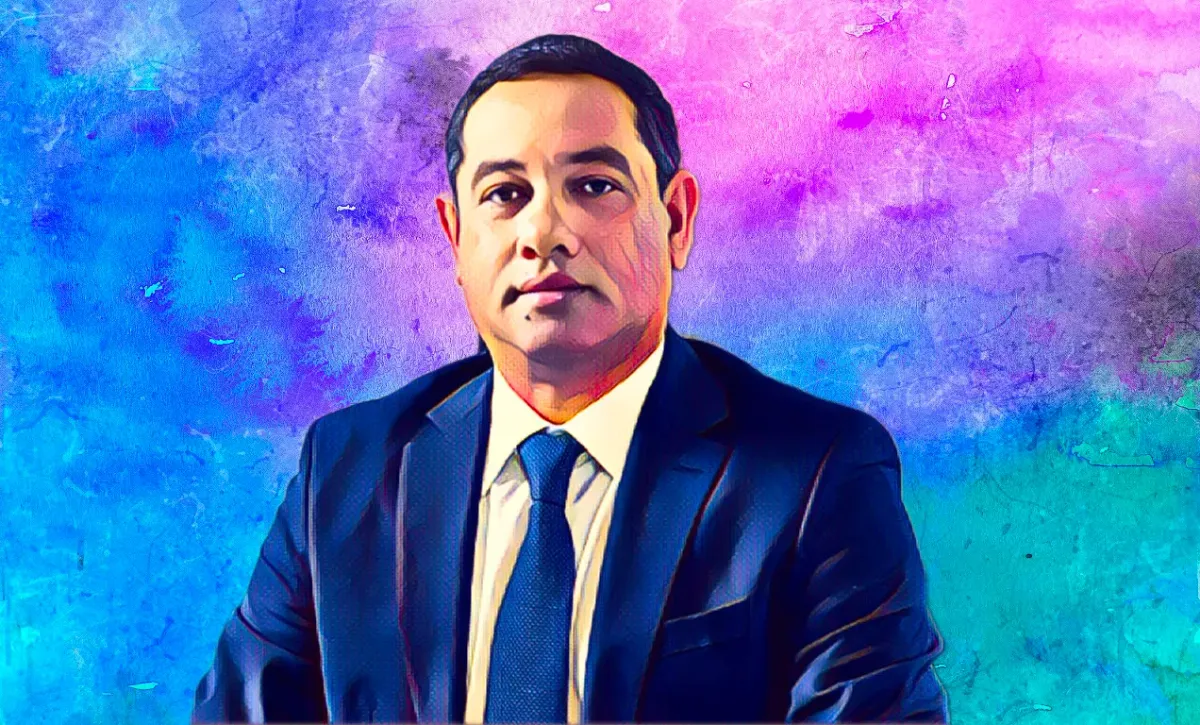
The case against Mamy Ravatomanga keeps getting wider.
Madagascar’s anti-corruption court issued a third international arrest warrant against the billionaire businessman on March 5, 2026, this time over alleged corruption in the country’s mining sector. The man who was once the second richest person in Madagascar, a close confidant to a president and the head of one of the island’s largest conglomerates, is sitting in a jail in Mauritius as the charges mount back home.
From Morondava to the top
Ravatomanga was born on Nov. 11, 1968, in Morondava, a coastal city on the western edge of Madagascar. He did not inherit a business empire. His early career was modest. He worked as a commercial agent at Toyota before becoming a provincial distributor while still in his twenties. In 1990, he founded Sodiat S.A., a company focused on transporting goods and fuel and repairing vehicles. He was 22 years old.
Over the next three decades, Sodiat grew from 4 employees into a sprawling conglomerate of 18 companies employing close to 4,000 people. The group’s interests eventually covered transport, oil services, construction, aviation, real estate, hotels, health services, security, media, tourism, golf and the import-export of agricultural products. By 2017, Forbes listed Ravatomanga as the second richest man in Madagascar.
The man behind the presidency
Ravatomanga’s rise did not happen in isolation. His connection to political power defined much of what Sodiat became.
In 2008, his companies and those linked to then-rising politician Andry Rajoelina were both subjected to tax investigations initiated by the government of incumbent President Marc Ravalomanana. The shared scrutiny drew Ravatomanga and Rajoelina together. When Rajoelina came to power through a military-backed transition in March 2009, Ravatomanga was close behind him, serving as an unofficial economic adviser, a position he held for years without a formal title but with unmistakable influence.
Critics and protesters labeled him the “vice-king.” His conglomerate won government contracts. His media companies shaped public opinion. His associates occupied strategic roles across sectors. Transparency International Initiative Madagascar, in a 2022 investigation, identified him as one of the key figures controlling the export of Malagasy lychees to France and Europe, alleging that a handful of powerful operators close to the ruling establishment captured profits that should have reached tens of thousands of small farmers and collectors. One TI-IM official said the concentration of wealth in the lychee trade represented a systemic failure that had gone largely unchallenged.
Sodiat subsidiaries also appeared in the Panama Papers. Ravatomanga held majority shares in a company registered in the British Virgin Islands. His name surfaced in France’s financial prosecution service in connection with investigations into money laundering, corruption and rosewood trafficking, though the French inquiry was dropped in August 2023 on grounds of insufficient evidence, a decision that drew its own scrutiny.
His group was also linked to the Carlos Ghosn affair. One of Sodiat’s aviation subsidiaries, the Malagasy airline TOA, was identified as the aircraft used by the former Renault-Nissan-Mitsubishi chief executive to flee Japan in 2019.
Boeing jets and the Iran connection
By 2025, a more serious international dimension had emerged. Five Boeing 777 aircraft were transferred to Iranian airline Mahan Air in July 2025, routed through Madagascar in what investigators described as a violation of U.S. sanctions against Iran. Madagascar’s Civil Aviation Authority had issued the registration certificates that made the transfers possible.
Madagascar’s Justice Ministry wrote to Interpol in October 2025 requesting a red notice for Ravatomanga’s arrest, stating that a suspect under interrogation had identified him as associated with the project to send the aircraft to Iran. Ravatomanga denied the accusations and said he had nothing to hide.
The fall
Starting in late September 2025, youth-led protests erupted across Madagascar over electricity cuts, rising food prices and what demonstrators described as decades of elite capture. Ravatomanga became one of the focal points of popular anger. His name was chanted at rallies. Protests targeted Sodiat offices.
On Oct. 12, 2025, with military units beginning to join protesters, Ravatomanga boarded a private Cessna Citation belonging to one of his companies and flew to Mauritius. The plane arrived at Sir Seewoosagur Ramgoolam Airport around 1 a.m. without a flight plan or a landing slot, requesting emergency authorization after the aircraft was low on fuel. It carried Ravatomanga and family members of former Prime Minister Christian Ntsay.
On Oct. 14, military commander Colonel Michael Randrianirina overthrew President Rajoelina. Three days later, Randrianirina was sworn in as interim president. Sodiat’s offices in Antananarivo were surrounded by soldiers.
Mauritius authorities arrested Ravatomanga on Oct. 24, 2025, at a private clinic where he had been receiving medical treatment. The Financial Crimes Commission there charged him with laundering approximately 7.3 billion Mauritian rupees, roughly $163 million, through a network of offshore companies in Mauritius, Seychelles and elsewhere. The FCC also moved to freeze $180 million held by Ravatomanga in two Mauritian banks. A former FCC commissioner was separately charged after investigators discovered, through intercepted messages, that he had secretly met with Ravatomanga in an apparent effort to obstruct the inquiry.
Three warrants and counting
Back in Madagascar, the Pole Anti-Corruption, the country’s specialized anti-graft court known as the PAC, began issuing international arrest warrants in rapid succession.
The first, issued around Feb. 21, 2026, concerned the lychee export scandal. Investigators alleged that Ravatomanga’s Sodiat Group had exercised monopolistic control over Madagascar’s lychee exports to Europe between 2019 and 2026, steering lucrative contracts to connected companies and excluding competitors without transparent criteria. Eight Sodiat executives were indicted and three were placed in provisional detention. Prosecutors said the scheme involved suspicious financial flows between Madagascar and Mauritius, with products shipped to a Sodiat-linked entity in Mauritius that then resold them in European markets at substantial margins.
The second warrant, issued days later, centered on the Kraomita Malagasy affair, known as Kraoma. Kraoma is a state-owned chrome mining company. In 2023, its chrome concession at Brieville was transferred from Kraoma to a private firm called Dana Minerals. Investigators allege the transfer was made in violation of public procurement rules. The PAC said an entry fee of $35 million was demanded in connection with the deal, and that $5 million from that amount was paid to an offshore company called Island Partners, registered in Mauritius. The PAC noted that Island Partners shares the same registered address as Madarail Holding, an entity it described as linked to Ravatomanga. Four other individuals and four companies were also named as suspects.
The third warrant, issued March 5, extended the mining corruption allegations further, accusing Ravatomanga of additional infractions involving abuse of function, favoritism, corruption and money laundering in the management of natural resources. Investigators said the diversions amounted to several million dollars taken from the state.
Ravatomanga remains in custody in Mauritius. Any extradition will require formal judicial cooperation between the two neighboring island nations, a process that legal observers say is likely to be slow and procedurally complex.
What the case represents
Madagascar is one of Africa’s poorest countries despite sitting on extraordinary natural resources including chromite, ilmenite, cobalt, nickel, graphite and the world’s largest supply of vanilla. The gap between those resources and the living standards of most Malagasy has long been attributed, in part, to elite networks that captured state contracts, mineral concessions and export monopolies while ordinary citizens went without electricity and running water.
Ravatomanga’s case has become a test of whether Madagascar’s post-coup transition will actually dismantle those networks or simply replace one set of beneficiaries with another. The PAC’s willingness to issue three international warrants in two weeks, and to freeze accounts linked to Sodiat, signals an unusually aggressive posture from a court that critics have long accused of selective prosecution.
His lawyers have challenged the account freezes in court, arguing that Sodiat’s 4,000 employees should not suffer for decisions attributed to the group’s founder alone. That argument has not yet succeeded.
The next steps rest on whether Mauritius cooperates with extradition proceedings, whether the offshore structures unravel under continued investigation, and whether Madagascar’s transitional government has the institutional strength to see the prosecutions through.
Those are not small questions for a country that has, historically, found it easier to start cases than to finish them.
Crédito: Link de origem