

Chagos: Britain must act on the law or forfeit credibilty
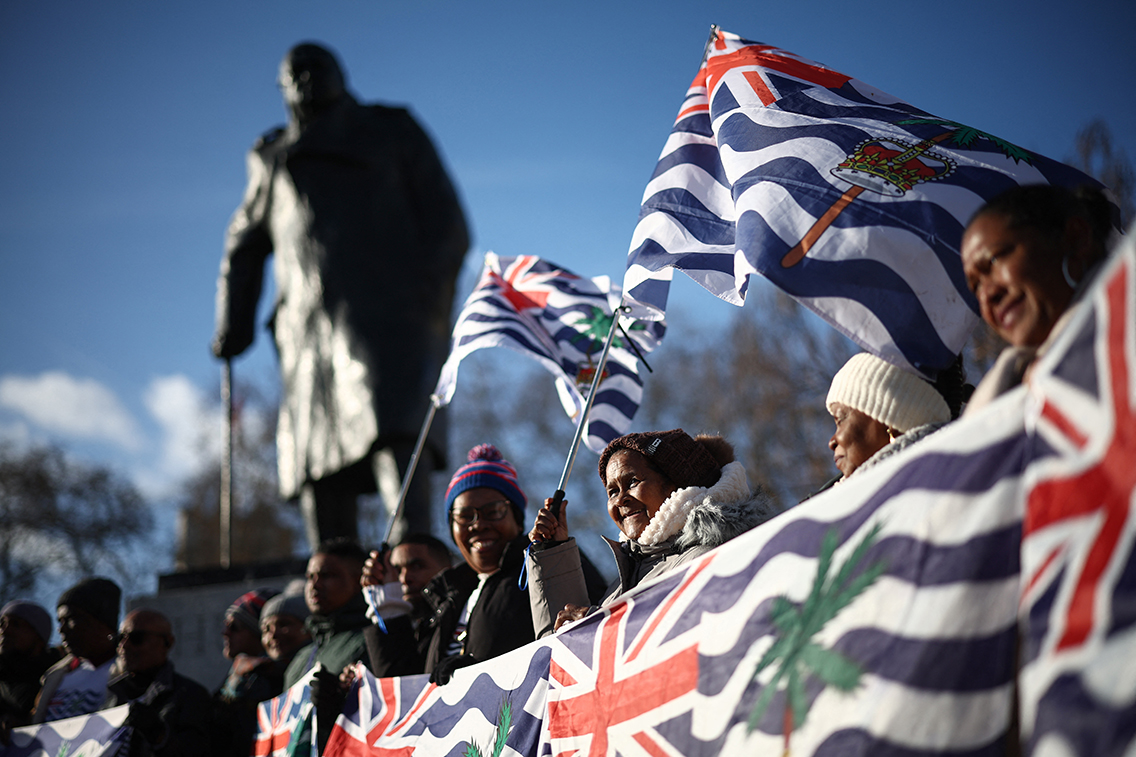
Britain has acknowledged Mauritian sovereignty over Chagos yet continued delay in ratification is reopening contradictions that international law has already settled. The longer implementation is deferred, the higher the cost—to credibility, to stability, and to the rule of law itself.
Britain has already accepted the legal reality on Chagos. It signed, on 22 May 2025, an agreement recognising Mauritian sovereignty over the archipelago, including Diego Garcia. That was the decisive step. What it has not yet done is act on it.
For Mauritius, this is not an abstract legal debate; it concerns the integrity of our territory, the dignity of our citizens of Chagossian origin, and the completion of our decolonisation.
This is no longer a matter of diplomacy or negotiation. It is a matter of implementation. And in that regard, Britain is now at risk of doing something far more damaging than resisting the law—it is appearing to accept it in principle while deferring it in practice.
The consequences are already visible.
The recent ruling of the so-called British Indian Ocean Territory (BIOT) Supreme Court has exposed the fragility of the legal edifice Britain continues to maintain. In striking at the prohibition on any right of abode, the court has effectively dismantled one of the central pillars of the BIOT regime. Its reasoning, tellingly, rests in part on the changed legal landscape created by the UK–Mauritius agreement itself.
Yet, here lies the contradiction. A colonial court, operating under a legal framework whose future has already been superseded, is now adjudicating rights in a territory Britain has agreed it does not ultimately own. This is not a sustainable legal position. It is a holding pattern masquerading as governance. And while this ambiguity persists, it is being actively exploited.
A small group of UK-based activists claiming Chagossian descent recently sailed into the archipelago and landed on Peros Banhos in open defiance of the law. Their actions were not spontaneous. They were encouraged and amplified by sections of the British right, including the far right, Reform Party, Nigel Farage, who has seized on the issue not to resolve it, but to weaponise it.
Let me be clear: this is not advocacy for Chagossian rights. It is political opportunism dressed in humanitarian language. The rights of displaced communities are not advanced by theatrical incursions designed to provoke confrontation and delay settlement. They are advanced by legal clarity, negotiated solutions, and responsible implementation.
Political opportunism
Nor is this opportunism confined to the margins. It has found expression within mainstream political debate, particularly in the resistance to ratification within the UK Parliament. The prolonged legislative impasse—most notably within the House of Lords—has shifted from scrutiny to obstruction. For scrutiny tests, legislation is obstructed from taking effect.
Those who continue to delay or dilute the agreement—among them Priti Patel, Kemi Badenoch, and the now politically itinerant Andrew Rosindell—should reflect carefully on the position they are staking out. This is not a contest over policy preference. It is a moment that will be judged against the settled direction of international law and the opportunity to correct a clear historical wrong.
To stand against that tide for reasons of domestic positioning or political expediency is to risk being remembered not as defenders of principle, but as its obstructionists.
Meanwhile, the wider strategic environment is shifting. The Maldives has begun to retreat from its earlier position supporting Mauritian sovereignty, introducing fresh diplomatic noise into what should be a settled matter. In Washington, the rhetoric surrounding Chagos has oscillated under Donald Trump, reflecting the unpredictability of an administration that has alternately supported and criticised the agreement.
These developments do not change the law. But they thrive in the space created by delay. And delay, at this point, is not neutral. It is corrosive.
The legal position is settled. The International Court of Justice has spoken. The United Nations General Assembly has endorsed. Britain has signed. There is no ambiguity left to resolve—only a decision to implement. What is now at stake is credibility.
Britain has long argued that international law matters—that it is not merely aspirational, but operational. That argument carries weight only when it is applied consistently, including when it requires difficult adjustments to inherited arrangements.
Chagos is precisely such a case. It is not about revisiting history for its own sake. It is about aligning present conduct with principles Britain itself has affirmed.
To delay that alignment, in the face of legal clarity and a concluded agreement, is to send an unmistakable signal: that the rule of law is something to be invoked abroad but negotiated away at home.
Britain has already taken the essential decision. It has recognised Mauritian sovereignty. The only question that remains is whether it will now complete what it has begun.
Because at this stage, hesitation is no longer prudence. It is inconsistency.
And a country that treats international law as optional in practice cannot expect it to be respected in principle.
Vijay Makhan, former Mauritian ambassador and foreign secretary, is regarded as one of the most astute commentators on international affairs involving Africa.
Crédito: Link de origem