

Five African founders who staged major comebacks in 2025
In 2025, Africa’s technology ecosystem stopped running on untested optimism. After years of speculation, the ecosystem has matured into something leaner and more calculating. The hopeful belief of outsiders no longer governs the market, but by a collective memory of what happens when the hype runs out.
After a bruising two-year contraction, venture funding into African startups has climbed back across the $3 billion threshold, a 36% jump from last year’s $2.2 billion, according to data from Africa The Big Deal.
However, while the headline figure suggests a return to the boom times of 2022, the market’s internal structure has undergone a fundamental shift. The days of sprinkling capital across a hundred early-stage experiments are over. Now, the money is moving in heavy, deliberate tranches, focusing on fewer bets, with rounds often exceeding $50 million.
At the centre of this recalibration is an emerging class of “survivor” founders. They are a distinct minority because numbers show that while 68% of African founders walk away for good after a startup fails. In 2025, the stigma of failure no longer defines this group, nor are they celebrated with the uncritical “fail fast” worship of Silicon Valley’s past.
For the modern African investor, a previous collapse is now a stress test. They are demanding a forensic accounting of why a company failed, separating unavoidable macroeconomic shocks, such as the regulatory shifts and funding droughts of 2023, from the self-inflicted wounds of unchecked cash burn and weak governance. They look for operational scars like missed hires, misjudged purchasing power in low-income markets, and flawed assumptions that can only be corrected by an expensive failure.
In a landscape where trust is the most expensive currency, founders who returned unused capital to their backers, a practice recently documented in high-profile closures, are finding a much warmer reception than those who left a trail of unpaid creditors.
These second-time founders are returning to the arena with a newfound sense of restraint, raising less capital upfront and treating every dollar as something to be earned through proven demand rather than assumed by right.
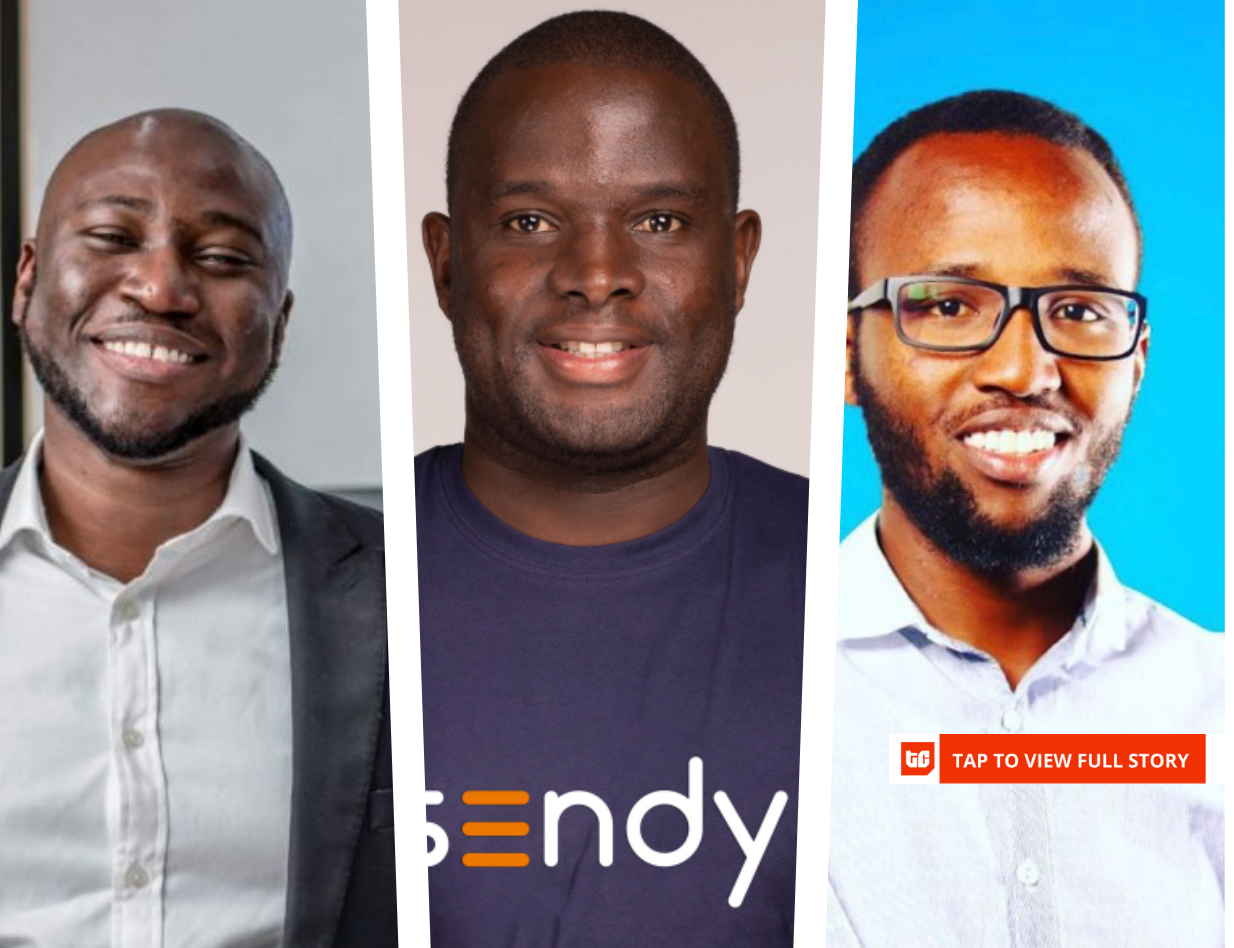
1. Meshack Alloys, from Sendy to TABB – Kenya
Meshack Alloys built Sendy into one of East Africa’s most visible logistics startups, raising over $24 million before the company collapsed in 2023, according to Crunchbase. The promise of asset-light logistics across multiple markets collided with thin margins and operational complexity, producing scale without durability.
Alloys’ return with TABB, a trade credit network that allows banks to extend revolving credit to small businesses using transaction data, reflects a rejection of that model rather than an attempt to refine it. The idea grew directly out of Sendy’s failure, where liquidity constraints repeatedly limited customer growth.
Credit infrastructure offers higher margins and clearer regulatory pathways than physical logistics, provided relationships with banks and regulators are built early. TABB positions itself as a partner to existing financial institutions rather than a challenger, signalling a more conservative approach.
2. Tesh Mbaabu, from MarketForce and Chpter to Cloud9 – Kenya
Tesh Mbaabu has become one of the most closely watched repeat founders of the cycle. Mbaabu’s B2B marketplace RejaReja, under MarketForce, shut down in 2024 after operational costs and FMCG (fast-moving consumer goods) margins eroded sustainability, a diagnosis Mbaabu made publicly.
His interim pivot, Chpter, an AI-driven conversational commerce platform, grew rapidly, onboarding about 1,500 merchants in four months, according to company statements. By late 2025, Mbaabu and his co-founder stepped aside to launch Cloud9, a digital bank aimed at younger users.
Kenya’s fintech market is projected to reach $14.5 billion (KES 1.9 trillion) by 2028, making the sector attractive but crowded. Cloud9’s appeal to investors lies in its insistence on early usage data and unit economics, a response to lessons learned in earlier ventures. Mbaabu’s repeated reinvention invites debate about focus, yet his willingness to abandon models that fail quickly rather than defend them indefinitely aligns with the market’s current preference for evidence over narrative.
3. Abasi Ene-Obong, from 54gene to Syndicate Bio – Nigeria
Abasi Ene-Obong co-founded 54gene and helped raise more than $54 million to build genomic datasets focused on African populations. Obong’s departure in 2023 and the company’s shutdown in September 2023 followed governance disputes that played out publicly.
Ene-Obong returned with Syndicate Bio, launched in 2023, but moved into full operational mode in 2025 with the opening of its first sequencing laboratory. The company wants to provide genomic infrastructure for global medicine, positioning Africa as a foundational contributor rather than a peripheral sample source. Early backers include Nubia Capital, Techstars, African Union Development Agency-NEPAD, and StoryHouse Ventures, according to PitchBook.
The decision to remain in biotech signals confidence that domain expertise accumulated over the years can outweigh reputational risk when paired with revised governance and operational discipline. Syndicate Bio is capital-intensive and slow by design, qualities that now attract investors seeking infrastructure-level businesses.
4. William McCarren, from Zumi to quieter second acts – Kenya
William McCarren scaled Zumi, a B2B e-commerce platform, to $20 million in sales and roughly 5,000 customers before the company shut down in March 2023, a closure attributed less to demand failure than to the inability to secure follow-on capital amid heightened risk aversion toward African e-commerce.
McCarren’s return has been deliberately low profile. He now works in South Africa as a co-founder of FARO, a re-commerce startup founded in 2023 but only gaining traction after a $6 million raise in 2024 led by Bloomberg President JP Zammitt. FARO runs physical stores that resell reconditioned fashion inventory, pairing software-led pricing with in-house garment refurbishment.
Unlike the purely digital Zumi, FARO is built around tight control of stock and cash flow. In 2025, the model moved into execution, with physical retail openings and scaled reconditioning operations validating unit economics through repeat demand and disciplined inventory turnover. FARO’s model has helped retailers recover value from unsold goods while reducing environmental waste and offering shoppers high-quality products at lower prices.
5. Alexandria Procter, from builder to funder – South Africa
In 2018, Alexandria Procter founded DigsConnect, a student accommodation platform that remains active, but her most notable move in 2025 was the launch of Pharos of Alexandria Ventures, a $1.4 million syndicate announced in October. The fund focuses on fintech, SaaS, climate, and digital infrastructure at pre-seed to Series A stages.
Procter’s transition reflects a broader trend of capital becoming more local and experiential. Her investment criteria mirror the discipline expected of comeback founders, emphasising customer evidence and capital efficiency. In this model, a second act does not always involve another product.
How failure is being priced into African tech
These individual trajectories align with wider shifts in where capital is flowing. Climate and energy accounted for four of the ten largest African tech raises in 2025. Sun King raised $156 million through bank-backed securitisations, while Spiro secured $100 million for electric mobility. These businesses generate predictable revenue and can absorb debt alongside equity.
Local banks have become more active participants in financing, particularly through structured debt. For founders, this changes incentives where debt demands cash flow and narrows tolerance for speculative expansion. Many comeback founders have adapted by designing businesses that generate revenue to support a runway rather than the reverse.
External investors long treated African markets as opaque because reliable data was scarce, operating conditions varied sharply across borders, and many business fundamentals could not be validated from a distance. Founders who have failed inside them now carry granular knowledge about where systems break, knowledge that does not appear in pitch decks. In 2025, that knowledge is a competitive asset.
Crédito: Link de origem
Comments are closed.