

For Lade Falobi, marketing starts with thinking, not hacks
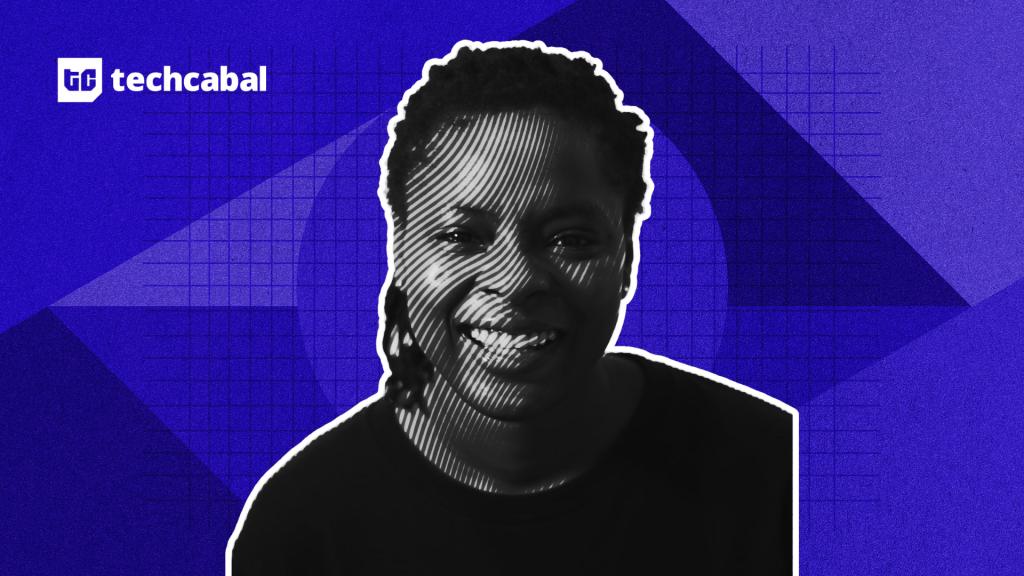
Lade Falobi does not want to save the world. “I try not to project philosophical worldviews onto marketing. I’m not a doctor. Nobody is going to die if a B2B SaaS (Business-to-Business Software as a Service) product isn’t perfect. We’re just making things better for people.”
This mindset is the hallmark of Falobi’s journey, a narrative that stretches from winning teenage photography awards to building Marketing for Geeks (MFG), a community that has become a ‘sanctuary’ for marketers who value marketing first principles.
The journalist’s daughter and the conceptual lens
Falobi was born into a cult of reading and writing. With a father, an uncle, and an aunt in journalism, her childhood was spent navigating bookshelves that held ideas far beyond her years.
Before Falobi transitioned to marketing as an adult, she was a teenage photographer who believed a camera could reveal deeper realities than the naked eye. While she now views that philosophy with fondness, the core instinct remains: reverse engineering, a working backward process that breaks down the thinking behind a finished product.
Falobi applies this instinct by trying to understand and replicate the thinking behind successful ads in the ones she creates.
“Replication is doing what someone else did. Reverse engineering is understanding why they did it,” she explains.
This obsession with “why” led her to an internship at The Independent, a national newspaper publishing in Lagos, Nigeria, where she spent her holidays.
The unlearning: From billboards to conversion
In 2021, after the COVID-19 pandemic and an Academic Staff Union of Universities (ASUU) strike stalled her final year of university, Falobi took a job at a JK&O, a traditional advertising agency, working on billboard-scale campaigns. But a message from a founder with a growth agency changed her trajectory.
Falobi left traditional advertising for the growth agency serving tech startups. The transition was a culture shock of the highest order.
“I had to unlearn the idea that creativity is everything,” Falobi admits. “In tech, people start from a place of distrust. Clarity becomes more important than cleverness. If your creativity overrides how clearly you explain what the product does, you’ve failed.”
This realisation propelled her through her stints at Enterscale in 2022, a marketing and growth agency focusing on tech startups, where she moved from copywriting to product marketing.
The move from agency life to in-house roles at companies such as Motherboard, a B2B Human Resources technology firm, in 2023, and Rivva, an administrative artificial intelligence company, in 2025, brought a new challenge: raw data access.
“Suddenly, I was the one responsible for setting up Mixpanel and Customer.io from scratch,” she says of data and marketing funnel platforms that in-house marketers use to manage their customers.
The transition from advising to “being in the deep end” meant learning to create event tracking plans and managing third-party vendor integrations that directly affected product quality.
For Falobi, this was where marketing met product growth.
The “Geek” supremacy: Marketing for Geeks
In 2022, Falobi started writing a newsletter on MailChimp about pop culture, but she realised she wasn’t actually interested in the topics she was covering.
Then she made a switch: “I sent a mail to 30 or so subscribers I had at the time, ‘I’m talking about marketing from now on, if you don’t like it, leave.’ They didn’t leave, surprisingly.”
She moved to Substack and leaned into the ‘geek’ label, a label she defines as not being an expert, but being interested in a subject enough to seek knowledge about it. She called it ‘Marketing for Geeks.’
Marketing for Geeks (MFG) wasn’t a calculated personal branding move. It was a byproduct of her obsessive nature. “At one point, I had a swipe file of over 10,000 ads. I just wanted to document the things I was noticing about these ads – why they worked, why they didn’t.”
MFG shares marketing tips, insights, and analyses into marketing campaigns, strategies, and ads through the African tech ecosystem. It has garnered a following of over 2,000 followers according to Falobi, and has morphed into a WhatsApp community of marketers across the continent.
The transition from a newsletter to a community was fueled by a desire to solve Falobi’s concern about the Lagos-centric nature of the ecosystem.
“Everything is in Lagos, all the meetups, most of the events,” she says. “I wanted something for just the Ibadan residents. I wanted the people in Lagos to finally be the ones feeling the FOMO (fear of missing out).”
MFG quickly outgrew its borders and now exists as a community of over 700 people on WhatsApp in a space where thought supremacy matters more than clout. While the members that do not reside in Ibadan now ironically outnumber the ones who do, the community’s soul remains rooted in Falobi’s first principles.
Her insistence on first principles makes her wary of the current AI hype, especially for entry-level marketers who do not have a firm grasp of marketing first principles.
“AI makes entry-level people outsource their thinking before they even know what they don’t know,” she warns. “While a senior marketer uses AI to sharpen a brief, an entry-level person might let the AI lead the way. The result is a significant drop in the quality of the ecosystem’s output.”
“If you don’t understand user psychology or frameworks like Cialdini’s Principles of Persuasion, you can’t tell when the AI is giving you nonsense.”
What’s next? JumpWag.
Falobi is currently pivoting into her most ambitious role yet: Founder.
Her startup, JumpWag, is a TikTok growth tool born out of her own struggle with video content. Falobi and her all-female co-founding team are building a bootstrapped tool to help creators jump on trends contextually using AI.
“I wanted to build something I could sell to my own community, rather than just promoting other people’s products,” she says.
For Falobi, the path forward isn’t just about more marketing; it’s about building the tools that make the marketing better.
Crédito: Link de origem