

Google launches speech dataset for African languages
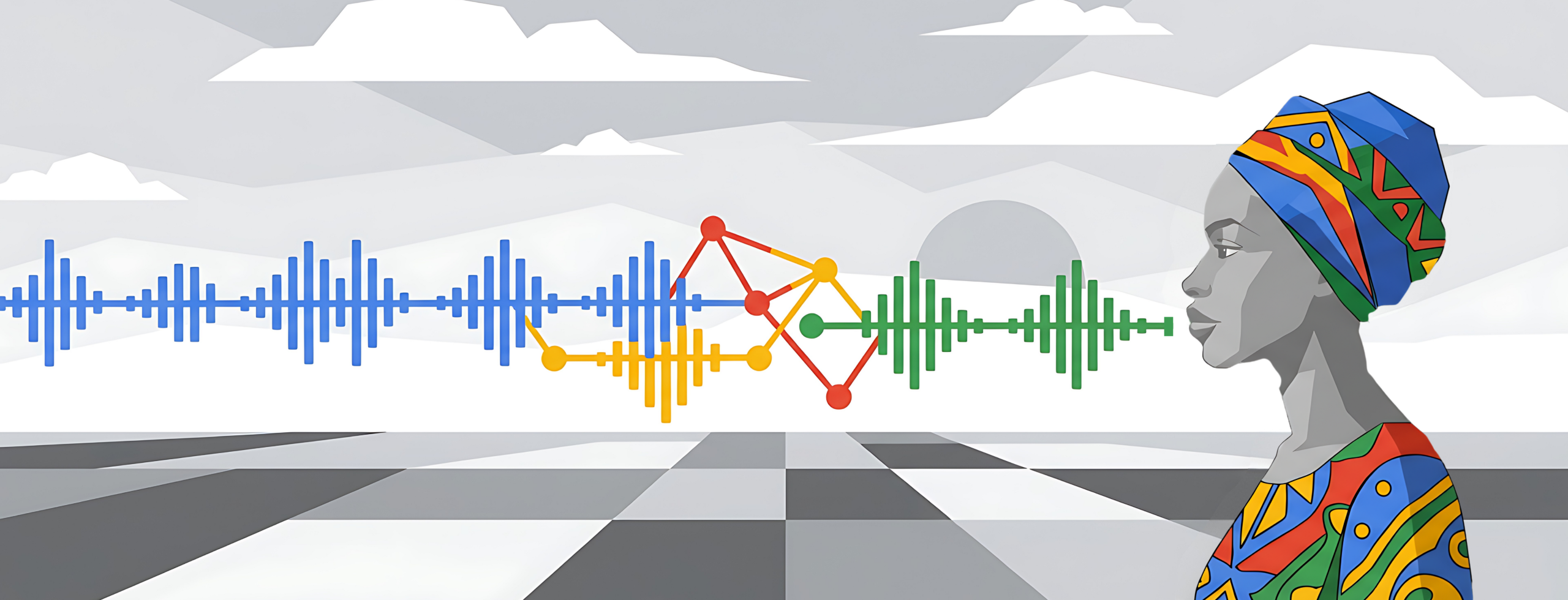
Google has collaborated with African universities and research institutions to launch WAXAL, an open-source speech database designed to support the development of voice-based artificial intelligence for African languages.
African institutions, including Makerere University in Uganda, the University of Ghana, Digital Umuganda in Rwanda, and the African Institute for Mathematical Sciences (AIMS), participated in the data collection for this initiative. The dataset provides foundational data for 21 Sub-Saharan African languages, including Hausa, Luganda, Yoruba, and Acholi.
WAXAL is designed to support the development of speech recognition systems, voice assistants, text-to-speech tools, and other voice-enabled applications across sectors such as education, healthcare, agriculture, and public services.
“This dataset provides the critical foundation for students, researchers, and entrepreneurs to build technology on their own terms, in their own languages,” said Aisha Walcott-Bryantt, Head of Google Research Africa
WAXAL’s launch comes amid growing efforts across Africa to develop language technologies that reflect local cultures and realities.
In September 2025, the Nigerian government unveiled N-ATLAS, an open-source language model capable of recognising and transcribing spoken words and generating text, in Yoruba, Hausa, Igbo, and Nigerian-accented English.
Similar initiatives are emerging in the private sector, where startups such as South Africa’s Lelapa AI are building tools like Vulavula, which offers speech recognition, translation, and sentiment analysis.
By making this speech dataset openly accessible, WAXAL provides the fuel for a growing wave of homegrown efforts to bring African languages into the digital age.
Although Sub-Saharan Africa is home to more than 2,000 languages, reports suggest that fewer than 5% of those languages have the resources needed for Natural Language Processing (NLP), which allows computers to understand and comprehend human language. This lack of representation in training datasets limits the effectiveness of speech recognition and text-to-speech systems for African users.
Developed over three years with funding and technical support from Google, WAXAL addresses a major gap in global AI development.
WAXAL provides speech data for 21 Sub-Saharan African languages, including Fulani (Fula), Hausa, Igbo, Ikposo (Kposo), Swahili, and Yoruba. The dataset contains more than 11,000 hours of speech drawn from nearly two million individual recordings.
Under the project’s partnership model, contributing institutions retain ownership of the data they collected, while making it openly available to researchers and developers worldwide.
“For AI to have a real impact in Africa, it must speak our languages and understand our contexts,” Joyce Nakatumba-Nabende, Senior Lecturer at Makerere University’s School of Computing and Information Technology, said.
“The WAXAL dataset gives our researchers the high-quality data they need to build speech technologies that reflect our unique communities.”
Crédito: Link de origem