

Is There An Intersection Between Fashion and Big Brother Naija?
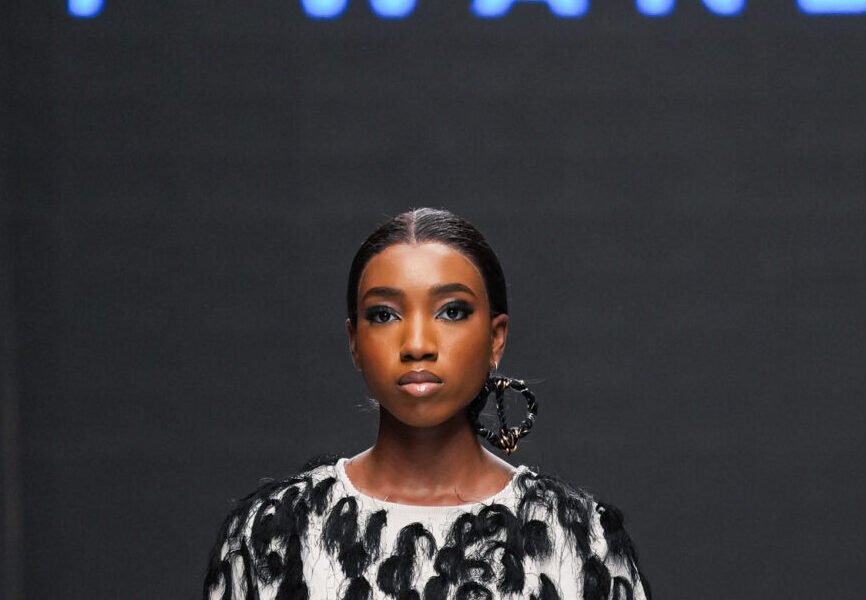
Shaun Okojie, BBN 2024 housemate, on the runway for Cute Saint.
A few days after winning the Her Money, Her Power contest inside the Big Brother Naija (BBNaija) house, Anita Ukah, a BBNaija season 9 housemate, walked the runway for the fashion brand Y’wandelag during the 2024 Lagos Fashion Week. It was the first public appearance for Anita since leaving the Big Brother house, which she did not win, but went home with ₦5 million prize money from the Her Money, Her Power contest for her excellent delivery about women’s economic power.
Our #HerMoneyHerPower winner, Anita Ukah (@UkahAnita) closing for Y’WANDELAG show.#LagosFashionWeek pic.twitter.com/71ojRMpr8A
— BellaNaija (@bellanaija) October 26, 2024
Big Brother Naija is one of the most-watched television programs on the African continent. The show has engagements as high as over 1.3 billion votes. Originally debuting in 2006 and then relaunched in 2017 with a fresh wave of housemates and media attention, the show locks a group of strangers (called housemates) in a house, with cameras capturing their every move. Over the course of three months, housemates participate in games, share personal stories, build relationships and sometimes spark national debates. But beyond the drama and entertainment, BBNaija has steadily become a springboard for fame; a fame that makes some of them movie stars like Tobi Bakre, who has now won the Africa Magic Viewers’ Choice Awards, arguably the biggest movie award on the continent or Bella Okagbue, who reportedly became an ambassador for the global fashion brand, Fashion Nova. And many more.
“BBNaija is a cultural phenomenon. It’s the biggest non-sporting television event in Africa. There’s nothing quite like it… You can’t deny the platform’s power and impact,” says Njideka Akabogu, a fashion editor and PR expert.
What the show offers, more than anything, is visibility. Millions of people tune in to watch these housemates daily, forming connections with them, studying their personalities, and rooting for their growth. It is this sustained exposure — with its built-in fan base — that fashion brands in Nigeria have learned to leverage.
Since 2011, Lagos Fashion Week has become one of the most anticipated cultural events in the country, a calendar moment where media, influencers, and designers converge to celebrate Nigerian and African fashion. It’s become a site for spectacle and culture, where who walks is just as important as what they wear.
During the fashion week, established and emerging brands leverage the popularity that Big Brother Naija offers the housemates by using them as runway stars. Coincidentally, the fashion week coincides closely with the BBNaija season. Brands court the star housemates whose stories and online presence still carry influence.
“One of the major things that we look out for when choosing a housemate is the image of the housemate. We always prefer someone who represents our target audience, and also a housemate whose values align with the house codes. Another criterion is the style of the housemate. We want someone who has a personal style that fits into our aesthetics,” Cute Saint, a Nigerian fashion brand, says.
Like Anita, in 2018, Tobi Bakre walked for Ugo Monye’s brand during Lagos Fashion Week in the year he was a BBNaija housemate. Dorathy Bachor, a 2020 housemate, was used for the runway by Hertunba during the Lagos Fashion Week in 2024. Shaun Okojie, a 2024 housemate, was used for the runway by Cute Saint during the Lagos Fashion Week.
“In Nigeria, where niche fashion media is still underdeveloped and mainstream coverage is limited, leveraging BBNaija housemates who are essentially walking algorithms is a strategic way to generate buzz around our most relevant fashion event. These personalities bring reach, engagement, and virality – the key metrics that sponsors prioritise. It’s ultimately a numbers game, and tapping into that audience, who might not typically engage with fashion week content, helps amplify the event far beyond what traditional media can do because now they’re watching, sharing, and even Googling the names behind the clothes,” Akabogu says.
These housemates, by the time they exit the show, often command hundreds of thousands — sometimes millions — of followers on social media. They’re not just seen as regular citizens anymore; they’re public figures whose fashion choices can spark conversation.
“It signals a clear shift in power, from traditional gatekeepers to the new age celebrities and personalities who command real-time attention on social media. Whether we embrace it or not, fashion is undergoing a democratisation. The industry is beginning to acknowledge that it can’t afford to operate in an echo chamber anymore. There’s a reason we’re seeing TikTok creators and influencers at the Met Gala,” Akabogu adds.
At the same time, fashion offers these housemates something in return: legitimacy. Walking a Lagos Fashion Week runway or becoming a brand ambassador for a fashion house helps housemates shed the tag of “just another reality star.” It places them within a broader cultural conversation, signalling that they have value. Fashion Week has become the meeting point, a physical space where all these identities are negotiated.
Still, this raises questions worth exploring: What does this say about fashion’s future in Nigeria? Is the industry now reliant on virality and visibility over craftsmanship? Or is this simply the evolution of how fashion works, tied towards culture and personality alongside design? Does the inclusion of BBNaija housemates elevate or dilute the artistic integrity (whatever it means) of Lagos Fashion Week?
“Labelling it a dilution of artistic integrity feels a bit purist. While I understand the concern and maybe even agree to some extent that we should keep anything and anyone that distracts from the art itself off the runway, the reality is that the Nigerian fashion industry is still finding its footing and is not yet at a place where it can afford to turn its nose up at visibility. Many designers are struggling to keep their lights on. If the inclusion of the housemates can shine a spotlight on their work, even if just momentarily, that’s a win.
There are millions of people whose first introduction to a designer’s work would be seeing their favourite housemate walk the runway in a piece by said designer. That visibility matters. Moreover, fashion is both an art and a business. What use is artistic integrity if the designers aren’t selling?” Akabogu argues.
Meanwhile, Cute Saint maintains that “there has been a considerable increase in engagement over the years since the BBNaija housemates were incorporated into our shows, from people cheering up and lots of comments that increased the brand’s visibility and awareness.”
But are there other ways fashion brands can leverage the BBNaija beyond runway shows? Akabogu answers: “We’ve already seen brands styling housemates for Saturday Night Parties, which I think is a brilliant way to showcase their brands in front of millions across the continent. But there’s room to do even more. Take Mercy Eke’s 2023 All-Star entrance look. It became a major fashion moment, yet we still aren’t quite clear on who designed it. A Nigerian brand could’ve leveraged that visibility to great effect.
From styling housemates for key moments like the premiere night or eviction shows, to post-show collaborations such as capsule collections or ambassadorships, the opportunities are vast. The key is ensuring that the partnership or collaboration aligns with the brand ethos, and that it’s done smartly, in a way that leverages the emotional connection fans have with their favourites, while steering clear of the toxicity and fan wars the show can sometimes spark. It’s a powerful platform, but it has to be navigated with intention. You need to be clear about what you want out of it and map out a plan that helps you achieve that.”
BBNaija housemates may not always become fashion icons in the traditional sense, but their presence on runways and lookbooks marks a shift. It tells us that in Nigeria today, fame is not a side effect of fashion; it is part of the design.
“In as much as the fanbase [or fame] isn’t really the most important criterion for us, it further helps in preaching the brand’s gospel when a housemate has a good fanbase. And by good fanbase, we aren’t really bothered about the number of followers on Instagram; we are mostly concerned about the activities of the fanbase and how much they engage with the housemate,” Cute Saint says.
Big Brother Naija is definitely a platform that enhances visibility and social media engagement, helping emerging fashion brands and the Nigerian fashion industry consolidate their cultural presence. While it is unclear, however, how fashion brands, which are often sponsors and therefore pay to appear on the show, have, besides brand awareness, a financial return on investment.
Crédito: Link de origem