

Machankura is putting Bitcoin on Africa’s most basic phones
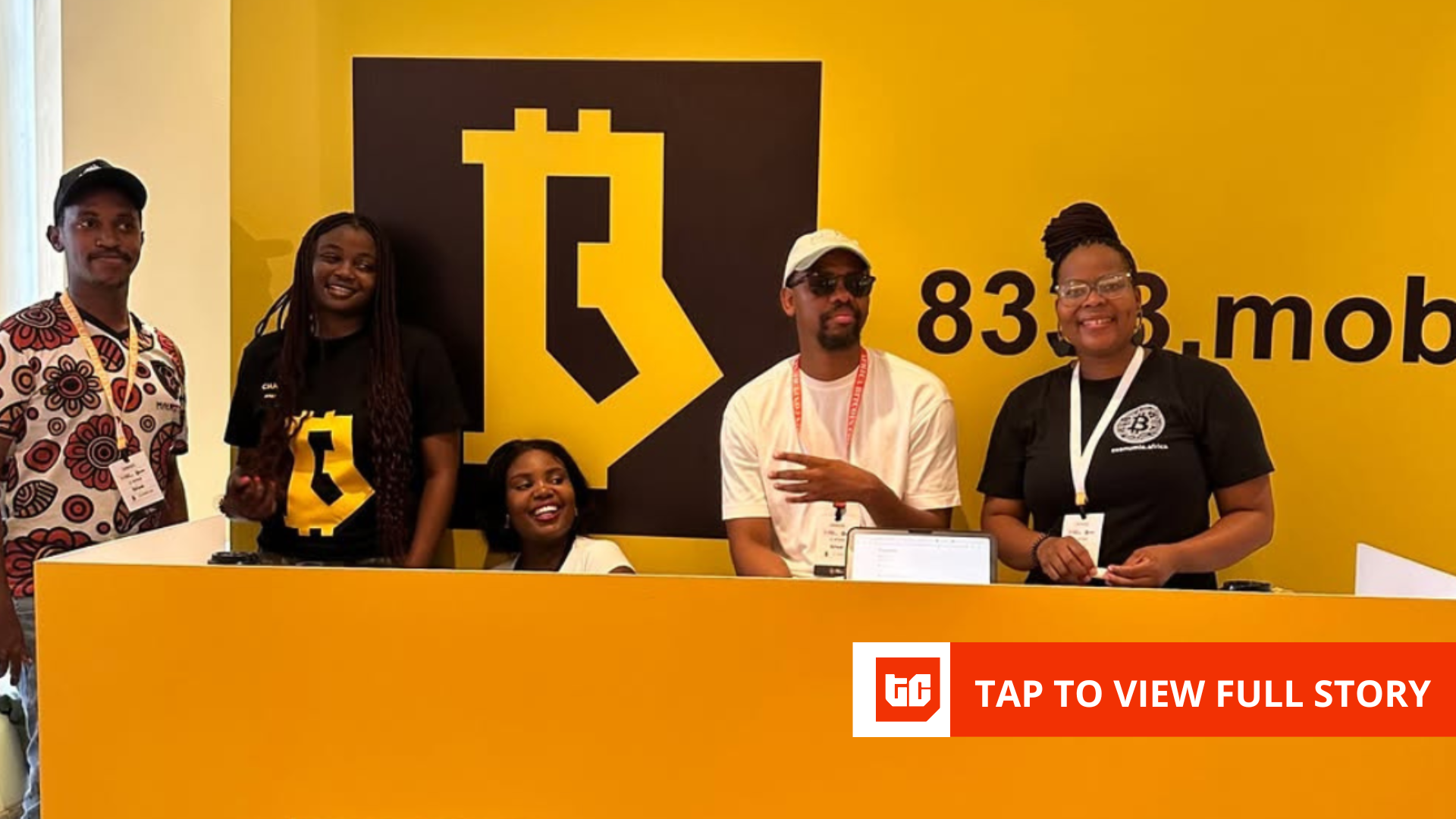
Bitcoin—and most other digital assets—promise cheap, fast cross-border payments. But there’s a catch: you need a smartphone and internet access to use them. In much of Africa, where millions of people still use feature phones, that design shuts them out.
Kgothatso Ngako, a South African software engineer and former Amazon Web Services (AWS) developer, founded Machankura in 2022 to solve this design flaw. The startup allows people to send and receive Bitcoin using the Unstructured Supplementary Service Data (USSD) technology, the same short-code system Africans use to check airtime, transfer mobile money, or query their account balance in traditional banking.
Machankura’s mobile-first approach targets Africa’s vast base of feature phone users. In 2024, the continent counted 710 million unique mobile subscribers, yet only 416 million—28% of the population—used mobile internet, according to GSMA’s “The Mobile Economy Africa 2025” report. About 860 million Africans remain offline, constrained by device cost, expensive data, and limited digital skills.
This divide persists despite growing smartphone purchases. A report by Omdia, a global research firm, found that smartphones accounted for 55% of all mobile handset shipments in 2025, leaving feature phones at about 45%. For hundreds of millions of Africans who can dial a short code but not download an app, smartphone-built digital asset platforms remain out of reach.
Using Machankura, a user dials a local code from any phone—feature or smartphone. A text-based menu appears. They can create a wallet linked to their phone number, check their balance, or send Bitcoin, without needing an app or internet connection.
The ambition is to do for Bitcoin what M-PESA did for payments: embed it into a technology that hundreds of millions of Africans already use daily, Noelyne Sumba, Machankura’s Director of Operations, said in an interview with TechCabal.
“USSD is already familiar,” she said. “People use it every day for financial services. We are extending that to Bitcoin.”
Who uses Machankura and how
Machankura operates in Côte d’Ivoire, South Africa, Kenya, Ghana, Malawi, Zambia, Nigeria, Namibia, Tanzania, and Uganda. In each country, users dial a local USSD code to access their wallet.
The service is now connected to over 39,000 phones, including feature devices, according to Sumba. Yet, the user base is not evenly distributed. Adoption is concentrated in urban and peri-urban areas, and primarily among younger, digitally-aware users, aged 35 and below, who understand crypto but may lack the devices or data to use conventional wallets.
“It’s the young people who are mostly tech-savvy, but because either they cannot afford internet connectivity, or most of them have feature phones, it’s very easy for us to onboard them,” said Sumba. “I’ll be more than happy to get to the older generations, but it will take a while.”
Beyond peer-to-peer (P2P) transfers, Machankura users spend Bitcoin through a network of partner platforms connected via the Lightning Network. In Kenya, users can send Bitcoin from their Machankura wallet to Tando, which converts it into M-PESA credit, allowing them to pay for goods and services at zero transaction fees on Tando’s end.
In South Africa, MoneyBadger, a local off-ramp partner, has integrated the Lightning Network into its point-of-sale (PoS) system; through a recent partnership with Scan to Pay, it now covers over 650,000 merchant locations, including major retailers like Pick n Pay. Users can also purchase airtime, data, and digital vouchers through services like Bitrefill.
Sumba cites examples of daily use: In Kisii, a town in western Kenya, members of Bitcoin Chama use feature phones to transact in Bitcoin for everyday purchases. In Kibera, Nairobi’s largest informal settlement, the Afribit project has onboarded 2,600 residents into a similar circular economy where merchants accept Bitcoin and participants earn satoshis through community work programmes.
In South Africa’s Mossel Bay, Bitcoin Ekasi pays all staff salaries entirely in Bitcoin and has onboarded local shops to accept it.
“These are the circular economies we’re building for,” said Sumba. “We want that local mama mbogas [female vegetable sellers] to be able to say, ‘You know what, you can still pay me in Bitcoin.’”
Since its launch, the startup has processed over 19 Bitcoins (BTC) in total transaction volume across its markets, according to Sumba. At current market prices, that’s over $1.2 million in routed value.
How Machankura works
Machankura sits between two distinct infrastructure layers: Africa’s telecom networks and the Bitcoin Lightning Network.
On the telecom side, when a user dials the Machankura code, the request travels through the mobile network to Africa’s Talking, a communications application programming interface (API) provider that offers USSD connectivity across African mobile operators. Africa’s Talking routes the session to Machankura’s servers. The user then interacts with a real-time, session-based text menu limited to 160 characters per prompt and timed to 20 seconds per response.
For most of its markets—Ghana, Kenya, Malawi, Namibia, Nigeria, and Zambia—Machankura uses Africa’s Talking as its aggregator. In Côte d’Ivoire, Tanzania, and Uganda, local providers handle the USSD integration due to regulatory constraints.
“They [Africa’s Talking] were very open to working with us,” said Sumba. “Thanks to Africa’s Talking, we were able to have the service in as many countries as possible. Even when we kicked off operations, we started with all the countries we could integrate into.”
USSD infrastructure carries real costs. In Nigeria, acquiring a USSD code through Africa’s Talking costs ₦200,000 ($145), with a monthly maintenance fee of ₦70,000 ($51) plus value-added tax (VAT); per-session charges vary by carrier.
In Kenya, a Safaricom setup runs KES 145,000 ($1,122) with KES 70,000 ($542) monthly maintenance. These are fixed costs that Machankura bears regardless of transaction volume, an important consideration for a startup processing micro-value transactions.
For users with smartphones and internet access but limited technical skills, Machankura also offers a WhatsApp-based interface as an alternative channel.
On the Bitcoin side, Machankura connects to the Lightning Network, a second-layer protocol built on top of the Bitcoin blockchain. Lightning allows near-instant, low-cost transactions by routing payments through channels between nodes, rather than recording every small transfer directly on the base chain.
Machankura runs its own Lightning nodes holding about 1.6 BTC in liquidity today, split across two main nodes that together maintain nearly 20 payment channels. This liquidity enables Machankura to push users’ Bitcoin payments through the Lightning Network quickly and cheaply from a basic phone to services like Bitrefill or partners like Tando and MoneyBadger.
Each user’s phone number is mapped to a custodial Lightning wallet and a simple, email‑style Lightning address (for example, phonenumber@8333.mobi), so anyone in the world can send them Bitcoin using that address. Machankura’s own nodes ensure the payment is routed and the balance is updated on the user’s USSD wallet.
Machankura charges a 1% fee on transactions, denominated in Bitcoin. The startup does not touch fiat currency. On the cost side, it pays USSD session fees to Africa’s Talking (or other local aggregators), maintains Lightning node infrastructure and liquidity, and runs server operations.
Regulatory tension and the on-ramp problem
Machankura’s biggest operational risks come from unclear digital asset regulation across markets where it operates, said Sumba.
“I don’t think the telecom companies are not welcoming,” Sumba said. Integration is handled through established aggregators like Africa’s Talking, which already maintain commercial relationships with mobile operators.
The harder challenge is how governments view crypto businesses. In the startup’s early months, Machankura lost its USSD codes in Tanzania and Uganda.
“We were baptised by fire,” said Sumba. “It was quite demoralising.”
The startup has since switched to local USSD providers in those markets, but the episode illustrates a structural vulnerability: Machankura’s entire service depends on maintaining access to telecom infrastructure that governments can revoke.
The fragility extends beyond regulation. Even where Machankura operates legally, users need a way to buy Bitcoin in the first place—a fiat-to-crypto “on-ramp.” Sumba identified this as a persistent challenge:
“Another problem we still have is with the on-ramp and off-ramp,” said Sumba. “Because of the uncertainty, we often rely on platforms to help with onboarding, but after a while, something happens, and we can’t access them anymore. At least with Bitnob and Bitika, we’re trying to make on-ramping easier. Off-ramping isn’t as much of a problem. The real challenge is usually the buying of Bitcoin part, and that’s something we’re constantly working to address.”
When an on-ramp goes down, Machankura users lose the ability to add Bitcoin to their wallets, even if the USSD service works perfectly.
Can Machankura be the M-PESA for Bitcoin?
Machankura does not operate in a vacuum. Several models compete for the same user base: Africans seeking affordable, accessible digital financial services.
M-PESA remains the biggest competition because it uses fiat currencies, which most people are already familiar with. The mobile money platform processes billions of dollars each year, with a merchant density that dwarfs any crypto-based rival.
Machankura’s advantage over M-PESA is narrow but specific: cross-border transfers without currency conversion fees, and access to a global settlement network that operates outside the banking system.
Kotani Pay, a Tether-backed Nairobi-based crypto startup, is its most direct competitor. It uses the same USSD infrastructure to offer stablecoin access, targeting the same unconnected population, but with dollar-pegged assets that eliminate volatility. Kotani operates on over 15 blockchain networks and has integrated with mobile money services like M-PESA for on-ramp and off-ramp provisions.
Machankura’s defensible position rests on three things: its Lightning Network infrastructure (two of the three largest nodes in Africa), its multi-country USSD footprint via Africa’s Talking, and its deep embedding in grassroots Bitcoin circular economies.
The “Bitcoin only” operating ideology and path to scale
Machankura does not plan to integrate stablecoins, said Sumba, despite the rising adoption of dollar-backed digital currencies on the continent.
“Simple answer: no, we will not be having stablecoins,” said Sumba. “We are strictly Bitcoin only.”
The reasoning, according to Sumba, hinges on three arguments: First, Bitcoin has no central issuer. Stablecoins like USD Tether (USDT) and USD Coin (USDC), two dominant dollar-backed stablecoins, are controlled by companies that can freeze accounts and blacklist transactions, as Tether did in Venezuela, said Sumba.
Second, Bitcoin has a fixed supply, while stablecoins are pegged to the US dollar, which Sumba argues has contributed to the debasement of African currencies through inflationary monetary policy.
Third, stablecoins require banking partners and government compliance dependencies that introduce fragility in markets where regulatory clarity is limited.
Yet, Machankura’s Bitcoin-only stance is operationally challenging due to Bitcoin’s price volatility, since it targets grassroots economies. A shopkeeper in Kisii who accepts Bitcoin for vegetables in the morning could see that balance drop 5-10% by evening.
Sumba acknowledged this volatility problem, telling TechCabal that the startup aims to “educate informal sellers in grassroots areas on how to balance the financial risk.”
Stablecoins, by contrast, offer the dollar peg that most African consumers and merchants already use as a mental benchmark. Kotani Pay has built a similar USSD-based wallet for stablecoins like USDT and USDC, operating in over eight African countries. Its approach sidesteps Bitcoin’s volatility and plugs directly into existing mobile money rails. For a risk-averse user whose primary goal is preserving purchasing power, stablecoins may be more practical.
Insisting on a Bitcoin-only approach may limit Machankura’s addressable market to ideologically-aligned users and early adopters known as ‘Bitcoiners,’ while the broader base of price-sensitive, risk-averse Africans gravitates toward dollar-pegged alternatives.
Machankura’s growth curves
Machankura’s growth has been steady but slow. The user base has expanded from 2,900 connected phones in 2023 to 13,600 by 2024 to 39,000 at present. The startup grew its mobile phone ecosystem by roughly 4-5x growth per year in the early phase, but that has decelerated to 2-3x in later years.
The crypto payments startup tracks two key metrics, according to Sumba: total phones connected to the service, and transaction volume.
39,000 connected phones in a market of over 570 million mobile subscribers represents a 0.007% penetration. The target, as Sumba put it, is “hopefully one billion. We still have a long way to go.”
Adoption of Machankura’s product faces a core chicken-and-egg problem. Most users need to buy Bitcoin before they can spend it, and buying Bitcoin in Africa remains difficult.
“The Bitcoin reach—trying to get Bitcoin into the hands of people—it takes a lot,” said Sumba. “If you’re not earning it, you have to find a way to buy it. And even if you’re buying it, not so many people still understand how to buy it.”
Machankura’s growth strategy relies less on traditional marketing and more on embedding into existing community structures.
Sumba pointed to savings circles—informal cooperative groups common across East Africa—as a major channel they have barely started to tap.
“There are still lots of these small communities, savings groups. And that’s one thing that we’ve not really tapped into, because they do have lots of capital,” she said.
Machankura has built a “Clans” feature to target these groups, offering a shared platform for collective savings and monitoring.
Beyond communities, the team is exploring new utility integrations. The startup is building a service that would allow users to buy AI credits and software subscriptions using Bitcoin to make the wallet useful for daily digital spending, not just long-term savings.
Yet, from a business model deconstruction, Machankura still faces tensions that critically tug on its scale ambitions.
First, USSD dependency. The entire service runs on telecom infrastructure that Machankura does not own or control. If a major carrier or regulator decides to block USSD access for crypto services, the service goes dark in that market.
Second, on-ramp fragility. Fiat-to-Bitcoin on-ramps in Africa are unstable. Partner platforms can lose banking access, face regulatory action, or shut down, severing users’ ability to load their wallets.
Third, unit economics. At 1% of micro-transactions, revenue per user is low. Fixed USSD costs across 10 countries, including setup fees, monthly maintenance, and per-session charges, create a cost floor that requires significant volume to cover.
Also, as African governments formalise digital asset regulation, Machankura may be required to obtain Virtual Asset Service Provider (VASP) licences, implement full know-your-customer (KYC) controls, and maintain minimum capital requirements that could conflict with its grassroots, low-friction model.
The road ahead for Machankura
Machankura’s near-term roadmap centres on three priorities, according to Sumba.
The startup is targeting grassroots merchants—small shopkeepers, market vendors, mama mbogas—rather than large retailers. The goal, said Sumba, is to build enough “merchant density” in specific communities that Bitcoin can function as a true medium of exchange.
The startup is also building “Machankura 2.0,” which would allow users to hold their own private keys on a SIM-based chip to address the trust problem.
Machankura still bets that the majority device in Africa are feature phones, the most trusted financial interface is still USSD, and the most powerful monetary technology is still Bitcoin.
Whether that combination can scale past 39,000 users to anything approaching one billion is the bet Sumba is making. Yet, it will depend on forces the startup can only partially control: regulatory clarity, on-ramp stability, and whether communities across the continent decide that the trade-offs of Bitcoin are worth the promise.
“If it doesn’t get to work, probably we’ll just call it a day and say we tried,” Sumba said, laughing. “But for us, the rules have been set in stone, and we already know what we’re working with. It offers us that certainty as a company; to be able to plan not just for now, but for decades.”
Crédito: Link de origem