

Modern railways drive Tanzania’s economic ambitions
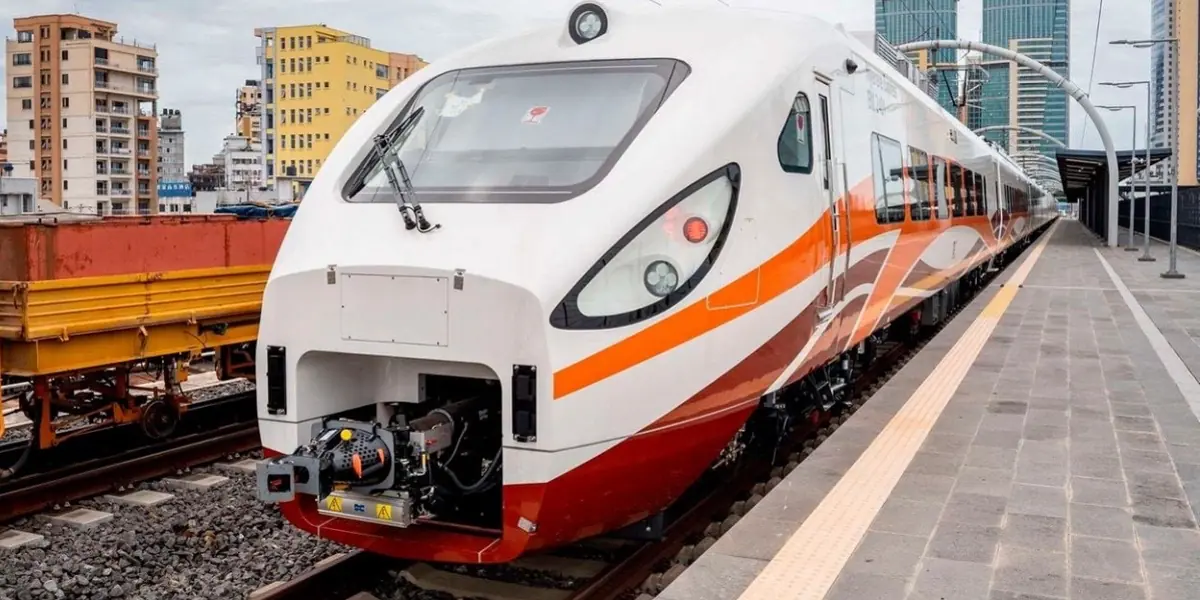
- Tanzania President Samia commits to modern railways to revolutionize the economy.
- Electric trains promise fast economic change in Tanzania.
- New jobs created thanks to modern railways.
Modern railways, in particular electric trains for passengers and other ultra fast trains for cargo are changing the landscape in East Africa’s infrastructure development. Most recently, Tanzania announced an ambitious national infrastructure agenda seeking to transform the country into a rail linked economy.
Officials in the country say modern railways are the key to drive fast paced economic development. “Modern railways will speed up trade, investment and industrial growth across all regions,” said Tanzania’s President Samia Suluhu Hassan. The president raised the modern railways topic in parliament as she introduced the government’s long-term development plan.
The president seized to the opportunity when she inaugurated the country’s Parliament in Tanzania’s capital Dodoma soon after her ben sworn in for her second term.
President Samia, the country’s first female president, said her government has a comprehensive strategy that is being prepared in which modern railways will open up and link vibrant economic corridors across the country and region.
“Modern railways will create wider opportunities all along their routes,” she told parliament citing that investing in modern railways will also serve to address the shortage of jobs among youth. “My government also plans to introduce modern commuter train systems in Dar es Salaam and Dodoma to ease congestion in the two rapidly growing cities,” she informed parliament again insisting that modern railways will help the country achieve it’s national development goals.
Also Read: Reimagining Africa’s trade corridors: A blueprint for integration, growth, and resilience
Modern Railways: Tanzania’s ambitious rail infrastructure plan
“Shaped and coloured like the country’s rare gemstone, tanzanite, the sparkling new railway terminal in Dar es Salaam is a symbol of Tanzania’s transport ambitions,” that is how the BBC described the recent inauguration of Tanzania’s new railway terminal in the commercial port city of Dar es Salaam.
“The glass panels gleam in the sun, like an outsize version of the prismatic bluish-purple gem that glitters in the light,” BBC wrote.
As for the trains themselves, “…they are powered by electricity, a first for the region – carry passengers from the commercial hub to the capital, Dodoma, in less than four hours, half the time it takes by road,” BBC said.
The article speaks of how the inauguration ‘marks the starting point of one of the country’s strategic projects – the building of a 2,560km (1,590-mile) Standard Gauge Railway (SGR)’ and it is correct.
Tanzania’s president Samia said her government envisages connecting key cities and linking up landlocked neighbours the likes of Burundi, Rwanda and the Democratic Republic of Congo.
Notably, the 460km (285-mile) Dar es Salaam to Dodoma leg of these modern railways was opened since August of last year at which point, President Samia Suluhu described the railway as “a pathway to our future” that would “enhance our standing in the region,” recalls the BBC article.
When you travel the 460 plus kilometers from Dar es Salaam to Dodoma, here you find the station is yet another grand building, that this time resembles the rocky hills that are abound in the Capital city which the BBC says is evidence of “an architectural effort to blend the country’s natural heritage with modernity.”
“It is a reluctant capital. In the middle of the country, it was first designated the centre of power 50 years ago, but it took the strong-willed late President John Magufuli to force government bodies to relocate,” BBC writes of the capital city Dodoma.
“But as most commercial activity, and even some government work, continues in Dar es Salaam, a fast and efficient transport link between the cities has been seen as vital,” it notes.
That been said, it is modern railways that run electric trains that now make it smooth and convenient for the ordinary Tanzanians to traverse the long distance between the two cities in the shortest of times.
“A far cry from the experience on the road or the older slower, narrower train that this service replaces,” BBC compares the advent of modern railways in Tanzania to it’s old traditional road mode of transport.
It goes on to describe the trains themselves noting that; “Inside the train carriage, the seats are clean, comfortable and reclinable. There is a foldable tray table attached to each one. A member of the train crew is on hand to sell hot and cold drinks as well as snacks.”
It is indeed a commendable achievement for Tanzania, a country that has only recently joined the status of lower-middle income economy.
Inside the economy class the new trains there are five seats in each row, three on one side of the aisle and two on the other side. Then in the business and luxury classes there are two seats on either side of the row, offering more comfort and legroom,” in this description, the BBC captures the modernity and comfort of these trains.
The SGR service is capable of serving at least 7,000 passengers travel on the eight daily services on the line, and is already approaching capacity, the article details.
Moving from passengers to cargo, the modern railways are promising even bigger changers.
The Tanzania Railways Corporation (TRC) is in charge of these modern railways and it inaugurated freight service on the Standard Gauge Railway (SGR) between Dar es Salaam and Dodoma early last year.
Notably, the SGR, which is part of a USD6 billion strategy to turn Tanzania into East Africa’s top logistics hub is well underway to achieving this goal.
Following it’s inauguration, the first cargo train ferries well over 700 tons, marking a grand milestone in it’s effort to link landlocked neighbors to Tanzania’s maritime trade routes.
When the Tanzania Railways Corporation (TRC) announced departure of the first electric freight train from the Pugu station in Dar es Salaam, bound for the capital, Dodoma, the maiden cargo is reported to have carried a cargo of more than 700 tonnes packed in some ten new wagons.
That madien run comes after several months of successful trial runs that are reported to have run sow 264 freight wagons procured from China, the TRC reports.
TRC says of these, 200 of them were dedicated to container transport and another 64 were set aside for bulk cargo, a grand achievement by all standards.
“The SGR project is a cornerstone of Tanzania’s logistics modernization. The first 300-kilometer segment between Dar es Salaam and Morogoro has already halved passenger travel time from five to two hours. The rail line is designed to operate both passenger and freight services to bolster domestic supply chains and regional trade flows,” TRC sums up the achievement of modern railways in Tanzania.
Crédito: Link de origem
Comments are closed.