

Nigeria’s Benin rescue thwarts a coup, sends a warning to a volatile region
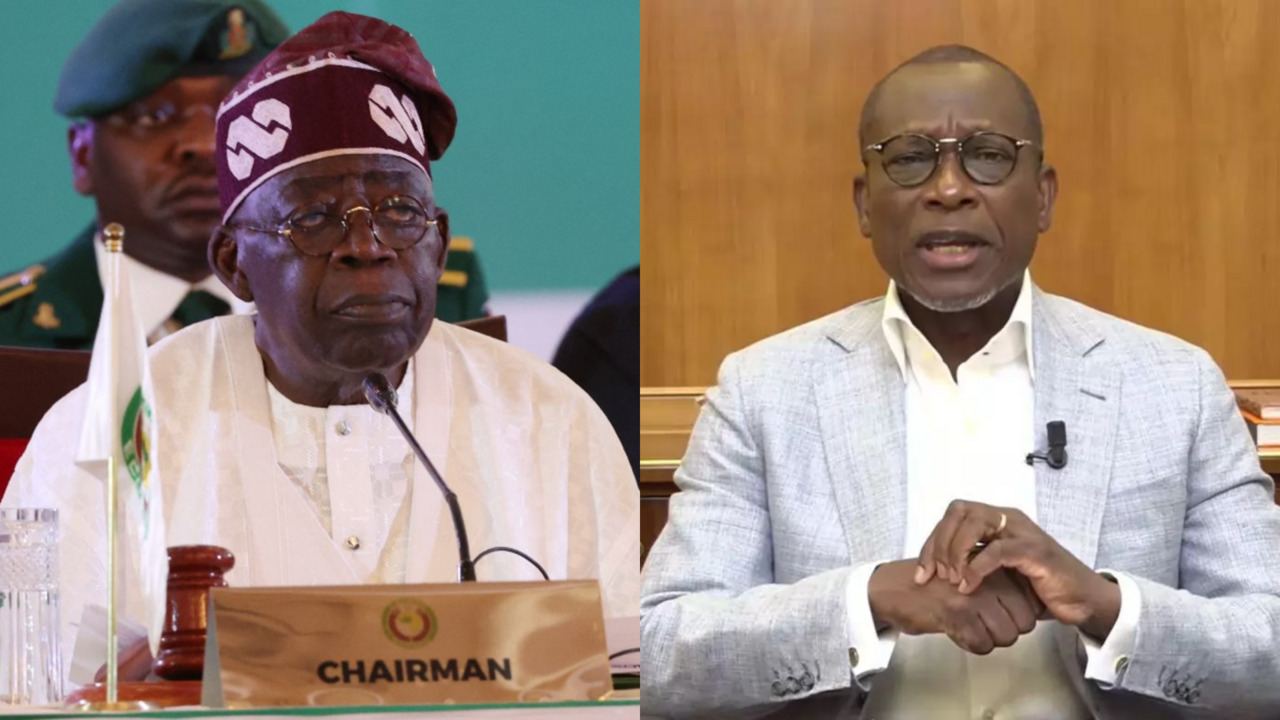
It was a tumultuous weekend in Benin, a tiny, West African nation that shares a more than 800-kilometer border with regional giant, Nigeria. On Sunday, December 7, as a coup attempt was underway in Benin, fighter jets from Nigeria repeatedly struck the positions of mutinous soldiers in the economic capital of Cotonou, near the national TV station and the Togbin military base.
Read moreAs it happened: ECOWAS deploys Standby Force to Benin
The operation, ordered by Nigerian President Bola Tinubu, proved decisive in routing the coup plotters and regaining control of the army base, the Beninese government confirmed on Monday.
Abuja’s intervention was revealed by Nigerian security sources and then confirmed on Sunday evening in a detailed statement from the president’s special adviser. Nigerian authorities explained that they responded to two separate requests from the Beninese foreign ministry, via a “verbal note” to obtain “immediate air support” and intervention by Nigerian ground forces.
Benin also confirmed the arrival of the West African ECOWAS (Economic Community of West African States) bloc’s “Standby Force,” composed of Nigerian and other regional forces. By Sunday evening, Benin’s President Patrice Talon took to the airwaves to declare the situation was “totally under control” following the attempted coup.
Read moreSituation is ‘totally under control’ following attempted coup, Talon says
France, for its part, said it had provided surveillance, observation, and logistical support to the Beninese armed forces.
Jihadists in Benin’s north, bandits in western Nigeria
The Nigerian president was quick to commend his country’s troops for their decisive role as “a defender and protector of constitutional order” in Benin. Tinubu’s statement on Sunday evening noted that Nigerian armed forces “helped stabilise a neighbouring country and have made us proud of their commitment to sustaining our democratic values”.
Benin is facing a deteriorating security situation in its northern border areas with Burkina Faso, Niger and Nigeria, where al Qaeda-affiliated JNIM (Group for the Support of Islam and Muslims) and the Islamic State (IS) group’s Sahel branch ISSP (Islamic State’s Sahel Province) are expanding their influence.
In their Sunday morning televised statement, Benin’s coup plotters mentioned the army’s difficulties in the north and the Talon administration’s “disregard and neglect of our fallen brothers-in-arms”.
In April, 54 Beninese soldiers were killed in coordinated JNIM attacks on military posts in a northern Beninese national park, the highest official toll since troops were deployed to secure borders in January 2022.
Read moreBenin border attack kills 54 soldiers
Terrorist groups in the region are also making incursions across the border into western Nigeria, which is facing a wave of kidnappings, attributed to criminal gangs and bandits, for ransom.
“The Nigerian government determined that an intervention in Benin was essential to safeguard its own territorial integrity,” explained Sam Olukoya, FRANCE 24’s Nigeria correspondent.
Size and border ethnic compositions matter
Nigeria also wanted to avoid a repeat of what happened across its much longer border with neighbouring Niger, noted Olukoya. “The Nigerian authorities learned their lesson after the coup in Niger two years ago. Niger’s new military authorities did not cooperate with Nigeria to combat jihadists around their shared border. The Nigerian government wanted to prevent a similar scenario from happening in Benin,” he said.
On July 26, 2023, Niger’s President Mohamed Bazoum was overthrown by elements of his presidential guard, led by General Abdourahamane Tiani.
Read moreWho is Abdourahamane Tiani, the army general who seized power in Niger?
At that time, Tinubu was just two months into his presidency and was also rotating chair of ECOWAS. The newly elected Nigerian president threatened a military intervention to restore Bazoum and constitutional order in Niger. The operation was hotly debated within the West African bloc, deemed too dangerous, and ultimately abandoned.
“An intervention in Niger would have been much riskier for Nigeria than the one carried out in Benin, for both logistical reasons, as Niger is ten times larger, and there were domestic political reasons,” said Seidik Abba, head of the Paris-based Centre international de réflexions et d’études sur le Sahel (CIRES).
“Northern Nigeria and southern Niger are populated by the same ethnic groups, the Hausa, Fulani, and Kanuri. A military intervention would have created an internal political crisis in Nigeria,” Abba explained. “Added to this is the fact that President Bazoum had already been overthrown, which was not the case for Patrice Talon in Benin. It was therefore still possible for Nigeria to intervene at his [Talon’s] request,” he said.
Reaffirming Nigeria’s regional power
The 2023 Niger episode was viewed as a bitter failure for Nigeria’s new president and the region. Months after the coup, the juntas in Niger, Mali, and Burkina Faso got together to announce their new military alliance, the Alliance of Sahel States (AES), and firmly slammed the door on ECOWAS. President Bazoum is currently still in detention in Niger.
This time, by intervening in Benin, “Nigeria, which suffered a real blow in 2023, is attempting to reaffirm its status as a major sub-regional power,” said Niagalé Bagayoko, head of the African Security Sector Network research center.
As West Africa’s leading power in economic, military, and demographic terms, Nigeria has already led several military operations in the region: in Liberia (1990-1997) to stop the civil war, in Sierra Leone (1997-2000) in support of ousted President Ahmad Tejan Kabbah, and more recently in Gambia (2017) to force Yahya Jammeh to step down after his election defeat.
These interventions were carried out within ECOMOG, a multilateral force replaced in 2004 by the ECOWAS Standby Force, to which Nigeria was already the main contributor.
Nigeria’s operation in Benin revives this “past hegemony,” Bagayoko noted. It also sends a strong signal to West Africa, which has been rocked in recent years by a series of coups in Mali, Burkina Faso, Niger, Guinea, and most recently Guinea-Bissau.
“This wave of coups is perceived by the Nigerian president as a threat to his own power,” noted Olukoya. This is therefore a way for Bola Tinubu to champion democratic values while simultaneously deterring would-be coup plotters, including those within his own country.
This article was adapted from the original in French.
Crédito: Link de origem