
Nigeria’s new UN ambassador’s failed empire
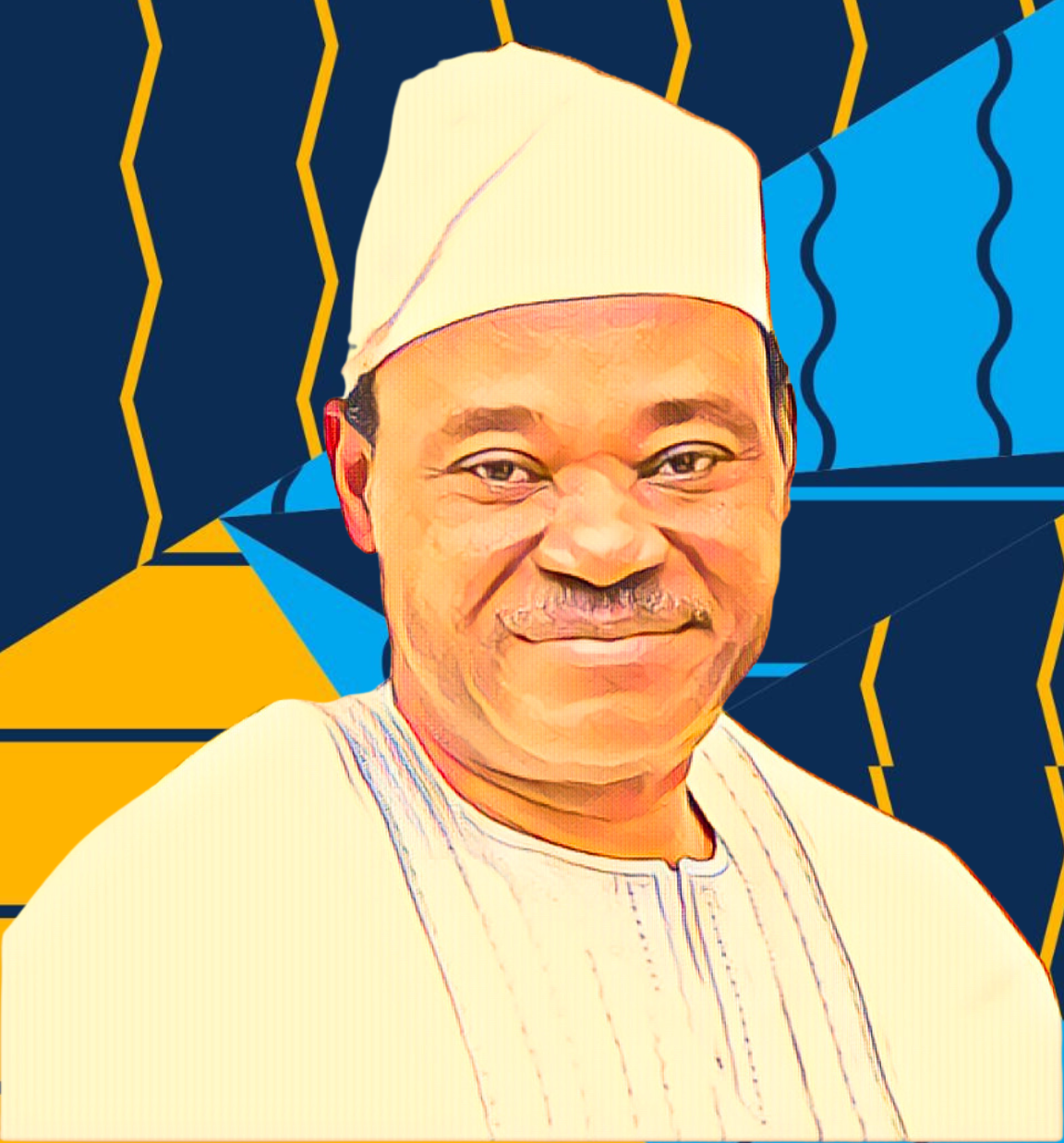
When President Bola Tinubu announced the appointment of Senator Jimoh Ibrahim as Nigeria’s Permanent Representative to the United Nations last week, the congratulatory messages arrived quickly. Supporters in Ondo State praised it. The UN Inter-Parliamentary Union called it a boost for Africa’s voice. What much of the diplomatic commentary left out was the trail Ibrahim leaves behind him in Nigerian business: a string of collapsed institutions, hundreds of workers still owed wages after nearly two decades, and a N69.4 billion ($84 million) debt that a federal court has already ruled against him on.
Ibrahim is not a simple character. He is educated, energetic, well-connected and often loudly present in any room he enters. He is also one of the most controversial businessmen Nigeria has produced in a generation.
The early years
Ibrahim was born on Feb. 24, 1967, in Igbotako, in the Okitipupa Local Government Area of Ondo State. His father was a bricklayer who married seven wives and fathered 40 children. His mother sold fish. He attended Community Grammar School in Igbotako before moving on to the Federal School of Arts and Science in Ondo.
He studied law at Obafemi Awolowo University in Ile-Ife, earning both a Bachelor of Laws degree and later a Master of Public Administration from the same institution. He then attended Harvard University, graduating with a combined Master of Laws and Master of International Taxation. In July 2022, he received a Business Doctorate from the University of Cambridge.
Those are serious credentials by any measure. The question that has followed Ibrahim for most of his adult life is what he did with them.
The acquisition strategy
Ibrahim’s model was, in theory, sound. He would identify distressed assets, acquire them cheaply through Nigeria’s privatization windows, and turn them around through management overhauls and new capital. He founded Global Fleet Group in 2003 initially as a petroleum marketing company, rapidly acquiring some 150 petrol stations. Within a year, the company was posting daily sales of $1 million or more. The strategy seemed to be working.
Then he started buying everything else.
His acquisitions included EAS Airlines, which he renamed NICON Airways after buying it in July 2006 from Capt. Idris Wada. He took over Air Nigeria, formerly Virgin Nigeria, from Richard Branson’s group in 2010. He acquired NICON Insurance and the Nigeria Reinsurance Corporation. He purchased the NICON Luxury Hotel in Abuja, formerly the Le Meridien. He bought a 51% controlling stake in Newswatch magazine, the storied weekly publication founded in 1984 by journalist Dele Giwa and others. He acquired the former Allied Bank building in Lagos and renamed it the Global Fleet Building. He set up Energy Bank in Ghana in 2009 and purchased Oceanic Bank Sao Tome in 2011. He also launched the National Mirror newspaper.
It was an extraordinary portfolio for one man to run simultaneously. It did not hold together.
The airline disasters
The aviation record alone is damaging. NICON Airways, Ibrahim’s first airline, was acquired with three Boeing 737 aircraft. It operated for less than a year before Ibrahim shut it down. About 300 staff were left without wages from May 2007 onward. The National Industrial Court in Abuja eventually awarded the workers a judgment of N1.5 billion in 2013. Ibrahim appealed. The Court of Appeal dismissed the appeal in May 2017. The workers remain, to this day, largely unpaid.
A 2024 statement from former staff representatives said the airline owed N808.7 million in salary arrears alone, plus N8.1 million in unremitted pension contributions that had been deducted from workers’ salaries but never paid into the pension system. One former employee, now driving a taxi in Abuja, told Nigerian media: “We lost everything. Even our dignity.”
Ibrahim’s second airline acquisition was Air Nigeria, which he took over from the Nigerian Eagle Airlines successor of Virgin Nigeria in 2010. Workers and engineers complained that maintenance on the fleet was neglected. A senior former company official was quoted describing the aircraft as “flying coffins.” In 2012, Ibrahim abruptly declared the roughly 800 staff redundant and shut the airline down. The Federal Inland Revenue Service later charged Ibrahim, Air Nigeria and its managing director with 10 counts of tax fraud, accusing the company of using forged tax clearance certificates and failing to remit withholding tax and value-added tax from 2007 to 2010.
NICON Insurance and the N69 billion debt
NICON Insurance was, before Ibrahim acquired it, a national institution. It held government insurance business, maintained branches in every state and carried offshore accounts. Former staff have alleged that Ibrahim valued the company at only its naira assets, effectively ignoring dollar-denominated holdings, and that the London account alone held more than what he paid for the entire company. He denied wrongdoing.
After acquisition, Ibrahim fired approximately 85% of staff, telling those who remained he was cutting salary costs. Clients left. The company went from dominant market position to one that former managers say retained less than 1% of its pre-privatization client base. In 2016, the Federal Inland Revenue Service sealed NICON Luxury Hotel for owing approximately N392.6 million in unpaid taxes and sealed NICON Insurance’s offices for N182.7 million in unremitted withholding tax and VAT.
In November 2020, the Asset Management Corporation of Nigeria obtained a court order to seize 12 of Ibrahim’s prime assets and freeze all his bank accounts over a N69.4 billion debt, originally a non-performing loan purchased from Union Bank. The seized properties included NICON Investment Limited’s office in Abuja, NICON Hotels buildings in Abuja and Victoria Garden City, and commercial buildings in Lagos. Ibrahim appealed. In December 2021, the Court of Appeal in Lagos dismissed his challenge.
The media collapse
Newswatch was a household Nigerian publication during the 1980s and 1990s, one of the few magazines that held governments to account through the military era. Ibrahim bought a 51% stake in May 2012. Three months later, he suspended publication, citing the need for “corporate surgery.” Staff told Premium Times they had not been paid for three months. The magazine never properly recovered. The National Mirror, his newspaper, also eventually shut down.
The political pivot
In 2003, Ibrahim ran unsuccessfully for governor of Ondo State under the All Nigeria People’s Party. He tried again in 2016, this time under the People’s Democratic Party, securing a Federal High Court ruling that declared him the authentic PDP candidate after an intra-party dispute. The Court of Appeal reversed that ruling three days before the election. He lost anyway to the incumbent APC governor, Rotimi Akeredolu.
The Senate proved more accommodating. Ibrahim contested for Ondo South Senatorial District in February 2023 under the APC and won, polling 110,665 votes against 65,784 for his closest rival. He was sworn in on June 13, 2023. In the Senate, he chaired the Committee on Inter-Parliamentary Affairs Worldwide and was appointed Interim President of the UN Inter-Parliamentary in Geneva. He sponsored bills on bitumen exploration, a Federal Medical Centre for Igbotako, and insurance reform.
In December 2025, the Senate confirmed his nomination as Permanent Representative to the United Nations. Tinubu posted him to New York last week, part of a broader deployment of 65 ambassadors to foreign missions.
What comes next
The United Nations posting is the most prestigious assignment of Ibrahim’s career. The role demands credibility, continuity and the ability to speak with moral authority on global issues ranging from climate financing and debt relief to peace and security. Nigeria is Africa’s most populous nation and a country with legitimate claims to greater influence on the Security Council and in multilateral institutions.
The questions surrounding Ibrahim’s appointment are not abstract. The N69.4 billion court judgment has not been settled. More than 300 former NICON Airways employees are still waiting for wages a court awarded them years ago. The FIRS tax suits, the AMCON seizures and the collapsed institutions are matters of public record, not political allegation.
His defenders point to his academic credentials, his legislative work in the Senate, his experience chairing the inter-parliamentary committee and his self-described expertise in international taxation and economic law. Those are genuine credentials.
Whether they are sufficient to carry Nigeria’s voice at the United Nations, in a building where reputation and moral standing count as much as anything else, is a question the appointment has placed directly in front of Nigerians.
Crédito: Link de origem