

Samsung Galaxy Unpacked 2026 vs 2025: Differences explained
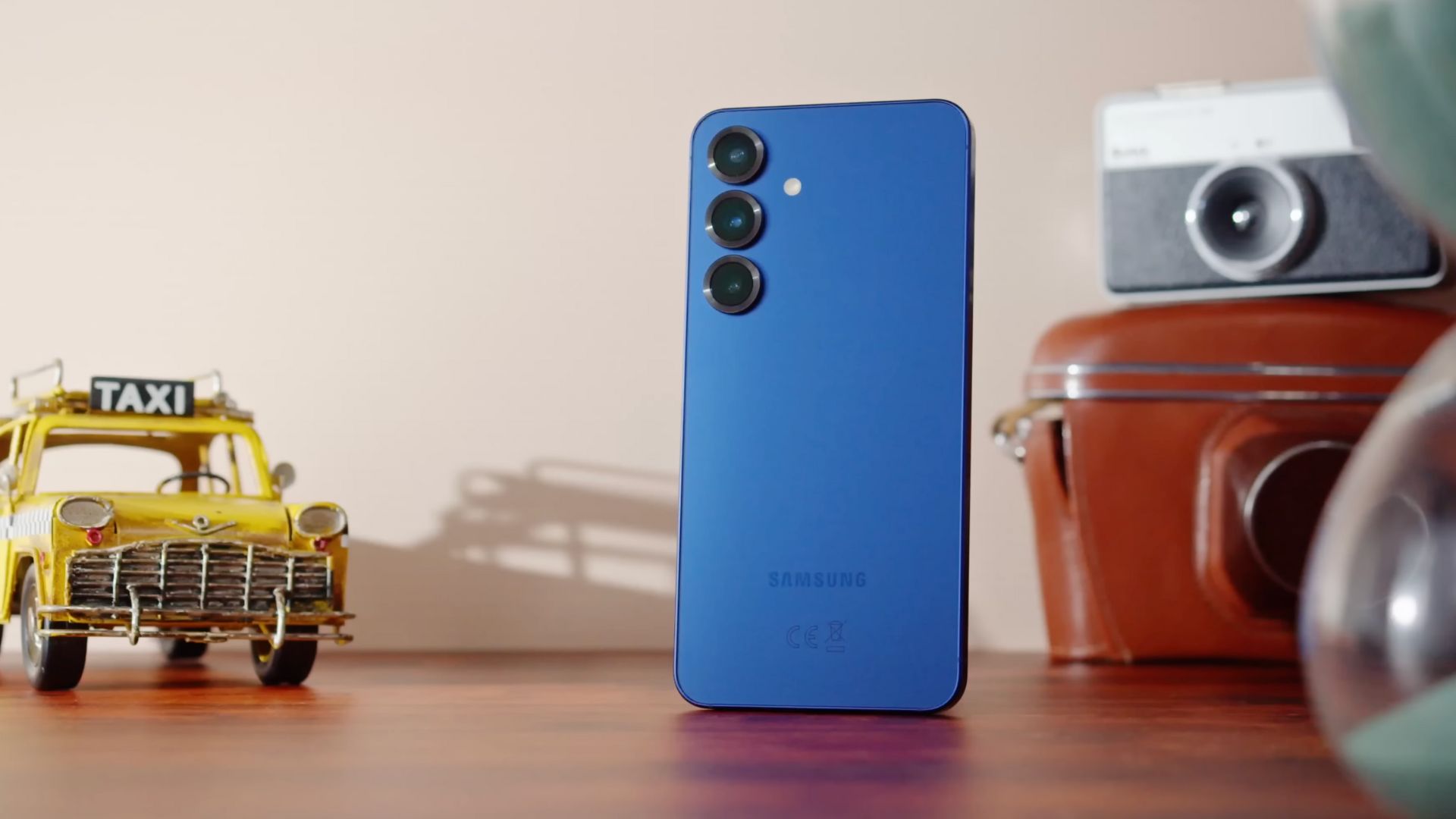
The global smartphone industry is now driven by AI built directly into your device. For Samsung Electronics, the main stage for showing this vision is the Galaxy Unpacked event series.
What started as a simple product launch has grown into a major showcase of its ecosystem and chip strength. The first Unpacked took place in June 2009 at CommunicAsia in Singapore, where Samsung introduced the Samsung S8000 Jet and the i8000 Omnia II.
Since then, nearly three dozen major events have been held across cities such as Barcelona, Berlin, New York City, and San Jose, each advancing consumer tech.
The February 2026 event in San Francisco is important for you and other global users, especially across Africa. It represents the peak of Samsung’s multi-year shift toward Truly Personal and Adaptive AI, built around its Integrated Device Manufacturer advantage.
While earlier launches focused on generative AI, 2026 centres on autonomous agents. Your device is expected to anticipate your needs across more form factors, including smart eyewear and tri-folding displays.
Samsung Galaxy Unpacked January 2025: The foundation of the AI phone
On January 22, 2025, in San Jose, California, Samsung introduced what it called the “AI Phone.” This event centred on the Galaxy AI ecosystem, where software and intelligence shaped the experience more than raw specs.
The Galaxy S25 series included the S25, S25+, and S25 Ultra, built as high-performance devices for a new phase of mobile AI.
At the core was the customised Snapdragon 8 Elite Mobile Platform for Galaxy. It powered One UI 7 and delivered major gains over the Galaxy S24:
- 40% improvement in the Neural Processing Unit
- 37% increase in CPU performance
- 30% boost in GPU efficiency
These upgrades enabled multimodal AI agents to understand text, speech, images, and video simultaneously, giving you more natural, context-aware interactions.
| Galaxy S25 model | Primary hardware specifications | Key AI/Display features |
| Galaxy S25 Ultra | 6.9-inch Display, 200MP Main Camera, Titanium Frame | Corning Gorilla Armor 2, ProVisual Engine, 12GB+ RAM |
| Galaxy S25+ | 6.7-inch QHD+ Display, 50MP Main Camera, 4,900mAh Battery | ProScaler AI Enhancement, 12GB RAM, Fast Charging |
| Galaxy S25 | 6.2-inch FHD+ Display, 50MP Main Camera, Slim Compact Design | Galaxy AI Suite, 12GB RAM Standard, Recycled Cobalt |
The Galaxy S25 Ultra stood out with:
- A 6.9-inch display protected by Corning Gorilla Armor 2, the industry’s first anti-reflective glass ceramic
- A 50MP ultra-wide camera alongside a 200MP main sensor for better Nightography
Samsung also added a 40% larger vapour chamber to manage heat during gaming and AI video editing, helping your device stay stable under pressure.
On the software side, One UI 7 introduced:
- Now Brief, which learns your routine and shows updates like weather, health data, and daily tasks on your lock screen
- AI Select and Drawing Assist inside the Edge Panel to summarise articles and turn sketches into detailed images
Samsung also included six months of Gemini Advanced and 2TB of cloud storage at no extra cost, strengthening its partnership with Google and its vision of Android with AI at the core.
The Galaxy S25 Edge was teased as a slimmer option. At 5.8mm thick, it used a titanium frame and Gorilla Glass Ceramic 2 for durability. To achieve this design, Samsung removed the telephoto lens and reduced the battery capacity to 3,900 mAh. It sat between the Plus and Ultra models as a premium design choice for users who cared about style over telephoto power.
Samsung Galaxy Unpacked July 2025: Foldables and comprehensive wellness
On July 9, 2025, in Brooklyn, New York, Samsung shifted focus to foldables and wearables. This event centred on the seventh generation of foldable devices and an expanded Galaxy Watch lineup. The message was clear: AI tailored to specific form factors, such as foldables and watches.
Galaxy Z Fold 7
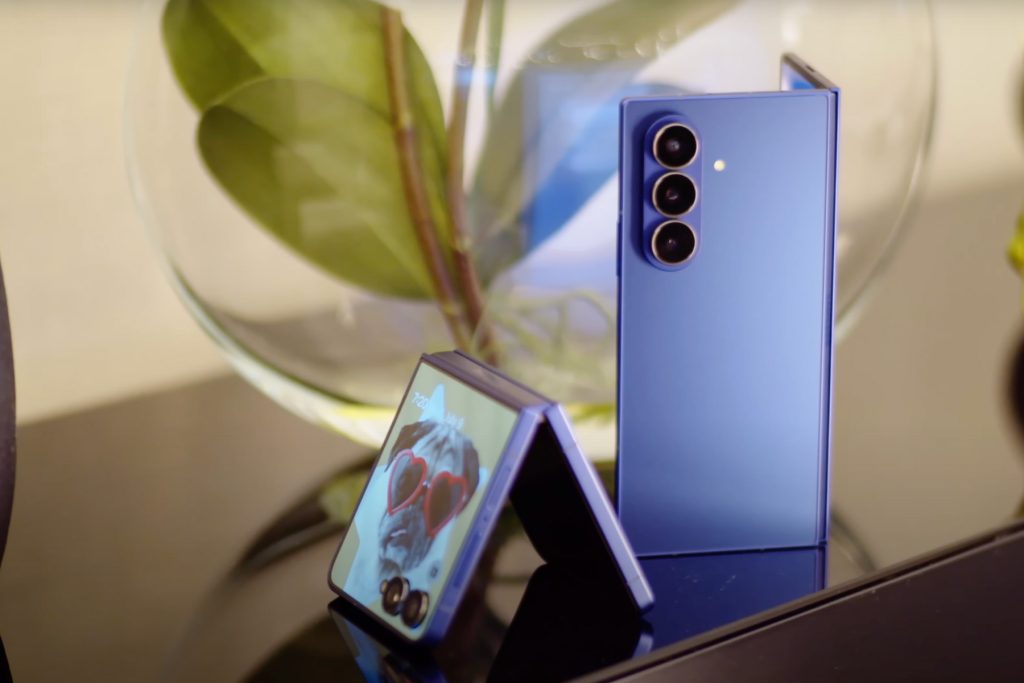
Samsung positioned the Galaxy Z Fold 7 as its slimmest and most powerful Fold yet. Key details:
- 6.5-inch cover screen and an 8-inch main display, larger than the previous generation
- 200 megapixel wide-angle camera, bringing S series-level photography to a foldable
It ran on the Snapdragon 8 Elite for Galaxy with Vulkan optimisations for better gaming performance and smoother graphics.
Galaxy Z Flip 7 and Flip 7 FE
The Galaxy Z Flip 7 received a major redesign:
- 4.1-inch edge-to-edge Flex Window with 120Hz refresh rate
- Largest battery in the Flip series and a 50 megapixel camera powered by the ProVisual Engine
Samsung also launched the Galaxy Z Flip 7 FE. It kept the foldable design and the 50MP camera but came at a lower starting price, giving you a more affordable entry into premium foldables.
| July 2025 product | Key technical specifications | Primary AI/Software feature |
| Galaxy Z Fold 7 | 8-inch Main Display, 200MP Camera, Slimmer Hinge | One UI 8, Suggest Erases, Writing Assist |
| Galaxy Z Flip 7 | 4.1-inch Flex Window, 50MP Camera, 120Hz Refresh | Gemini Live, FlexCam, Pocket Perfect AI |
| Galaxy Watch 8 | 3nm Processor, BioActive Sensor, Dual GPS | Gemini AI on-wrist, Vascular Load Tracker |
| Galaxy Watch 8 Classic | 47mm size, Rotating Bezel, 435mAh Battery | Antioxidant Index, Bedtime Guidance |
Galaxy Watch 8 Series
The Galaxy Watch 8 series included:
- Standard model
- Classic with the returning rotating bezel
- Ultra 2
These were the first smartwatches to ship with Google’s Gemini out of the box. They ran on Wear OS 6 and One UI 8 Watch. New health features included Vascular Load, which tracked stress on your vascular system during sleep, and Antioxidant Index, which measured carotenoid levels for insights into healthy ageing.
Software and sustainability
Samsung introduced One UI 8, optimised for foldables and supported by KEEP (Knox Enhanced Encrypted Protection) for sensitive data. All new foldables launched in July 2025 ran on Android 16 with enhanced AI and security tools.
Samsung also highlighted sustainability. The new foldables used nine recycled materials, including plastics from discarded fishing nets and recycled lithium.
Samsung Galaxy Unpacked February 2026: The era of personalised AI and smart eyewear
On February 25, 2026, in San Francisco, Samsung pushed beyond smartphones into what it calls the “Next AI Phone,” integrating XR experiences. The theme, “Your Companion to AI Living,” focuses on advanced AI that runs directly on your device for speed and privacy. While the Galaxy S26 series is the headline launch, the event also highlights smart glasses and the global rollout of the Galaxy Z TriFold.
Galaxy S26 Series
The Galaxy S26 lineup includes the S26, S26+, and S26 Ultra. The design shifts to a cleaner look, with a minimalist camera module replacing the separate lens rings of earlier models.
The S26 Ultra stands out with:
- A 6.9-inch M14 OLED display reaching 3,000 nits peak brightness
- A 200MP main camera with a wider aperture that allows 47% more light into the sensor
This upgrade improves motion handling and delivers stronger low-light performance compared to the aperture on the S25 Ultra.
A major addition is the Privacy Display, also known as the Flex Magic Pixel. This hardware-level feature gives per-pixel control over viewing angles, narrowing what others can see when you use your phone in public. It strengthens Samsung’s privacy-first approach by building protection into the screen itself.
| Galaxy S26 Series (Exp.) | Key hardware innovations | AI and privacy features |
| Galaxy S26 Ultra | Aperture 200MP Camera, 6.9-inch 3000-nit Display | Privacy Display (Flex Magic Pixel), Perplexity Integration |
| Galaxy S26+ | 6.7-inch AMOLED, Snapdragon 8 Elite Gen 5 | AI Image Editing via Text Prompts, One UI 8.5 |
| Galaxy S26 | 6.3-inch Screen, 4,300mAh Battery, 12GB RAM | Bixby with Contextual Awareness, On-device AI |
Samsung Smart Glasses
February 2026 also marks the global debut of Samsung Smart Glasses, built with Google, Warby Parker, and Gentle Monster. They run on the Qualcomm Snapdragon AR1 platform and aim to deliver immersive multimodal AI experiences while weighing about 50 grams for all-day comfort.
They use Android XR and are expected to be available in two versions:
- A voice and sensor model focused on AI assistance
- A display model that shows digital information directly on the lens
| Expected product (2026) | Primary function | Hardware/Ecosystem detail |
| Samsung Smart Glasses | AI Assistant & AR Overlay | Qualcomm AR1, Google Gemini, Warby Parker Design |
| Galaxy Z TriFold | Phone-to-10-inch Tablet | Dual-hinge “Z” design, 5,600mAh battery, 16GB RAM |
| Galaxy Buds 4 Pro | Professional Audio & AI | Sleeker metal-strip design, improved sound quality |
Software and AI ecosystem
The software experience runs on One UI 8.5, bringing contextual awareness to a redesigned Bixby. Samsung also integrates Perplexity as an alternative AI agent on the S26 series. You can activate it with the “Hey Plex” keyword.
This move creates a multi-agent AI setup, giving you the option to use Google Gemini for everyday tasks or Perplexity for deeper research-driven queries.
2025 vs 2026: What’s the difference?
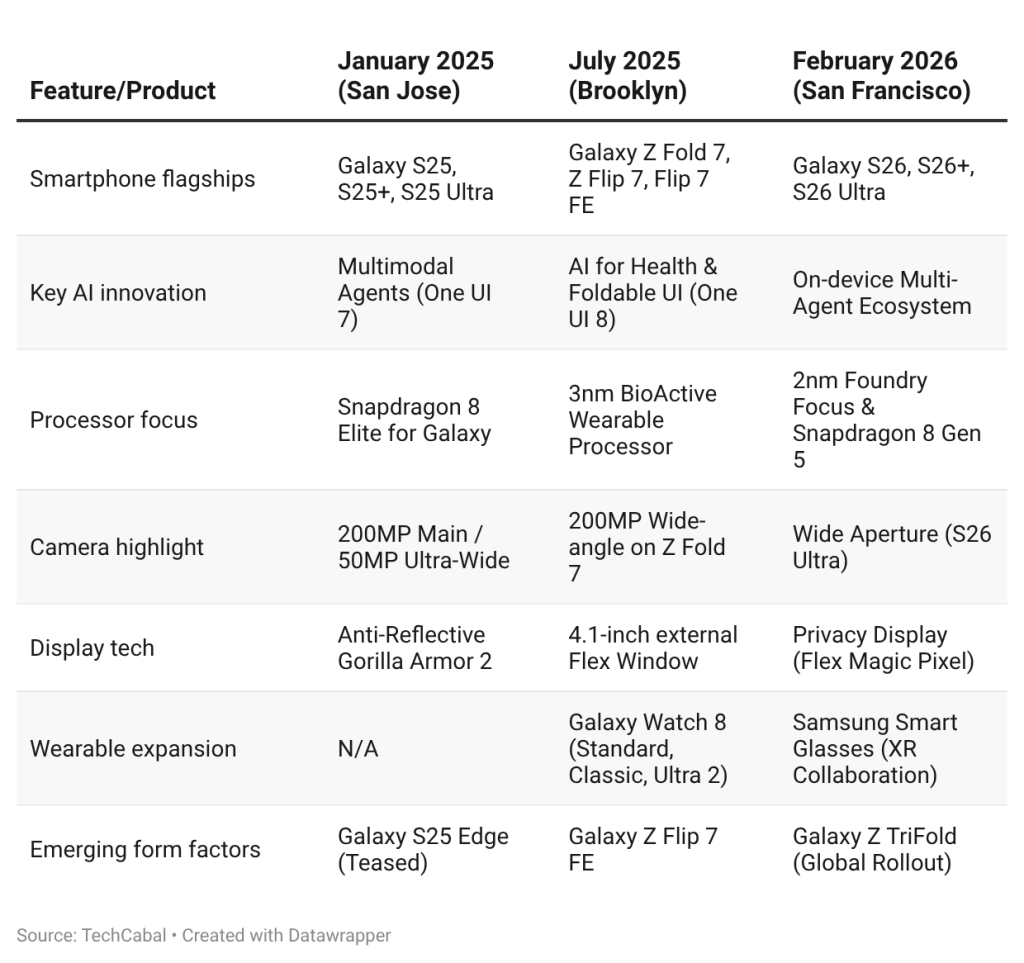
The shift from early 2025 to early 2026 shows how Samsung moved from launching the “First AI Smartphone” to building an Integrated AI Lifestyle. In 2025, the focus was proving AI inside the phone. In 2026, the focus is on making the phone the centre of your wider tech life.
Crédito: Link de origem