

who won, who was left behind
When Nelson Mandela walked out of Victor Verster Prison on Feb. 11, 1990, he stepped into a country whose economy had been deliberately engineered to exclude most of the people who lived in it. Black South Africans, who made up roughly 80% of the population, owned almost nothing of consequence — not the mines under their feet, not the banks that held their wages, not the farms on which their grandparents had labored. That was not an accident. It was policy, and it had been policy for decades.
Under the apartheid regime, a series of laws locked black South Africans out of the formal economy with surgical precision. The Mines and Works Act of 1911 reserved skilled mining jobs for whites. The Native Land Act of 1913 stripped blacks of the right to own land outside designated “homelands” that together amounted to 13% of the country’s territory. The Group Areas Act of 1950 banned them from living in commercial urban centers. The Bantu Education Act of 1953 deliberately gave black children inferior schooling. Banks would not lend to them. Professional licenses were withheld. Black businesses could only operate inside designated areas, selling to each other, cut off from the wider market. By the time apartheid ended, the racial architecture of wealth in South Africa was almost total. White South Africans, roughly 9% of the population, owned and controlled virtually the entire formal economy.
The birth of BEE
What came next was always going to be contested. The question facing the ANC government after 1994 was not whether to redistribute economic power, but how. The answer, which evolved over the following decade, became known as Black Economic Empowerment, or BEE.
The concept did not emerge overnight. Its intellectual roots go back to the Freedom Charter of 1955, which called for the nationalization of mines, banks and monopoly industry. But the version that took shape in the 1990s was far more moderate. BEE as a concept emerged in the early 1990s, with the initial focus in practice on increasing black ownership of shares in major companies. The ANC’s 1994 Reconstruction and Development Programme identified it as a central tool for addressing the apartheid legacy.
The man most associated with its early institutionalization was Thabo Mbeki, who became president in 1999. Mbeki was explicit about wanting to create what he called a “patriotic black bourgeoisie” — a class of black capitalists who would own and run significant pieces of the economy and, in doing so, pull others up behind them. In 1999, the ANC government supported the creation of the BEE Commission under the chairmanship of Cyril Ramaphosa. The commission’s report, issued in 2001, moved the government not only to bring the process of asset transfer within a legal framework, but also to greatly broaden the nature of BEE itself.
The Broad-Based Black Economic Empowerment Act was made into law in 2003. It created a scorecard system by which companies were rated across seven pillars: ownership, management control, skills development, enterprise development, preferential procurement, socioeconomic development, and employment equity. Companies with high BEE scores got preferential treatment in government contracts. Mining licenses, telecoms spectrum and other state-issued assets were conditioned on meeting minimum black ownership thresholds. White-owned firms had to find black partners or risk being shut out of enormous markets.
The first BEE transaction actually predated the law, occurring in 1993, before the country’s first multiracial elections, when Metropolitan Life sold a 10% stake to Methold, a holding company owned by well-connected blacks. By 1998, 111 transactions worth a combined fortune had been completed. The machine was running.
The selection question
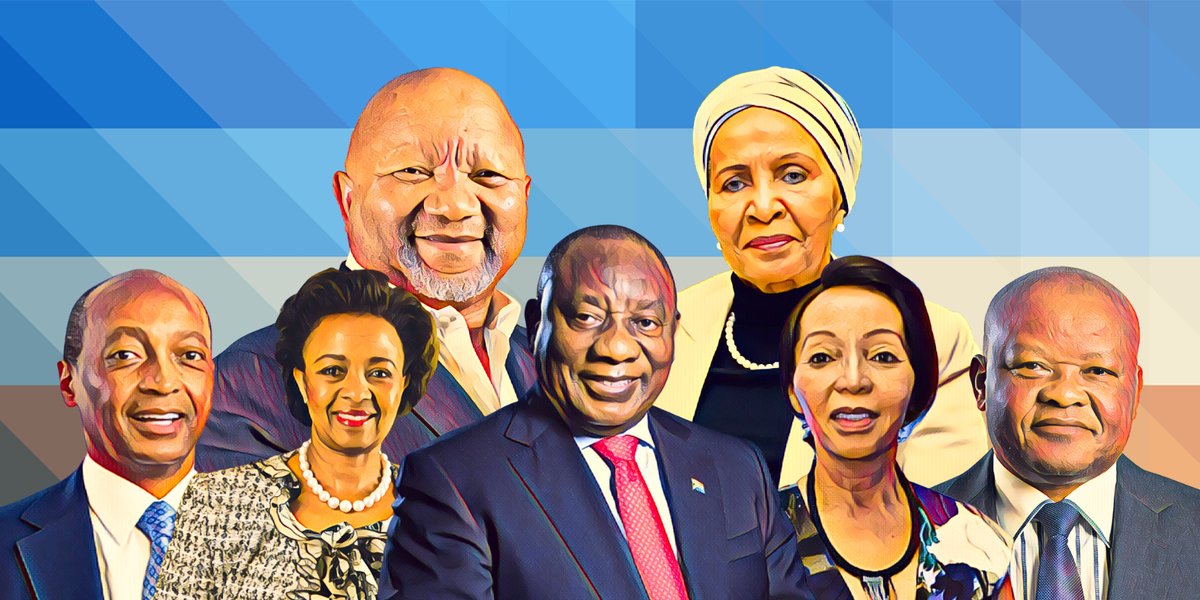
This is where the story gets complicated. The law said companies needed black shareholders. But which black South Africans would become those shareholders? The process was almost entirely undemocratic. Several politically connected ANC stalwarts, notably Saki Macozoma, Tokyo Sexwale, Cyril Ramaphosa, and Patrice Motsepe, gained substantial wealth and influence in key sectors such as mining and finance through BEE deals.
White corporations, facing government pressure to “transform,” did not hold open auctions or public processes to find black partners. They called people they knew. They wanted names that would reassure government, smooth regulatory approvals, and reduce political risk. Former anti-apartheid activists, former trade unionists, ANC insiders and liberation struggle figures were the obvious candidates. They had the political credibility that corporations needed. The corporations had the capital that these individuals lacked. The arrangement suited both parties well — and it created, within a few years, a new and very small black elite.
Cyril Ramaphosa: The dealmaker in chief
No biography of BEE is complete without Cyril Ramaphosa, now South Africa’s president but in the late 1990s and 2000s its most prolific dealmaker. Ramaphosa had been secretary general of the National Union of Mineworkers, then ANC secretary general under Mandela, then the chief architect of the country’s 1996 constitution. In 1996 he stepped away from politics and into business.
His primary source of wealth was the Shanduka Group, a pioneering BEE company he founded and ran as executive chairman. Shanduka facilitated investments across sectors including mining, energy, real estate, and telecommunications. Its portfolio came to read like a map of the South African economy: MTN, Standard Bank, Coca-Cola bottling plants, SABMiller, Alexander Forbes, Bidvest, Lonmin. In addition to Shanduka, Ramaphosa chaired Bidvest for nine years and MTN for over a decade. In 2011, his company acquired a 20-year master franchise agreement to operate 145 McDonald’s restaurants in South Africa.
By 2014, Shanduka was valued at over R20 billion ($1.1 billion), with the Ramaphosa family’s Tshivhase Trust as its majority shareholder. In 2015, Ramaphosa sold the company to the Phembani Group, netting, according to Forbes estimates, between $200 million and $300 million. His fortune at its peak was estimated at $700 million.
The mechanism that built this empire was not entrepreneurial in the traditional sense. Ramaphosa did not start a tech company in a garage or develop a new product. He was, at his core, a deal connector. White companies needed a black partner with ANC credibility and political heft. Ramaphosa provided that. In return, he received equity stakes, board positions and share options. His political connections made him valuable. Critics, including economist Moeletsi Mbeki, have argued that this model built wealth without building industrial capacity. “Transferring shares from white people to black people does not grow the South African economy,” Mbeki said in a 2025 documentary. “They were distributing the existing wealth.”
Patrice Motsepe: The outlier
Among the major BEE beneficiaries, Patrice Motsepe stands apart because he also did something the others largely did not: he built a real operating business.
Motsepe grew up in Soweto, where his father ran a spaza shop that catered to mineworkers. He trained as a lawyer and became the first black partner at Bowman Gilfillan, a top Johannesburg law firm. That legal career gave him an intimate understanding of South Africa’s mining industry — how its contracts worked, where the bodies were buried.
In 1997, with gold prices at a historic low, he purchased marginal gold mines from AngloGold under favorable finance terms. AngloGold sold Motsepe six gold mine shafts for $7.7 million, allowing him to repay the debt out of the future earnings of the company now known as African Rainbow Minerals. Those were mines Anglo American considered too old and unprofitable to bother with. Motsepe bet he could run them lean. He cut management costs in half, restructured worker pay to include profit-sharing bonuses, and within a year the shafts were turning a profit. Bobby Godsell, Anglo’s CEO of gold and uranium at the time, had been skeptical. The National Union of Mineworkers boss told Motsepe he was setting black people up for embarrassment. Motsepe pressed on regardless.
BEE laws requiring companies to have a minimum 26% black ownership before a mining license would be granted were instrumental in cementing Motsepe’s position in the industry. ARM was listed on the Johannesburg Stock Exchange in 2002 and went on to become a major diversified mining house. In 2003, Motsepe created Ubuntu-Botho Investments, and a year later made a BEE deal with Sanlam, the insurance and financial services company. When the deal concluded in 2014 after the debt was paid, Ubuntu-Botho had acquired a 13.5% stake in Sanlam. Today Motsepe’s net worth is estimated at approximately $2.9 billion, making him South Africa’s third richest person and the continent’s first black dollar billionaire when he appeared on Forbes’ list in 2008.
Tokyo Sexwale, Saki Macozoma and the usual suspects
Tokyo Sexwale, Cyril Ramaphosa, Saki Macozoma and Patrice Motsepe were sometimes referred to as the “Fabulous Four,” their companies holding more than $1.5 billion worth of interests in the country’s most important industries, from the biggest banks to the richest gold mines.
Sexwale had spent 13 years on Robben Island alongside Nelson Mandela before becoming the premier of Gauteng province in 1994. When he left politics in 1998, he founded Mvelaphanda Holdings, building stakes in gold, platinum and diamond mining as well as banking, hotels and healthcare. He became CEO of Batho Bonke, which received an effective 10% stake in Absa bank in 2004, and also held positions at Gold Fields, Trans Hex Group and Northam Platinum. His net worth grew to an estimated R3 billion ($165 million) at his peak.
Saki Macozoma, another Robben Island veteran, went into management at the parastatal Transnet in 1996, then moved to the private sector. His main vehicle became Safika Holdings, largely funded through Standard Bank, giving him interests in banking, mining, telecoms and financial services. Standard Bank, in one of the largest BEE deals yet concluded at the time, sold 10% of its shares to black partners, with a substantial share going to a consortium led by Macozoma and Ramaphosa.
The names of six magnates recurred in deal after deal: Tokyo Sexwale, Cyril Ramaphosa, Saki Macozoma, Patrice Motsepe, Moss Ngoasheng and Mzi Khumalo. They had amassed huge fortunes, were part of or had access to the ANC, and were linked through business alliances and friendships. South Africa’s then-vice president Phumzile Mlambo-Ngcuka publicly complained about it, noting that the deals always seemed to involve “the same BEE gentlemen.”
The women who broke through
BEE also produced a cohort of black women who became significant business figures, often starting from nothing.
Irene Charnley came from a low-income home on the Cape Flats and spent 13 years as a negotiator for the National Union of Mineworkers before entering the corporate world. She became an executive director of the MTN Group, overseeing its listing and playing a significant role in its growth across Africa and the Middle East. She also spearheaded the Ikageng Scheme, in which 32,000 ordinary South Africans participated and received a 400% return on their initial deposit over three years. When she left MTN, she was worth over $150 million.
Bridgette Radebe, elder sister of Patrice Motsepe, is widely recognized as South Africa’s first black female mining entrepreneur. Starting in the 1980s as a contract miner managing shafts, she founded Mmakau Mining, which developed interests in platinum, gold, chrome and coal. Her net worth is estimated at R1.3 billion (roughly $70 million).
Wendy Luhabe founded Women Investment Holdings, one of South Africa’s first women-focused BEE investment vehicles, and later launched a R120 million private equity fund specifically for women-owned enterprises. She was the first woman to chair Vodacom. Gloria Serobe co-founded Wiphold, a women’s investment company listed on the JSE that gave thousands of women shareholders a stake in the mainstream economy. Louisa Mojela was also a key architect of Wiphold, which at its peak had over 25,000 women investors on its books.
Phuti Mahanyele-Dabengwa built her credentials through Shanduka Group, where she rose to CEO, before taking on the top role at Naspers South Africa. Faith Khanyile chairs Women’s Investment Holdings. Salukazi Dakile-Hlongwane, a founding member of Wiphold, went on to lead Kagiso Trust Investments. Tshepo Mahloele is the chief executive of Harith General Partners, a major infrastructure fund manager focused on the continent. Phumzile Langeni served on numerous boards including Bidvest and Exxaro. Nomhle Canca, Dawn Mokhobo, Zanele Mbeki, wife of former president Thabo Mbeki, and Cheryl Carolus, a former ANC activist and South Africa’s ambassador to Britain, all built investment and board careers that would not have been possible without the structural opening BEE provided.
The verdict: What did BEE actually deliver?
Thirty years on, the honest answer is that BEE delivered spectacularly for a tiny group of people and modestly, at best, for everyone else.
The policy created a black middle class. The number of black South Africans employed as managers increased by 176% between 2001 and 2017. Black-owned and black-managed firms exist across sectors where they were virtually invisible in 1994. The mining, banking and telecoms industries have been partially transformed. The black professional class is real and growing.
But the numbers at the bottom of the economy are damning. In 2003, the year BEE became law, 3.7 million South Africans were unemployed. By 2024, 16.3 million were unemployed. Black unemployment, which was 29.2% in 2003, had risen above 37%. South Africa’s Gini coefficient, the standard measure of income inequality, stands at 0.63, making it the most unequal country in the world. More than half of South Africa’s 60 million people still live in poverty. In the first quarter of 2025, the unemployment rate among youth aged 15 to 24 was 59.6%.
Archbishop Desmond Tutu captured the central contradiction plainly: “What is black empowerment when it seems to benefit not the vast majority but an elite that tends to be recycled?”
The structural problems
Several problems compounded over time. The first was concentration. BEE deals kept going to the same people because white corporations preferred known quantities with political connections. The ANC acknowledged as early as 1997 that this carried risks, warning in a resolution that elements of the new black capitalist class could become “parasites who thrive on corruption in public office.” That warning proved accurate.
The second was the debt trap. Because black South Africans had no accumulated capital — that was precisely the problem BEE was meant to fix — many early deals were financed with heavy borrowing against anticipated future share values. When the 1997 Asian financial crisis hit and JSE prices collapsed, several of those deals unwound. Black ownership of JSE-listed companies, which had climbed to roughly 10% by 1998, fell dramatically to between 1% and 3.8% by 2000.
The third was fronting: companies that met the letter of BEE requirements on paper while doing nothing to actually transform. Many companies in the private sector, as the Black Business Council has noted, are “not implementing the spirit of the legislation — they’re ticking boxes.” Verification agencies meant to enforce the scorecard were themselves implicated in corruption.
The fourth, and most serious, was state capture. The Zondo Commission found that BEE frameworks had been grotesquely abused under Jacob Zuma’s presidency, with government contracts awarded not to genuinely empowered black firms but to politically connected fronts. The Gupta family’s network secured Eskom contracts using fabricated BEE credentials. Billions in public money were siphoned through this apparatus.
What the critics and defenders say
Critics on the right argue that BEE discourages foreign investment, entrenches cronyism, and locks the economy into racial categories that impede growth. The Democratic Alliance has argued for replacing BEE with a needs-based empowerment policy targeting poverty regardless of race.
Defenders argue that BEE must be judged against the scale of what it was trying to undo. Three centuries of colonialism and apartheid cannot be corrected in 30 years. The structural poverty of post-apartheid South Africa — inherited public debt, global commodity cycles, the COVID-19 pandemic, rolling power blackouts — constrained the economy regardless of BEE.
The more nuanced view is that BEE as currently constituted was the right instinct, imperfectly designed and, in critical periods, catastrophically implemented. It succeeded in creating a black capitalist class. It did not succeed in creating a black working economy. The scorecard system rewarded ownership and management optics far more than it rewarded job creation, wage growth or genuine enterprise development. A policy that lets a mining company score well on BEE while its workers live in shacks has missed its own point.
In June 2021, President Ramaphosa, himself one of BEE’s greatest beneficiaries, announced that South Africa’s BEE strategy would be reviewed to ensure it was not being exploited for corrupt purposes. That review is ongoing. The difficulty is that the people best positioned to reform the system are, in many cases, the people who benefitted most from building it.
What Mandela envisioned when he walked out of that prison was an economy that worked for everyone. What BEE built was something more complicated: a cohort of black billionaires and multimillionaires at the top, a growing but fragile middle class in the middle, and a widening sea of poverty below. The unfinished work of South Africa’s economic transformation remains the defining challenge of its democracy.
Crédito: Link de origem