

Why Mission 300 hinges on speed, capital and market reforms
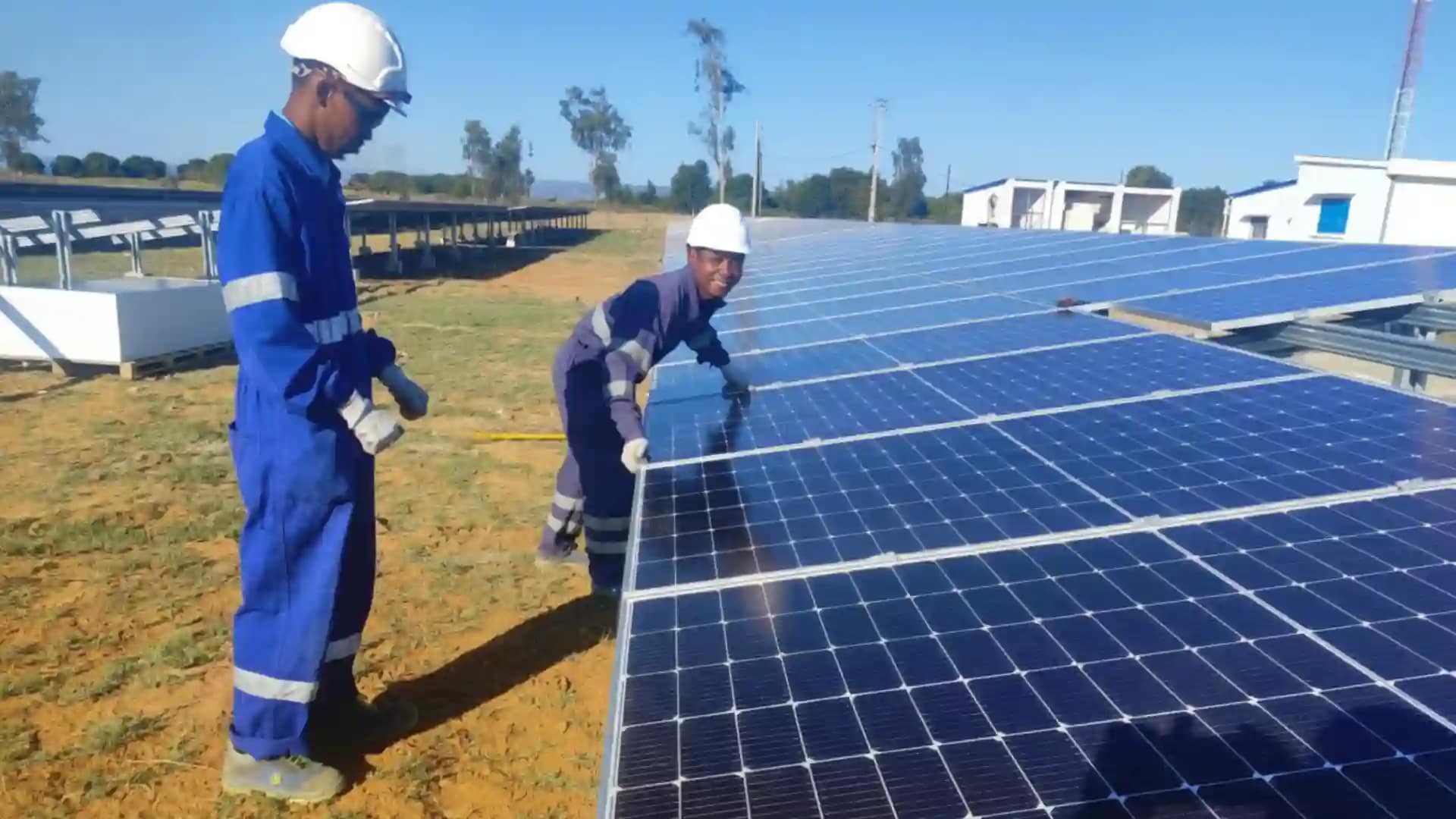
- Mission 300 targets 115 million new minigrid connections by 2030 yet capital shortages and reform bottlenecks put the ambition at risk.
- Players in the minigrids sector are warning that without rapid changes in how capital is mobilised, regulations are designed, and projects are executed, Mission 300 could miss targets by a wide margin.
- Delivering 23 million connections in under five years will require between $28Bn and $46Bn in total capital, including over $10Bn in equity by 2028, the industry projects.
As Africa races to close one of the world’s largest energy access gaps, minigrids have moved from the margins of power policy to the centre of the continent’s electrification strategy.
Under Mission 300, a flagship initiative led by the World Bank and the African Development Bank to connect 300 million people to electricity by 2030, African governments are increasingly betting on decentralised energy systems to light up homes, businesses and social institutions beyond the reach of national grids.
New analysis released in Nairobi this week shows just how pivotal that bet has become, and how fragile it remains. A Mission 300 Industry Position Paper, endorsed by leading minigrid company CEOs operating across Africa, reveals that governments now expect minigrids to connect more than 115 million people, equivalent to 23 million connections, by the end of the decade.
That ambition, however, comes with a warning; without rapid changes in how capital is mobilised, regulations are designed, and projects are executed, Mission 300 risks falling short of expectations.
“Mission 300 is achievable, but only with a step change in delivery. Delivering 23 million minigrid connections in less than five years implies unprecedented scale and coordination. The sector is ready to deliver, but success depends on immediate action across capital deployment, regulation and institutional execution,” a joint statement by leading minigrid company CEOs operating in Africa notes in part.
From Pilot Projects to National Infrastructure
Minigrids, which are small, decentralised electricity networks powered largely by solar and hybrid renewable systems, have long been seen as a niche solution for remote communities across Africa.
Already, energy compacts signed with 29 African governments show minigrids being positioned as national infrastructure, not stop-gap solutions. Countries are increasingly tapping on the power of minigrids to deliver power to rural areas, peri-urban settlements and productive economic zones where grid extension is slow, expensive or commercially unviable.
Industry leaders say the sector is ready for that leap. Companies endorsing the position paper collectively operate 392 active minigrid sites, have already invested over $300 million, and hold a development pipeline exceeding 1 gigawatt (GW), representing a future capital requirement of up to $8.2 billion. However, scaling from hundreds of sites to tens of thousands is not just a technical challenge.
“What is now needed is capital mobilisation with a clear, time-bound plan, and regulatory and institutional systems that move at the same speed as the ambition,” notes Africa Minigrid Developers Association (AMDA) CEO, Olamide Niyi-Afuye.
A Capital Problem Hiding in Plain Sight
At the heart of the minigrid debate lies a stark financing reality. Delivering 23 million connections in under five years will require between $28 billion and $46 billion in total capital, including more than $10 billion in equity by 2028, according to the report.
While concessional finance has helped de-risk early projects, industry executives argue that Mission 300 will fail unless funders clearly spell out how much capital will be deployed, on what timelines, and through which instruments.
“Mission 300 is achievable, but only with a step change in delivery,” added Olamide Niyi-Afuye, CEO of the Africa Minigrid Developers Association (AMDA). “The sector is ready, but capital mobilisation must move at the same speed as the ambition.”
A key challenge is the mismatch between project-level financing and company-level growth needs. Minigrids require upfront infrastructure investment, but developers also need corporate equity and local-currency debt to build teams, manage portfolios and expand across borders.
Without strong balance sheets, even technically successful projects struggle to scale.
The Tariff and Tax Trap
Beyond capital, regulation remains one of the sector’s biggest bottlenecks. In many African markets, minigrid developers face tariff caps that do not reflect real costs, particularly in countries where governments are politically sensitive to electricity prices. At the same time, developers are often restricted from operating in peri-urban or interconnected areas, even where demand is strong.
The 17-point strategy urges governments to allow cost-reflective tariffs, remove import duties and taxes that add more than 7 percent to equipment costs, and open commercially viable zones to private developers.
“Mission 300 is not constrained by technology or demand… Project-level financing remains essential to build minigrid infrastructure, but scaling delivery at the pace M300 requires will depend on increased corporate equity, alongside enabling national frameworks, to strengthen companies’ capacity to grow, execute, and manage portfolios efficiently,” said Camille André-Bataille, CEO and co-founder of ANKA.
André-Bataille warned that scaling minigrades could be constrained by how capital is structured and how regulation enables, or blocks, scale. Without these reforms, private capital is unlikely to flow at the pace required.
Counting Connections Is Not Enough
One of the most critical, and yet contentious recommendations in the position paper is a call to rethink how success under Mission 300 is measured. Currently, electrification targets focus heavily on household connections. Industry leaders argue that this approach underestimates the economic role of energy.
In practice, minigrids become financially viable, and socially transformative, when they power SMEs, agro-processing, health facilities, schools and water systems. These users increase electricity consumption, improve revenue stability and anchor local economic growth.
“It is well known that high-income, low-energy countries do not exist,” said Manoj Sinha, CEO and founder of Husk Power, adding: “Governments have spoken clearly about the need for minigrids to power economic growth beyond households. Now action must follow.”
Including productive and institutional connections in Mission 300 KPIs, the report argues, would unlock stronger economics and more sustainable systems.
Standardisation: The Silent Accelerator
Another major drag on deployment is fragmentation. Across Africa, minigrid developers navigate different licensing regimes, technical standards and reporting requirements in every market. The industry is calling for policy, regulatory and performance standardisation, supported by governments and funders, to reduce transaction costs and accelerate approvals.
Standardised Key Performance Indicators (KPIs) would also help investors compare projects across countries, improving confidence and lowering the cost of capital. For global financiers accustomed to scale and predictability, this could be the difference between pilot funding and portfolio-level investment.
Read also: Lighting Up Africa: The Transformative Power of Mission 300
Kenya’s Strategic Role
Kenya’s hosting of the Mission 300 industry discussions underscores its growing role as a regional hub for decentralised energy innovation. The country has one of Africa’s most developed off-grid markets, with a mix of donor-supported and commercial minigrid projects. Yet even here, developers face familiar challenges, tariff approvals, grid-arrival risk and long permitting timelines.
“Camco has been committed to the minigrid sector for over a decade, and we’ve seen how it can deliver clean energy and inclusive economic growth. The 17‑Step Action Plan offers the clarity needed to turn early ambition into scalable, bankable projects,” explained Kenneth Gitonga, Market Development Facility Manager at Camco.
As Kenya continues to refine its energy transition strategy, lessons from Mission 300 could influence how it balances grid expansion, private investment and rural electrification.
Execution Will Decide Mission 300
With over 600 million Africans still lacking access to electricity and less than five years to the 2030 deadline, industry leaders warn that incremental approaches will not deliver results at scale. “Mission 300 is no longer a question of ambition,” said Olu Ajala, CEO of Ashipa Electric. “It is a test of execution.”
That execution will, however, depend on whether governments align regulation with commercial reality, whether funders publish clear, time-bound capital plans, and whether institutions can move fast enough to support private delivery.
According to Kenneth Gitonga, Market Development Facility Manager at Camco, the sector has already shown what is possible. “With the right enabling conditions, we are ready to deploy catalytic capital and support developers to deliver sustainable impact for households, SMEs and communities.”
Mission 300: Africa’s Narrow Window for Action
The position paper’s 17-step action plan is blunt in its conclusion: the window for aligning ambition with execution is 2026 to 2028. If economies miss it, achieving Mission 300 would evolve into a tough assignment marked by well-intentioned target but undermined by slow delivery.
As Africa’s electrification agenda enters its most decisive phase, the question is no longer whether minigrids can deliver, but whether the systems around them can keep up.
Read also: Mission 300: More donors pour in to drive Africa’s electrification blueprint
Crédito: Link de origem