

Womandla, IBM and IAVE bring reskilling program to South Africa
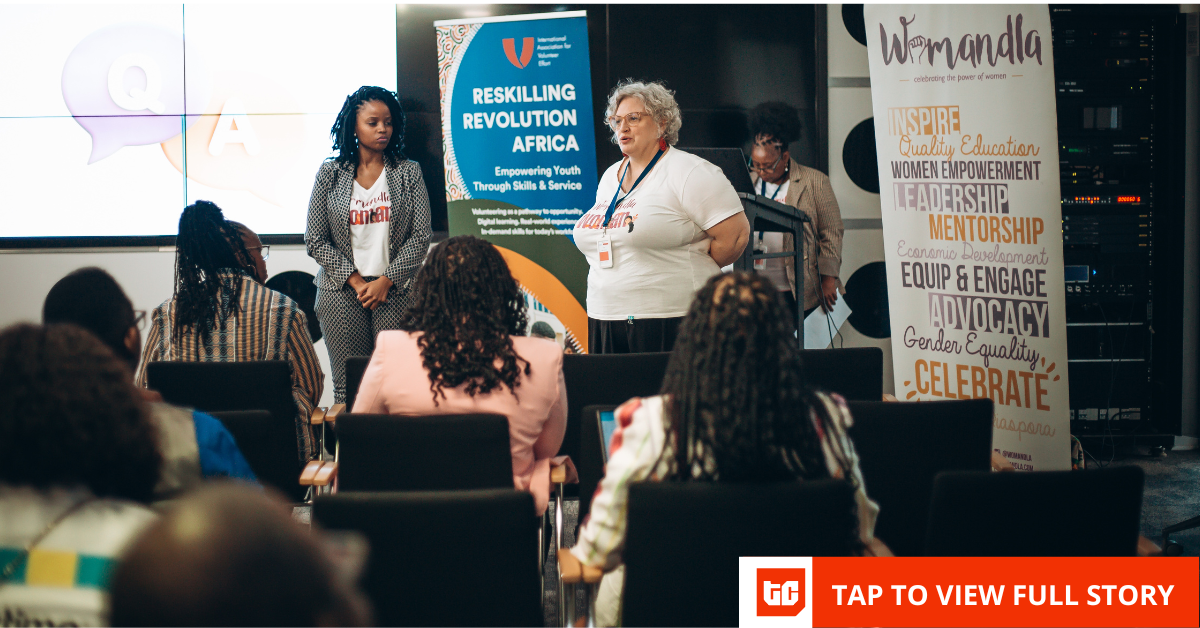
Womandla Foundation, a South African upskilling non-profit, has partnered with the International Association of Volunteer Effort and IBM SkillsBuild to launch Phase Two of Reskilling Revolution Africa in South Africa.
The initiative aims to equip women and young people with future-ready skills as automation continues to reshape entry-level work. The International Association of Volunteer Effort is a global network that promotes volunteering for social change, while IBM SkillsBuild is a free digital learning platform.
“At IBM, we believe that access to technology skills is a catalyst for inclusive economic growth,” John Matogo, corporate social responsibility leader for IBM Middle East and Africa, said at the launch on Thursday.
Reskilling Revolution Africa, endorsed by the African Union in 2023, piloted its first phase from late 2024 in Nigeria, Ethiopia and South Africa, reaching about 30,000 young people.
Participants enrol through local NGOs, complete curated learning pathways on IBM SkillsBuild, spanning digital literacy, AI, cybersecurity, entrepreneurship and soft skills, and earn globally recognised certificates. The model combines self-paced online courses with mentorship, volunteering and community projects to build practical experience and employability.
Phase Two, now being rolled out in South Africa by the Womandla Foundation, expands course offerings such as AI and green skills. Cohorts run 8–10 weeks with mentoring and post-training support to translate credentials into jobs, entrepreneurship or further study.
South Africa’s youth unemployment rate for ages 15–24 sits near 59%, one of the highest globally. While job losses in South Africa linked to AI and automation are still only estimates, the reality is that some workers are being laid off, and freelancers are struggling to find new work.
It is difficult to tell whether these retrenchments are driven by AI, cost-cutting, or offshoring, since current studies do not clearly isolate the causes in the South African context. But in the US, white-collar automation layoffs surged in 2025, a trend expected to diffuse globally and could soon intensify South Africa’s employment challenges.
South Africa faces heightened risk in sectors such as business‑process outsourcing (BPO) and call centres, where automation technologies are advancing quickly, but human labour still carries much of the workload. As these global trends take hold, the country is under growing pressure to plan strategically, finding ways to safeguard its workforce and prepare for the disruptions ahead.
“We should pay less attention to predicting job loss numbers and focus more on building adaptive learning ecosystems fast enough to keep up with technological change,” Sam Gqomo, the founder of Womandla Foundation, said.
She said the foundation offers about 36 free learning paths in entrepreneurship, Science, Technology, Engineering, and Mathematics (STEM), and creative industries, from beginner to advanced. n
“This collaboration demonstrates what becomes possible when technology, volunteering and purpose-driven partnerships align,” said Samuel Turay, Africa Senior Program Manager from IAVE. “Together, we are creating practical pathways that empower people to participate meaningfully in the economy.”
Khadija Richards, head of impact at Womandla, described the AI transition as less of a threat than a structural turning point for Africa’s labour market.
“Africa is the youngest continent in the world,” she said. “ Young people are already digitally adaptive, entrepreneurial and comfortable navigating change,” she said. “When AI moves quickly, youth are often the first to experiment with it.”
She said automation will primarily transform, not erase, sectors built on repetitive tasks such as administration, retail operations, and routine data work.
But new layers of employment are emerging above them, including AI supervision and optimisation, customer-experience design, digital operations management, tech-enabled supply chains, and platform entrepreneurship.
“Automation is not only changing jobs; it’s changing how young South Africans imagine work itself. Lots of young people want a career portfolio, a job, a side hustle, a gig, a family business and the current education infrastructure is not friendly to that,” Gqomo added.
A recurring theme across the Reskilling Revolution initiative is misalignment: education and policy cycles move in years, while AI capability cycles move in months.
“The key gap is alignment, not ability,” Richards said. “African youth are creative, resilient and adaptive. The system must ensure early AI fluency, applied learning, and recognition of alternative credentials.”
Policies are slow to catch up, and this affects jobs. Short training programs and certificates are not taken seriously in many hiring systems. That makes it harder for young people who taught themselves or learned informally to move up, even though employers are asking for exactly those skills.
But that upside depends on infrastructure and policy catching up: connectivity access, devices, inclusive STEM pipelines, and recognition of non-traditional learning pathways.
South Africa now faces a structural choice familiar across emerging economies: whether automation widens inequality or catalyses productivity growth.
Without intervention, AI adoption could concentrate opportunity among already-connected urban youth while displacing routine workers. With targeted policy, rural digital hubs, broadband expansion, and skills-based hiring incentives, the same technologies could expand participation.
“Africa’s youth are not behind the AI curve,” Richards said. “The real question is whether systems will empower youth to shape the new jobs.”
Crédito: Link de origem